

Rose petals curl by math, not magic. Here's the design lesson
Scientific American reports the rose's signature curl may be unique among flowers. The geometry behind it is a reminder that nature's designs are engineering waiting to be read.
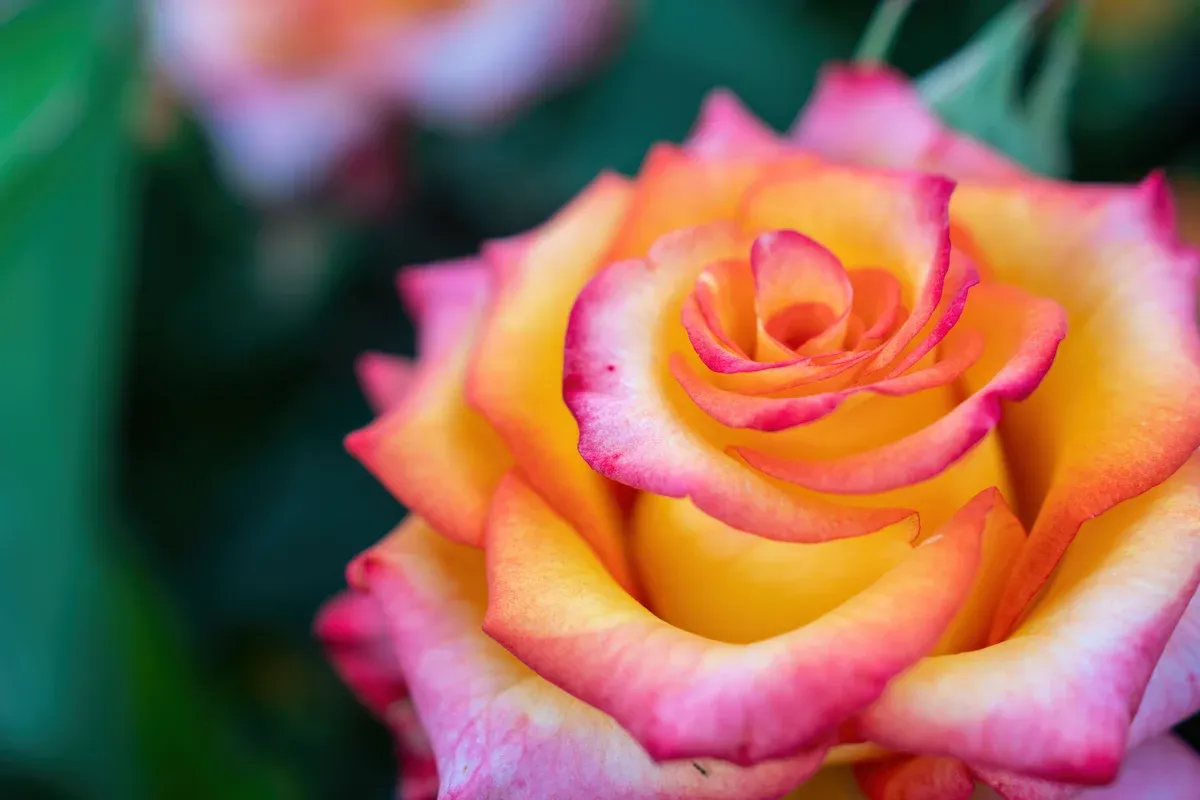
Scientific American reports that the elegant curl of rose petals may be distinct among flowers, and mathematics can explain the mechanism. For decision-makers, the story is a reminder that natural design principles, once decoded by math, have historically become the raw material for new products and industries.
The rose's signature curl is not a random flourish of nature. Scientific American reports that the elegant curl of rose petals may be distinct among flowers, and mathematics can explain why. That single sentence turns a flower you have seen a thousand times into a case study in how natural form follows a rigorous, decodable logic - and for anyone who builds products, companies, or brands, it is a reminder that the most beautiful designs often hide a rule underneath.
The mechanism, for context, is one botanists and physicists have studied for decades: differential growth. When one layer of a petal's tissue expands faster than the layer beneath it, the structure bends. The same physical logic shows up in engineered materials, from the bimetallic strips in thermostats to self-folding packaging. What makes the rose notable, per the report, is that its curl may be distinct among flowers - a geometry that is not just pretty but potentially unique in the plant world.
Why should a distinct curl matter? In nature, as in markets, a distinctive form usually signals a distinctive function. A petal that curls differently from its peers may be solving a problem other flowers did not face, whether that is unfurling efficiently, shedding water, or presenting a surface to pollinators. The report does not claim to have settled the question; it frames the curl as a puzzle that mathematics is well positioned to crack. For a founder or operator, the lesson is in the framing: the difference between 'beautiful mystery' and 'solvable problem' is often just the decision to look for the rule.
The larger lesson is about the value of cross-disciplinary thinking. A rose petal is not the first thing a founder or investor thinks about in the morning, but the mathematics of curved surfaces is everywhere: in the design of lenses, in the aerodynamics of wings, in the folds of soft robots, in the way packaging collapses into flat sheets. The equations that describe a petal's curl are cousins to the equations that describe how a sheet of metal bends under stress or how a membrane folds in a medical device. When a publication like Scientific American connects a flower to a formula, it is doing more than explaining botany; it is showing how a single mathematical lens can unify problems across industries.
For decision-makers, this is a small case study in why basic science matters. Scientific American is not reporting a market event; it is reporting a discovery about how the world works. And discoveries about how the world works have a long history of becoming products. Biomimicry has already produced self-cleaning surfaces inspired by lotus leaves, adhesives inspired by gecko feet, and wind-turbine blades modeled on humpback-whale fins. A mathematically explained rose petal is a candidate for that list - not because the report promises a product, but because the pattern is consistent. Many materials breakthroughs, historically, began as observations about structure and questions about why it worked.
None of that is promised in the report, and none of it should be assumed. The path from a mathematical explanation to a commercial product is long, uncertain, and full of failures. But the pattern is historical: when a natural form is reduced to a principle, engineers eventually find a use for it. The rose's curl, decoded, could one day inform materials that curl on demand, packaging that opens itself, or soft robotics that move without motors. The timeline is unknowable; the direction of travel is not. For a board or an executive team, the practical question is not 'when will this become a product' but 'what other natural patterns are sitting unexplained in plain sight, and who is already working on them?'
The strategic takeaway for executives is not to rush out and hire a mathematician to study flowers. It is to notice where your own industry has unexplained patterns - the 'curls' in your data, your operations, your customer behavior - and to ask whether a rigorous lens could explain them. The rose's curl looks like magic until math explains it. So do a lot of business problems. The companies that find the rule first get to design the product; everyone else gets to copy it.
Scientific American's report is a short read that rewards the curious. For the ambitious reader, it is also a reminder that the gap between 'beautiful' and 'understood' is often just a matter of finding the right framework. The rose got its curl through geometry. The next product, company, or career move might get its edge the same way. The flower did not need to know the math to execute it perfectly; the people who build the future usually benefit from learning the math first.
This story's Key Insights and Take-aways are locked.
Create a free account to unlock Executive Actions for one credit.
Register to UnlockAlways free for Executives Club members. Join the Club
More in Science

Alaska's 1,580-foot tsunami had warning signs. Scientists just found them.
Rapid glacier retreat, heavy rainfall, and thousands of tiny tremors preceded Alaska's 1,580-foot tsunami, a warning for every coastal community in a warming world.

The rare mutation that lets high-risk brains dodge Alzheimer's
Scientists found a natural defense against protein buildup, opening a new path to preventive treatments.

3,000 steps a day may halve Alzheimer's decline, study finds
New research links a modest daily walk to less tau buildup and nearly half the cognitive and functional decline, even for those with early signs.