

Russian plague researcher's mysterious death puts secret lab network in spotlight
A scientist's unexplained death at a closed anti-plague facility raises urgent questions about biosecurity across the former Soviet Union.
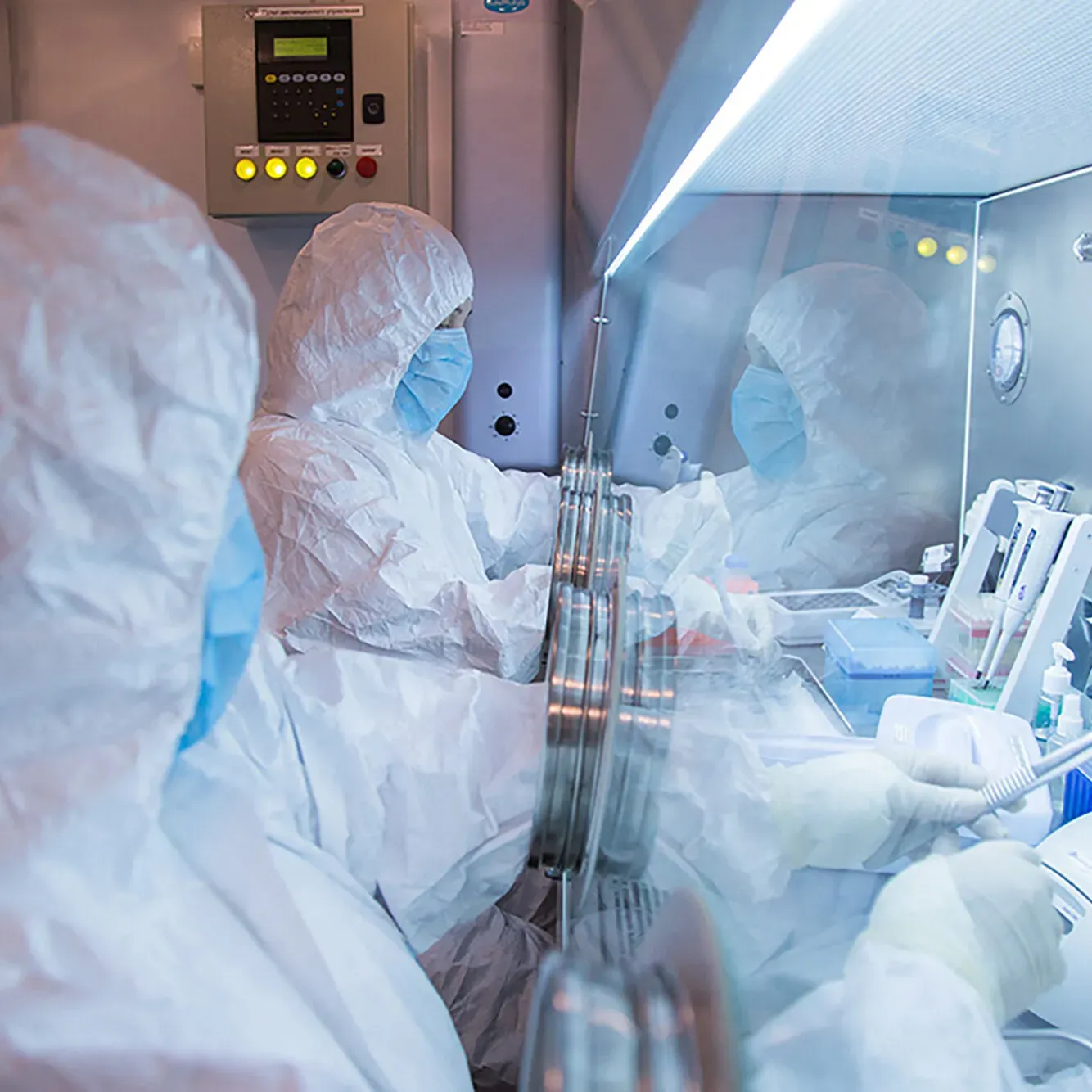
A Russian researcher who died of an unknown illness worked at a remote anti-plague facility, part of a secretive network of Soviet-era labs. The incident underscores the persistent opacity of biosecurity infrastructure in the former Soviet states and the risks of unmonitored high-containment research.
A Russian researcher has died from an unknown illness after working at a remote anti-plague facility, one of a string of secretive labs scattered across the former Soviet states. Few foreigners have ever visited these facilities, which remain shrouded in secrecy, according to reporting from the New York Times. The researcher's name has not been released, and details of the illness remain undisclosed, leaving a void that speculation and concern are already filling.
The death is a stark reminder that the network of Soviet-era anti-plague labs, built to monitor and combat deadly pathogens, still operates largely out of public view. For decision-makers, the mystery is not just a scientific curiosity; it is a biosecurity red flag. If a researcher can die of an unknown illness inside one of these labs, what else might be happening behind those walls? The incident forces a reckoning with a hard truth: the global community has almost no visibility into a network that handles some of the most dangerous pathogens on Earth.
The anti-plague system has deep roots. During the Soviet era, a vast network of institutes and field stations was established to track plague outbreaks across Central Asia, the Caucasus, and Siberia. These facilities were also part of a broader biological research program that, historically, included offensive bioweapons work. After the Soviet Union collapsed in 1991, many of these labs were consolidated or repurposed, but the network remains, with facilities in Russia and other former republics. The labs are not just historical relics; plague is still endemic in parts of Central Asia and the Caucasus, and these facilities play a genuine public health role in monitoring and responding to outbreaks.
The transition after the Soviet collapse was not seamless. In the 1990s, as funding dried up and security weakened, there were real concerns about the safety of the pathogens stored in these labs. International programs, including the Cooperative Threat Reduction initiative led by the United States, stepped in to help secure and dismantle some of the most dangerous stockpiles. But the effort was never complete, and many facilities continue to operate with limited outside oversight. Some have received international funding to improve safety, particularly after the 2001 anthrax attacks in the United States heightened global concern about bioterrorism. Yet many remain closed to outsiders, and the details of their research programs are opaque.
The dual-use nature of these labs is what makes the secrecy so troubling. They conduct research on high-consequence pathogens, including those that could be weaponized. A researcher dying of an unknown illness could be a tragic occupational hazard, or it could be a sign of a deeper problem, such as a lab-acquired infection or a security breach. The lack of transparency is the core issue. Without access to the facility, the researcher's identity, or the results of an independent investigation, the cause of death may never be known. This is not an isolated case; the Soviet and post-Soviet biological research complex has a history of incidents that were only partially explained, from the 1979 Sverdlovsk anthrax release to more recent reports of accidents at high-containment labs.
For executives, the implications are concrete. A pathogen escaping from a poorly secured lab could trigger a pandemic, disrupt global supply chains, and cause billions in economic damage. The COVID-19 pandemic demonstrated how quickly a biological event can upend the global economy. For industries as varied as pharmaceuticals, agriculture, and logistics, biosecurity is not just a public health issue; it is a business continuity issue. The mystery illness in Russia is a case study in how little visibility the private sector has into state-run biological research. Companies that operate near these facilities, or that rely on global supply chains that could be disrupted by an outbreak, need to factor this risk into their planning.
For policymakers, the incident underscores the need for greater transparency and international cooperation on biosecurity. The Biological Weapons Convention, which bans offensive bioweapons, has no formal verification mechanism, and countries are not required to disclose the activities of their high-containment labs. The Soviet-era network is a legacy of that opacity, and the researcher's death is a reminder that the risks are not abstract. The immediate question is what killed the researcher. But the broader lesson is clear: in a world where pathogens can travel faster than ever, the secrets of a remote anti-plague lab are not just a Russian mystery. They are a global concern that demands a more open and accountable approach to biological research.
This story's Key Insights and Take-aways are locked.
Create a free account to unlock Executive Actions for one credit.
Register to UnlockAlways free for Executives Club members. Join the Club
More in Science

Alaska's 1,580-foot tsunami had warning signs. Scientists just found them.
Rapid glacier retreat, heavy rainfall, and thousands of tiny tremors preceded Alaska's 1,580-foot tsunami, a warning for every coastal community in a warming world.

The rare mutation that lets high-risk brains dodge Alzheimer's
Scientists found a natural defense against protein buildup, opening a new path to preventive treatments.

3,000 steps a day may halve Alzheimer's decline, study finds
New research links a modest daily walk to less tau buildup and nearly half the cognitive and functional decline, even for those with early signs.