

Samsung’s Galaxy Book 6 Edge adds a Snapdragon X2 Elite model at $2,100
A $2,100 Galaxy Book 6 Edge with 1TB storage and 16GB RAM signals where premium Windows PCs are heading next.

Samsung is expanding its Galaxy Book 6 lineup with a Galaxy Book 6 Edge powered by Qualcomm’s Snapdragon X2 Elite. For decision-makers, the move raises the competitive bar for premium PC specs and pricing based on AI-era chip platforms.
Samsung is expanding its Galaxy Book 6 lineup with a new Galaxy Book 6 Edge model that runs on Qualcomm’s Snapdragon X2 Elite. The headline spec set is straightforward, but the stakes are not: this configuration comes with 1TB of storage and 16GB of RAM, and it costs $2,100.
In other words, Samsung is offering a high-end, “everything now” Windows PC package, and it’s not trying to hide the pricing. At $2,100, the Galaxy Book 6 Edge is clearly aimed at buyers (and procurement teams) who want maximum baseline capacity without compromise, starting with 1TB storage and 16GB memory, then leaning on the Snapdragon X2 Elite platform to do the heavy lifting.
Why does a launch like this matter beyond one product page? Because premium laptop strategies are converging on two big constraints that executives feel every quarter: platform differentiation and inventory risk. On platform differentiation, Qualcomm’s Snapdragon X2 Elite is the differentiator Samsung is choosing to lead with. When OEMs highlight a specific CPU family like this, they are effectively betting that performance per watt, responsiveness, and AI-adjacent capabilities (even if buyers do not name the features) will be the buying reason more than incremental cosmetic upgrades.
On inventory and SKU complexity, the number that jumps off the page is the price. $2,100 is a premium-tier signal. That means Samsung is likely prioritizing fewer, higher-margin configurations over many mid-tier variants with the same chip. For buyers, that can be good because it reduces confusion and aligns with what “premium” typically means in the PC market: large storage (1TB) so you do not have to manage space constantly, and enough memory (16GB) so multitasking and heavier workloads do not feel like a tradeoff.
There is also a regulatory and compliance undercurrent that sits underneath the consumer-friendly story. Windows PCs sold broadly in major markets must satisfy safety, wireless, and other regulatory requirements, which usually means OEMs and chip vendors build reference compliance paths into their design timelines. While the source does not provide details on approvals or jurisdictions, the practical implication is that launches at this scale tend to reflect work already done on the compliance side. That matters for business decision-makers because it reduces the “will it be supported and sold everywhere?” uncertainty that can pop up with new platforms.
Then there are second-order competitive implications. When one OEM pins a premium price to a specific elite chip and a clear baseline configuration, other OEMs have to respond somewhere: either match the spec level, adjust pricing, or reposition their own premium line to justify differences. The most common response pattern in this category is not just “release another expensive model,” but “reframe the value equation.” If Samsung’s Galaxy Book 6 Edge is perceived as the standard-bearer at $2,100, competitors can either undercut with an equivalent spec, or keep the price but emphasize other differentiators such as display, battery claims, or bundled software. The source confirms only the essentials here, but the competitive logic still follows: premium buyers compare configurations first, then details.
For executives, procurement and product planning, the core takeaway is that premium laptop assumptions are tightening. A $2,100 laptop is pairing 1TB storage with 16GB RAM as the default. That combination is not just a technical spec, it is a budgeting assumption: IT and operations teams budgeting for power users may increasingly treat 1TB and 16GB as baseline expectations rather than premium add-ons. If your organization buys or recommends devices at the top end, you are likely going to be pressured toward higher minimum specs, not because of preference, but because the market is presenting those specs as “normal” for premium.
Finally, Samsung’s move into a Snapdragon X2 Elite-powered Galaxy Book 6 Edge is a reminder that the chip platform is becoming a central part of the product story, not a background detail. Whether you are evaluating laptop fleets, designing device roadmaps, or overseeing board-level product strategy, what matters is that the lineup is expanding with a clear identity, a clear baseline configuration, and a clear price point: $2,100 for 1TB storage and 16GB of RAM, backed by the Snapdragon X2 Elite platform.
This story's Key Insights and Take-aways are locked.
Create a free account to unlock Executive Actions for one credit.
Register to UnlockAlways free for Executives Club members. Join the Club
More in Technology

Nvidia's $89B data center quarter: the 9 companies cashing in
The AI buildout is minting fortunes beyond GPUs, and memory, cloud, and cooling suppliers are riding the same wave.
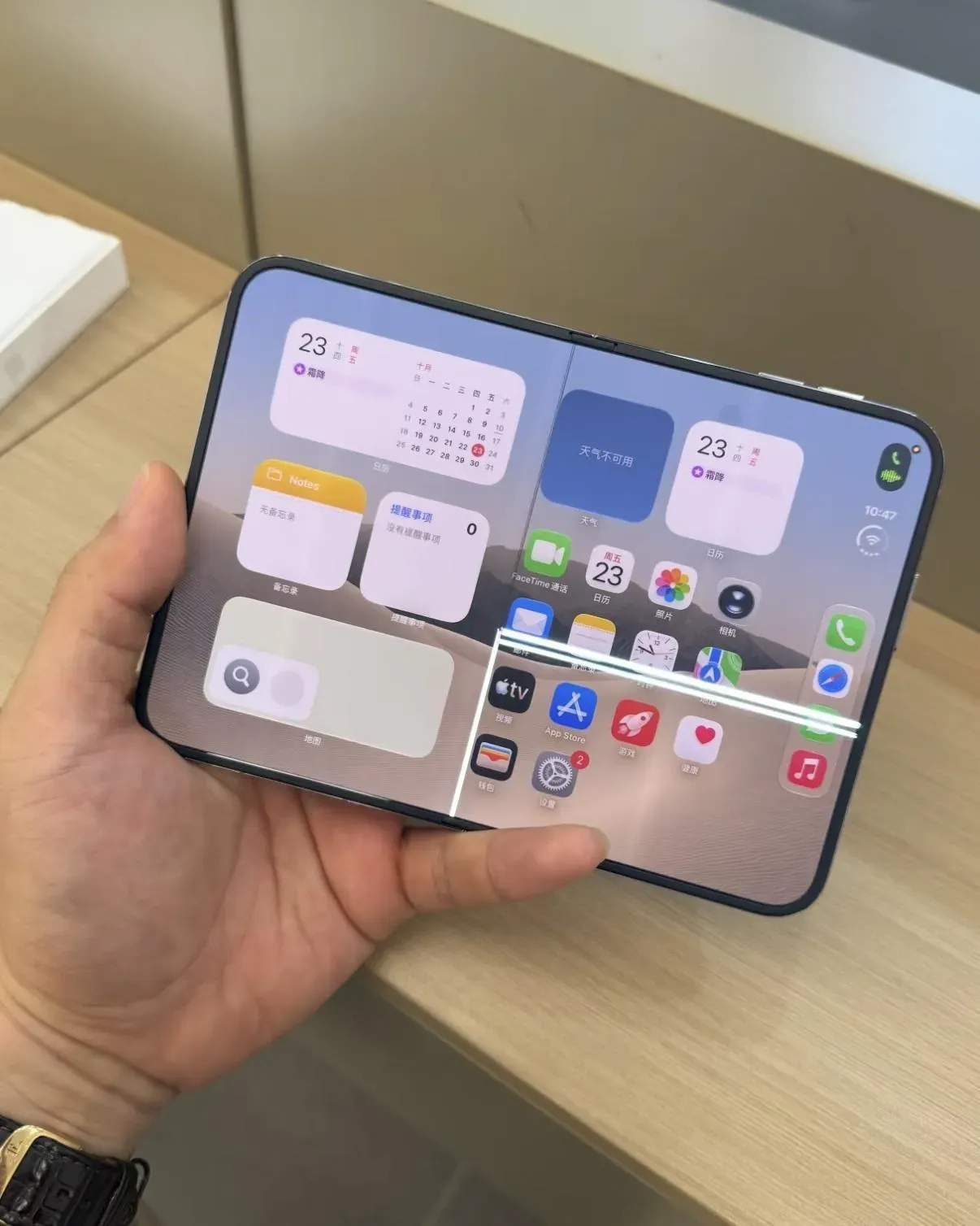
A YouTuber dissected the iPhone Duo and thinks he found crackgate's cause
CuriousHagi's teardown of Apple's foldable reveals a gear-like hinge that may explain why screens crack in the same spot within hours.

Google quietly links your phone number to every Android account on your SIM
Adding a SIM now ties your phone number to all Google accounts - and future accounts inherit it. Here's the security and privacy stakes.