
San Francisco seller wants OpenAI or Anthropic stock for a $3 million house
A Duboce Triangle listing turns pre-IPO AI equity into home-buying currency, exposing how paper wealth is reshaping luxury real estate.
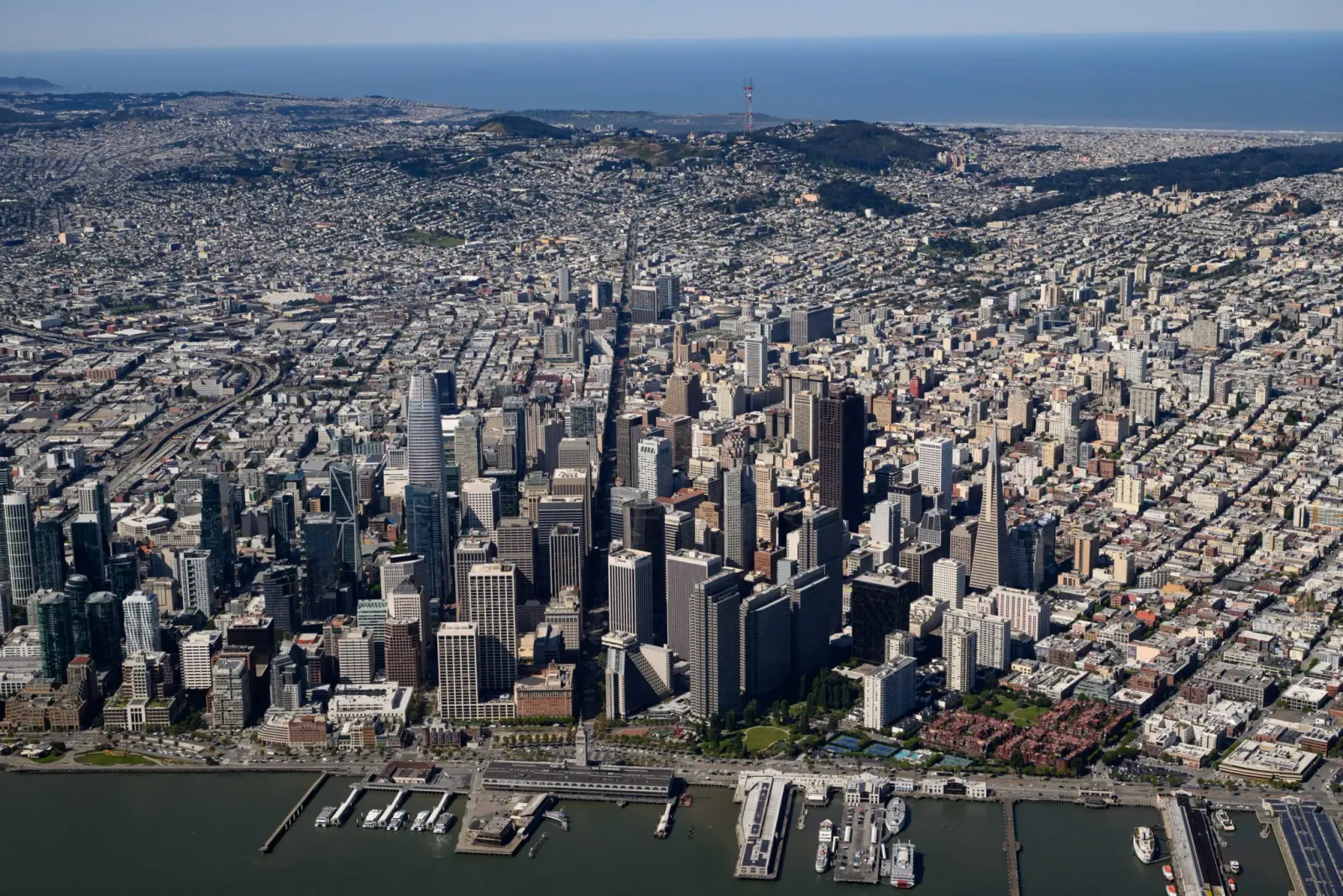
A San Francisco seller is asking for OpenAI or Anthropic stock as payment for a $3 million home at 160 Noe St., according to Realtor.com. For founders, operators, and investors, the deal shows how private AI riches are starting to leak into everyday markets before IPO cash turns that paper wealth liquid.
A San Francisco homeowner has put a price on the AI boom that is more creative than cash: the seller of a $3 million home at 160 Noe St. in Duboce Triangle will consider shares of OpenAI or Anthropic instead of dollars. Realtor.com was first to report the listing, which is for a two-level residence in a 1907-built building and has turned a standard luxury home sale into a very specific bet on private AI paper wealth. The home spans roughly 2,495 square feet, includes three bedrooms, two bathrooms, and a two-car garage, and recently finished a two-year renovation that added new plumbing, electrical, and HVAC systems.
The pricing is not floating in fantasyland. The lower unit in the same building sold for $3 million, giving the asking price a real-world benchmark. But the unusual part is not the number. It is the currency. Instead of demanding dollars at closing, the seller is openly signaling a willingness to accept equity in two of the most coveted private companies in Silicon Valley. That makes the listing less like a quirky one-off and more like a snapshot of how concentrated wealth is starting to collide with the real economy, one house at a time.
Angela Cummins, an agent with Linda Miller Real Estate who spent more than two decades at L'Oréal before entering luxury real estate, called the move “a landmark moment for home-buying.” In her view, “A seller publicly advertising pre-IPO AI stock as an accepted form of payment is a landmark moment for home-buying,” because “it legitimizes a conversation that has been happening in private negotiations for years and brings it into the mainstream.” That is the core of the story. There have already been private conversations about using stock instead of cash. Now the ask is public, and that matters because public asks have a way of becoming market norms if enough high-end sellers decide the idea is no longer weird.
Why now? Because OpenAI and Anthropic are racing toward the public markets, valuations are high, and a lot of employees are sitting on wealth that exists mostly on a screen. Anthropic recently reached a record valuation of roughly $965 billion after a new funding round, surpassing OpenAI, whose most recent valuation has been reported around $852 billion. Anthropic confidentially filed paperwork for an IPO on June 1, potentially beating OpenAI to a Wall Street debut as soon as this fall. In the narrow window before either company goes public, stock in both firms has become unusually attractive. For workers holding those shares, it can mean being rich on paper and short on spendable cash. For sellers, that creates a market of buyers who may be able to write a big check in equity even if they are not ready to do so in dollars.
The target buyer here is not just any tech employee with a good year. It is the equity-rich worker at a private AI giant who may have millions on paper but restrictions on how and when that stock can be sold. The listing is effectively meeting those buyers where they are. Instead of asking them to wait for a liquidity event, the seller is offering a way to convert illiquid wealth into a roof over their head right now. Cummins said she predicted every luxury agent in America will be asked about alternative payment methods like this within the next 90 days. She also framed the San Francisco listing as a leading indicator for markets beyond California: “What happens in the Bay Area tends to show up in luxury coastal markets like 30A about six months later,” she said, referring to Florida's Scenic Highway 30A, where she is currently marketing a $10 million estate. “When AI IPOs land and that paper wealth becomes liquid, coastal luxury markets outside of California are going to feel it in a significant way. The buyers are already here. The money is almost here.”
There is already at least one close cousin to this trade. In April, investment banker Storm Duncan offered his multimillion Marin County, Calif., estate in exchange for Anthropic shares and reportedly drew offers, including from Anthropic employees. That matters because it suggests this is not a pure novelty; it is a workaround for a very real imbalance between private-company compensation and the needs of people who want to buy real estate now. But the pool of buyers remains tiny. Christine Krenos, a real estate agent at Douglas Elliman who works with clients in Silicon Valley, said the challenge is how specific the ask is. In a market where “so much wealth is tied up in private company stock,” she said, “If the seller were open to a broader range of company stock, it could widen the buyer pool.” But when the seller asks specifically for OpenAI or Anthropic stock, “you're really looking for a needle in a haystack.” The buyer has to have access to that stock, be willing to part with it, and also love this exact property. “That's a very specific set of stars that needs to align.”
Then there are the mechanics, and they are messier than the headline makes them sound. Krenos compared the moment to Bitcoin's arrival in real estate, when the idea moved faster than the plumbing under it. “Real estate is hyper-local and very personal. Stock is not,” she said. “This is not as simple as swapping one asset for another.” Cummins agreed that the complexity is real. Title companies, she noted, are not built for these deals yet, and the IRS treats them as taxable events, which makes it hard to pin down the fair market value of private shares. That means the deal is not just a sign of exuberance. It is also a stress test for how luxury housing, private equity, and the tax code interact when a generation of buyers is rich in assets that cannot yet be easily spent. For executives and boards, the broader message is clear: once paper wealth gets big enough, it starts changing what people can buy, how they pay for it, and which markets feel the shock first.
This story's Key Insights and Take-aways are locked.
Create a free account to unlock Executive Actions for one credit.
Register to UnlockAlways free for Executives Club members. Join the Club
More in Business

Anthropic’s Levant Alpöge cracks the Jacobian conjecture after 87 years
A Harvard valedictorian used Claude to hit a 1939 breakthrough, but the missing “why” is the real problem.

Uber buys Delivery Hero for nearly $15B, vaulting to top food delivery outside China
The deal doubles Uber's dual-services footprint and pushes a ride-and-eats bundling play into 50 more markets.

Epic and Google drop settlement bid, forcing rival Android app stores by July 22
Google told the court it is ready to carry third-party app stores starting Wednesday, July 22.