

Secret Mode snaps up Chained Together after 10 million copies
The June 2 deal shows how breakout hits can become acquisition targets fast, and why publishers hunting for content are moving earlier.
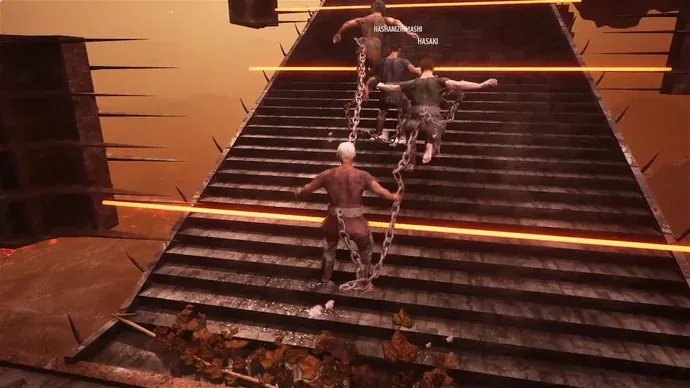
Secret Mode, the UK publisher, revealed on June 2 that it had acquired Chained Together from Anegar Games. For executives, the deal is a reminder that runaway hits can change hands quickly once they prove scale, turning proven engagement into strategic inventory.
Secret Mode has added a monster success story to its catalog. On June 2, the UK publisher said it had picked up Chained Together from Anegar Games, a move that arrives after the hardcore co-op platformer passed 10 million copies sold. That is not a modest indie win or a nice bonus for a niche audience. That is the kind of breakout performance that makes a game impossible to ignore, and the kind of result that explains why a publisher would move to own the asset rather than simply watch it keep growing from the sidelines.
For context, Chained Together was released in June 2024. The premise is delightfully cruel in the way only successful co-op games can be: players climb up from the depths of hell while chained to their friends. The fact that a game with that setup has sold more than 10 million copies tells you two things at once. First, the market still has a serious appetite for simple-to-understand, easy-to-sell multiplayer concepts. Second, once a title proves it can travel this far this fast, ownership becomes a strategic question, not just a creative one. Secret Mode's acquisition is a reminder that publishing is not only about launching new games, but about securing the ones that have already shown they can break out.
The source does not spell out the commercial terms of the deal, but the move itself is telling. Secret Mode said it had been "on the hunt for new content," and Chained Together fits the profile of content a publisher would covet: recognizable, already validated by the market, and still carrying momentum. In games, that kind of momentum matters because a hit is not just a hit at launch. It can become a platform for ongoing player attention, community discussion, and future commercial activity. When a title has already reached 10 million copies, the question shifts from whether it will find an audience to how long that audience will keep showing up, talking, and buying into whatever comes next.
That is why this acquisition should matter to other executives watching the sector. Publishers are constantly balancing the cost of discovering the next big thing against the safer appeal of assets that have already done the hard part. A breakout like Chained Together reduces uncertainty in a business where uncertainty is the default setting. It is easier to justify owning proven content than betting entirely on something untested, especially when a game has already demonstrated that it can cut through the noise and spread well beyond its initial lane. The acquisition also hints at a broader truth in games publishing: the line between creating content and assembling a catalog is getting blurrier every year.
There is also a second-order implication for studios and founders. When a game sells 10 million copies after launching in June 2024, it changes the conversation around what success looks like and who gets to control the next chapter. A studio that has produced a hit of that scale is no longer just shipping a product. It is managing an asset with leverage. Even without disclosed deal terms, Secret Mode's purchase suggests that standout performance can quickly translate into strategic optionality for the creator and strategic urgency for the buyer. That is especially true in a market where publishers are openly looking for new content and where proven traction is one of the most convincing signals in the industry.
For Secret Mode, the acquisition also signals intent. Buying a game after it has already smashed expectations is a different posture from funding a long-shot swing. It says the publisher is willing to chase content that has already earned its audience, rather than waiting for growth to happen on someone else's cap table. For peers, that raises a practical question: if you are a publisher, are you building a pipeline of originals only, or are you also ready to move quickly when a sleeper hit turns into a full-blown phenomenon? And if you are a studio, are you prepared for what happens when success arrives faster than your ownership structure expected?
In the bigger picture, Chained Together is exactly the sort of story that keeps publishers awake and acquisition teams busy. A game released just last June, built around a simple but highly streamable premise, has sold more than 10 million copies and is now changing hands. That combination is rare enough to turn heads, but not random enough to dismiss. It shows how fast the games market can reward clarity, novelty, and social play, and how quickly a publisher can decide that the smartest move is to buy what is already working. For anyone building, buying, or backing games, the message is straightforward: once a title proves it can become a phenomenon, everyone starts asking who owns the upside.
This story's Key Insights and Take-aways are locked.
Create a free account to unlock Executive Actions for one credit.
Register to UnlockAlways free for Executives Club members. Join the Club
More in Business

Anthropic’s Levant Alpöge cracks the Jacobian conjecture after 87 years
A Harvard valedictorian used Claude to hit a 1939 breakthrough, but the missing “why” is the real problem.

Uber buys Delivery Hero for nearly $15B, vaulting to top food delivery outside China
The deal doubles Uber's dual-services footprint and pushes a ride-and-eats bundling play into 50 more markets.

Epic and Google drop settlement bid, forcing rival Android app stores by July 22
Google told the court it is ready to carry third-party app stores starting Wednesday, July 22.