

Seoul police questioned Shinsegae audit chief Yang Jong-hwan over Starbucks 'Tank Day'
A reusable cup promo on May 18 collided with South Korea’s 1980 Gwangju trauma, triggering a regulatory reckoning.
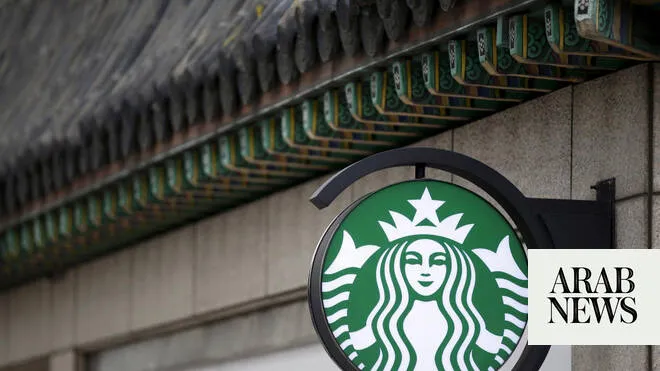
Seoul police questioned Yang Jong-hwan, head of Shinsegae Group’s audit team, as a witness in the investigation into Starbucks Korea’s “Tank Day” promotion. The fallout has already included firings, a chairman’s apology, protests, and planned “history lesson” sessions for stores and executives.
South Korean police have questioned Yang Jong-hwan, head of Shinsegae Group’s audit team, as a witness in their investigation of Starbucks operator Shinsegae’s “Tank Day” promotional fiasco, according to a company spokesman speaking to AFP. The question is the company version of a stress test: not just “what did you run,” but “who signed off, and how did it get past the safeguards.”
The promo itself is why the case is bigger than a marketing misstep. Starbucks Korea’s reusable cup promotion took place on May 18, the 46th anniversary of the Gwangju uprising, where 165 civilians were killed according to the official toll, though many believe the real figure to be much higher. In short, a product launch schedule intersected with national grief, and the campaign’s imagery and timing sparked public outrage.
Starbucks Korea operates more than 2,000 stores nationwide under a licensing agreement with Shinsegae Group. That matters because it places Shinsegae in the uncomfortable seat between brand standards and local execution. When this kind of controversy hits a scaled retail operator, it is not just about one store manager or one agency deck. It becomes a systems question: how designs get approved, how risk is identified, and how quickly bad feedback gets escalated internally. Shinsegae’s prior attempt to map the problem included identifying negligent acts leading up to the promotion, including officials signing off without checking the design file.
The immediate corporate response was blunt and public. Shinsegae Group fired its Korea chief executive the day the scandal broke. Later, the group’s chairman, Chung Yong-jin, bowed in apology over the incident. Those steps do two things at once: they try to stop the bleeding in the court of public opinion, and they also signal that leadership wants the story to end with discipline, not with a deeper explanation of internal controls. But the apology and firing did not close the loop.
A civic group filed a complaint against Chung and other executives, alleging they violated a 2016 law. That law, among other provisions, prohibits the dissemination of false information about the 1980 pro-democracy crackdown. The complaint also claims defamation and insult. This is where the case gets more complicated for boards and audit functions: even if a promotional campaign was intended as something else, regulators and complainants can frame it as misinformation or harmful characterization. In other words, the legal theory can shift the focus from “insensitive branding” to “information integrity,” which tends to be stickier for compliance teams and harder for leadership to resolve quickly.
Seoul police are now working through the evidence chain. A company spokesman told AFP that the Seoul Metropolitan Police Agency questioned Yang Jong-hwan as a witness on the day in question, and declined to provide further details. AFP reports that police did not respond to multiple requests for comment. Shinsegae, for its part, said it hoped the facts would be “clarified swiftly and transparently” and pledged cooperation with investigators. Those phrases are standard corporate language, but the subtext is not. Once police involvement starts, the priority becomes creating a clean record: what was reviewed, what was missed, who documented what, and how “audit” actually functioned before the public backlash arrived.
The business impact showed up early, not quietly. The controversy sparked protests in Seoul and Gwangju and produced a “sharp decline in sales” in the early days of the scandal, according to the operator. That kind of sales hit tends to compound because marketing teams lose the ability to act normal while the public is deciding whether to boycott, speak out, or demand answers. In the same window, political pressure landed. President Lee Jae Myung expressed outrage “by this inhumane and disgraceful conduct.” For operators, political attention can turn a local media story into a national compliance story fast.
Looking ahead, Shinsegae is also moving from defense to “retraining mode.” Starbucks stores across South Korea will next Monday shutter for half a day so staff can attend a history lesson about the crackdown. The chairman of Shinsegae and other senior executives will sit for a similar lesson two days later. For executives, this is more than optics. It is a practical attempt to harden cultural and historical review into day-to-day workflows, especially for promotions tied to dates, national symbols, or politically loaded imagery.
If you are an executive at a retailer with licensing arrangements, or a board member watching how large brands localize campaigns, this case is a reminder with teeth: the risk is not only reputational. It can become a regulatory question under laws that treat certain narratives and disclosures as legally sensitive. A promotional calendar may look like a marketing asset, but in this environment it can also become a compliance liability. And once that happens, your audit team is not just checking numbers. It is checking whether the organization understood what it was doing before the world made the meaning impossible to ignore.
This story's Key Insights and Take-aways are locked.
Create a free account to unlock Executive Actions for one credit.
Register to UnlockAlways free for Executives Club members. Join the Club
More in Business

Anthropic’s Levant Alpöge cracks the Jacobian conjecture after 87 years
A Harvard valedictorian used Claude to hit a 1939 breakthrough, but the missing “why” is the real problem.

Uber buys Delivery Hero for nearly $15B, vaulting to top food delivery outside China
The deal doubles Uber's dual-services footprint and pushes a ride-and-eats bundling play into 50 more markets.

Epic and Google drop settlement bid, forcing rival Android app stores by July 22
Google told the court it is ready to carry third-party app stores starting Wednesday, July 22.