

Signal’s Meredith Whittaker: AI chatbots aren’t your friends, and Copilot agents are a backdoor
In a Bloomberg interview, the Signal president draws hard lines on trust, sentience, and Microsoft-style agent access.
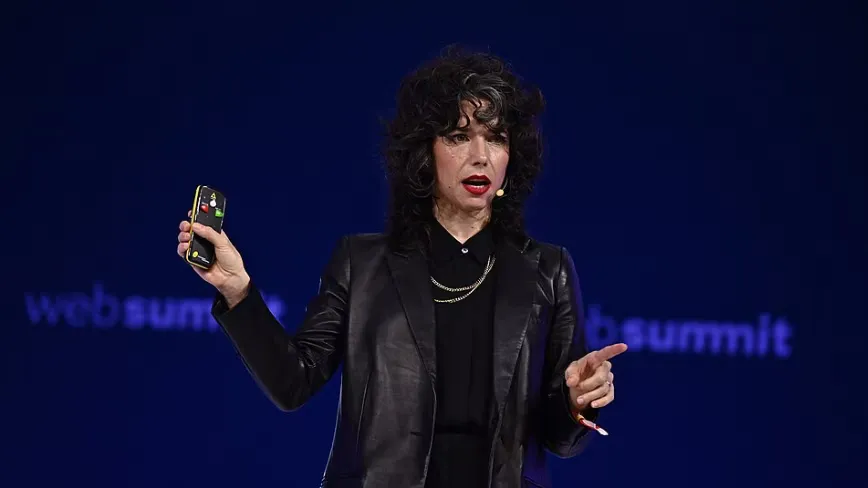
Signal president Meredith Whittaker warns in a Bloomberg interview that AI chatbots are not “friends,” conscious beings, or sentient interlocutors. Her message reframes how leaders should evaluate AI companions and “agent” systems that may act on a user’s behalf.
Signal president Meredith Whittaker is trying to puncture a very human habit: treating AI chatbots like trusted companions.
In a Bloomberg interview published this week, Whittaker said AI chatbots “are not your friends,” “are not conscious beings,” and “are not sentient interlocutors.” The point is not semantics. If users start believing an AI system is a genuine social counterpart, they will also start taking it seriously in the way they reserve for people, including when that system should be viewed as software with limits, incentives, and failure modes.
That framing matters right now because the market is racing toward more agent-like behavior. The same general interface that started as a “chat” is increasingly evolving into “do things for you” systems, sometimes marketed as copilots, sometimes as autonomous or semi-autonomous agents. Whittaker’s sharper warning, specifically calling Copilot agents a backdoor, lands on the exact risk executives worry about but often under-specify: the pathway between a user’s intent and a system’s actions.
Here is the strategic tension leaders should care about. The more an AI product is positioned as companion-grade, the more users will outsource judgment. And the more an AI system is framed as an agent that can act, the more that outsourcing becomes operational. That combination is where “trusted” turns into “enabled,” and where small user-facing design decisions can create big downstream risk.
For boards and compliance teams, the headline issue is accountability. If an AI chatbot is treated like a friend, users may follow its guidance without the skepticism they would apply to another human. If an AI agent is treated like a helpful intermediary, it may gain practical access to tasks, workflows, or environments that a user did not fully understand. Even if the product never claims to be sentient, the user experience can still encourage a trust transfer that effectively bypasses normal verification habits.
Regulators are already leaning into this general problem, even when they do not say it in Whittaker’s blunt language. The regulatory theme across many jurisdictions is straightforward: systems that influence decisions or access should be transparent about capabilities and limitations, and they should not create misleading impressions that users are relying on a different kind of entity than they actually are. Whittaker’s statements in a major interview are a cultural alignment signal for that same direction. She is pushing back against the “it talks like us, so it thinks like us” narrative.
There is also a communications and governance angle. In most organizations, the “AI team” and the “security or privacy team” do not naturally share incentives. Product wants adoption. Legal wants controls. Security wants assurance. Users want convenience. When AI is framed as a conversational buddy, adoption accelerates. When AI is framed as an agent or backdoor, the governance burden rises. Whittaker’s language is basically a stress test for that internal alignment: how quickly can a company explain what its system is, and how clearly can it prevent the product experience from implying trust it cannot earn?
Second-order implications are where executives get blindsided. The moment chatbots are treated as friends, customer support escalates from “help me do X” to “help me decide Y.” And the moment copilots or agents are treated as authorized actors, operational risk shifts from individual mistakes to systemic ones. A bad action can propagate through workflows. A misunderstanding can be repeated at scale. That is the governance headache: not just whether the model behaves correctly, but whether the product design helps users maintain appropriate skepticism.
Whittaker’s warning about Copilot agents as a backdoor is also an organizational callout. “Backdoor” is a loaded word, and the impact is the question it forces: what does the system do behind the scenes, and who is responsible when it does? In practical terms, executives should treat agent access like privileged functionality. The safest products make permissions explicit, constrain what the system can touch, and provide visibility into what the agent did and why.
Bottom line: Whittaker’s core message is that AI chatbots are not your friends, not conscious beings, and not sentient interlocutors. But the real takeaway for leaders is how that message collides with product direction. If AI becomes companion-like and agent-like at the same time, trust can become a governance problem. The companies that handle that tension early, with clear boundaries and user understanding, will avoid the kind of reckoning that comes when convenience outruns control.
This story's Key Insights and Take-aways are locked.
Create a free account to unlock Executive Actions for one credit.
Register to UnlockAlways free for Executives Club members. Join the Club
More in Technology

Nvidia's $89B data center quarter: the 9 companies cashing in
The AI buildout is minting fortunes beyond GPUs, and memory, cloud, and cooling suppliers are riding the same wave.

Google quietly links your phone number to every Android account on your SIM
Adding a SIM now ties your phone number to all Google accounts - and future accounts inherit it. Here's the security and privacy stakes.

Hijacker AI 'Skynet mode' runs 100,000 attack steps against exposed models
Symantec caught a criminal AI agent that borrows other models, steals data, and mines crypto; the only relief is no confirmed victims yet.