
Silicon Valley gushes over DeepSeek, calling it “amazing” despite less-advanced China chips
The surprising part is not DeepSeek's existence, it's the talent and hype it sparked while running on weaker hardware.

DeepSeek is getting major praise in Silicon Valley as “amazing and impressive,” even though it relies on less-advanced chips. For decision-makers, the signal is clear: model performance is starting to matter more than chip bragging rights.
Silicon Valley is raving about DeepSeek, and the reason is as counterintuitive as it is consequential: people are calling it “amazing and impressive” even though it runs on less-advanced chips. In other words, the conversation is shifting from who has the newest hardware to what teams can squeeze out of constraints.
That tilt matters because it attacks a core assumption in the AI arms race. If a made-in-China AI model can generate serious buzz while using chips that are described as less advanced, then the usual bottleneck is not just raw compute availability. It is also software efficiency, model design, training strategy, and how quickly teams learn, iterate, and ship. The headline fuel is simple: DeepSeek is being praised in a way that implies strong real-world capability, not just theoretical promise.
To understand why Silicon Valley is reacting so loudly, you have to remember how AI procurement and competition usually work. Chips have become a stand-in for everything executives want to believe: scale, speed, and superiority. When hardware is scarce, it often determines timelines. When hardware is cutting edge, it often determines credibility with partners and investors. So when a model gets “amazing and impressive” reactions while operating on less-advanced China chips, it creates an uncomfortable possibility for boards and leadership teams: your AI advantage might be less about what you can buy and more about what you can build.
This also lands in a regulatory and geopolitical context where “made in China” is not a neutral label. Export controls, licensing requirements, and technology restrictions have changed the incentives for everyone involved in AI infrastructure. Companies have had to plan around what chips and systems they can legally obtain, what is feasible to deploy, and what risk is attached to supply chains. In that environment, DeepSeek's reception in Silicon Valley reads like a stress test of the prevailing narrative: even under constraints tied to the chip ecosystem, teams can still produce models that command attention.
There is a second-order effect here that executives should not ignore. Praise like “amazing and impressive” does not only reflect technical merit. It also influences capital allocation. When respected builders and operators start talking up a model, it can shift expectations for product roadmaps, demo standards, and partnerships. It can also pressure rivals who assumed that compute advantage would automatically translate into model superiority. If peers believe performance can emerge from constraints, the competitive gap may narrow for companies that are simply waiting for better chips instead of investing in efficiency and iteration.
Boards and CFOs should also think about cost structure. Less-advanced chips are often associated with different price points, different procurement routes, and different operational tradeoffs. That means a model like DeepSeek, depending on its deployment realities, could change how leadership teams evaluate ROI. If comparable quality outcomes can be achieved with less-advanced hardware, then the internal justification for large, expensive infrastructure spend gets harder. Not impossible. But harder. The benchmark shifts from “we have the best compute” to “we can deliver outcomes per dollar and per watt.”
Finally, the strategic stake is not just about DeepSeek. It is about what its hype implies for the broader AI market cycle. When a made-in-China model earns strong praise despite less-advanced chips, it signals that innovation is distributed and that the hardware hierarchy is not destiny. That can accelerate competition, intensify scrutiny on model efficiency, and force leadership teams to measure what matters faster than the press cycle. The peers most likely to benefit are the ones who respond by tightening execution, sharpening evaluation, and building systems that perform under constraint.
In short: Silicon Valley calling DeepSeek “amazing and impressive” is more than a compliment. It is a real-time recalibration of how the industry measures progress, and it pressures decision-makers to prove their advantage is more than what sits on a purchasing order.
This story's Key Insights and Take-aways are locked.
Create a free account to unlock Executive Actions for one credit.
Register to UnlockAlways free for Executives Club members. Join the Club
More in Technology
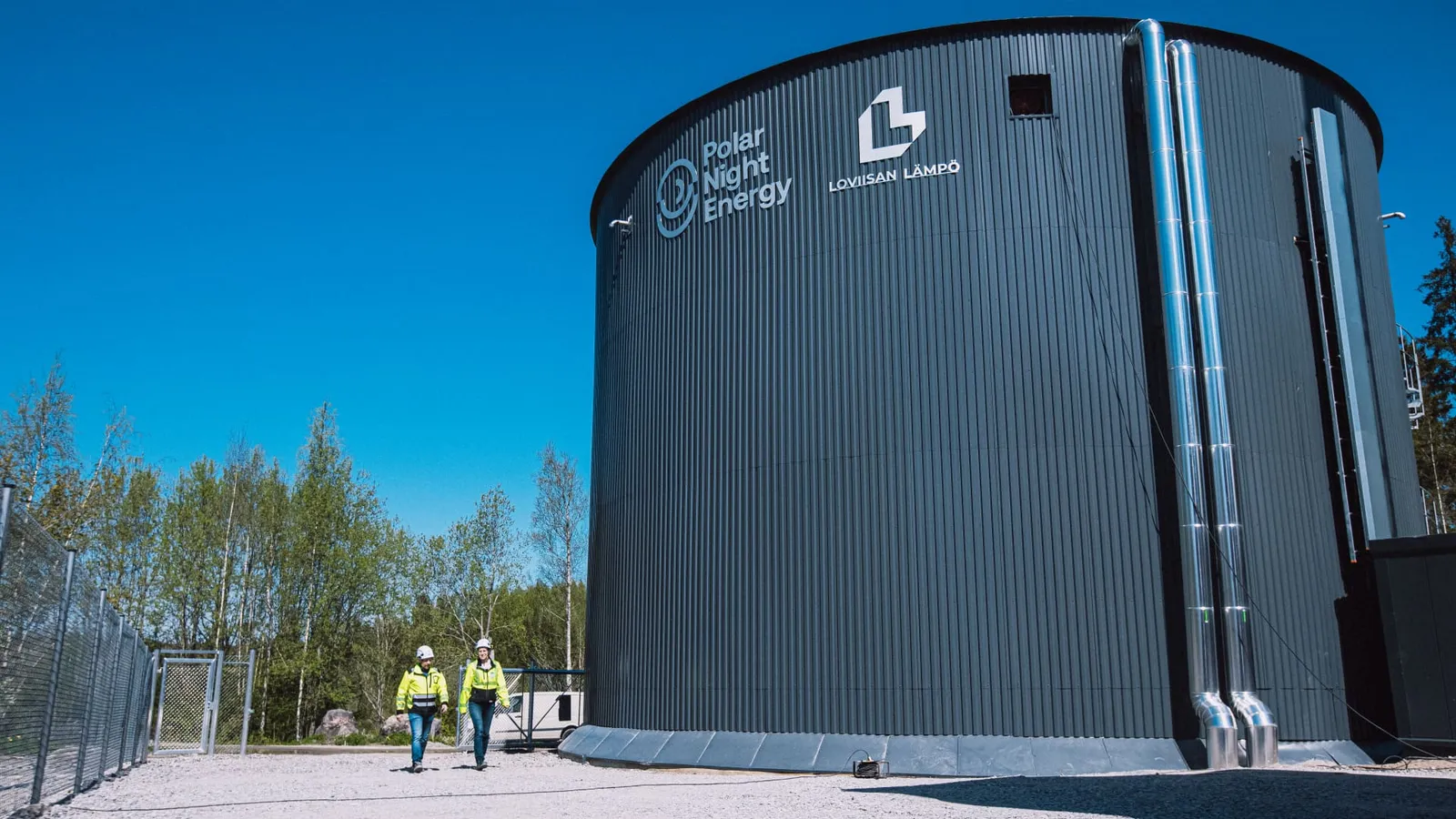
Finland powers through wind and solar lulls with the world’s largest sand battery
A small town in Finland is using the world’s largest commercial sand battery to solve intermittency.
Nvidia locks SK Hynix memory supply to power its $500B AI push
Nvidia is securing high-bandwidth memory access for its AI systems, and that supply chain control matters more than ever.

Beijing-backed money quietly ties DeepSeek, Zhipu AI, Unitree, and CXMT
The SCMP report shows state capital is reshaping “VC-style” funding across China’s frontier tech ecosystem.