
SK Hynix’s Nasdaq debut follows a 770% surge and 20% June peak selloff
A $29B first-time foreign listing doubles as a reality check on whether the AI rally still has fuel.
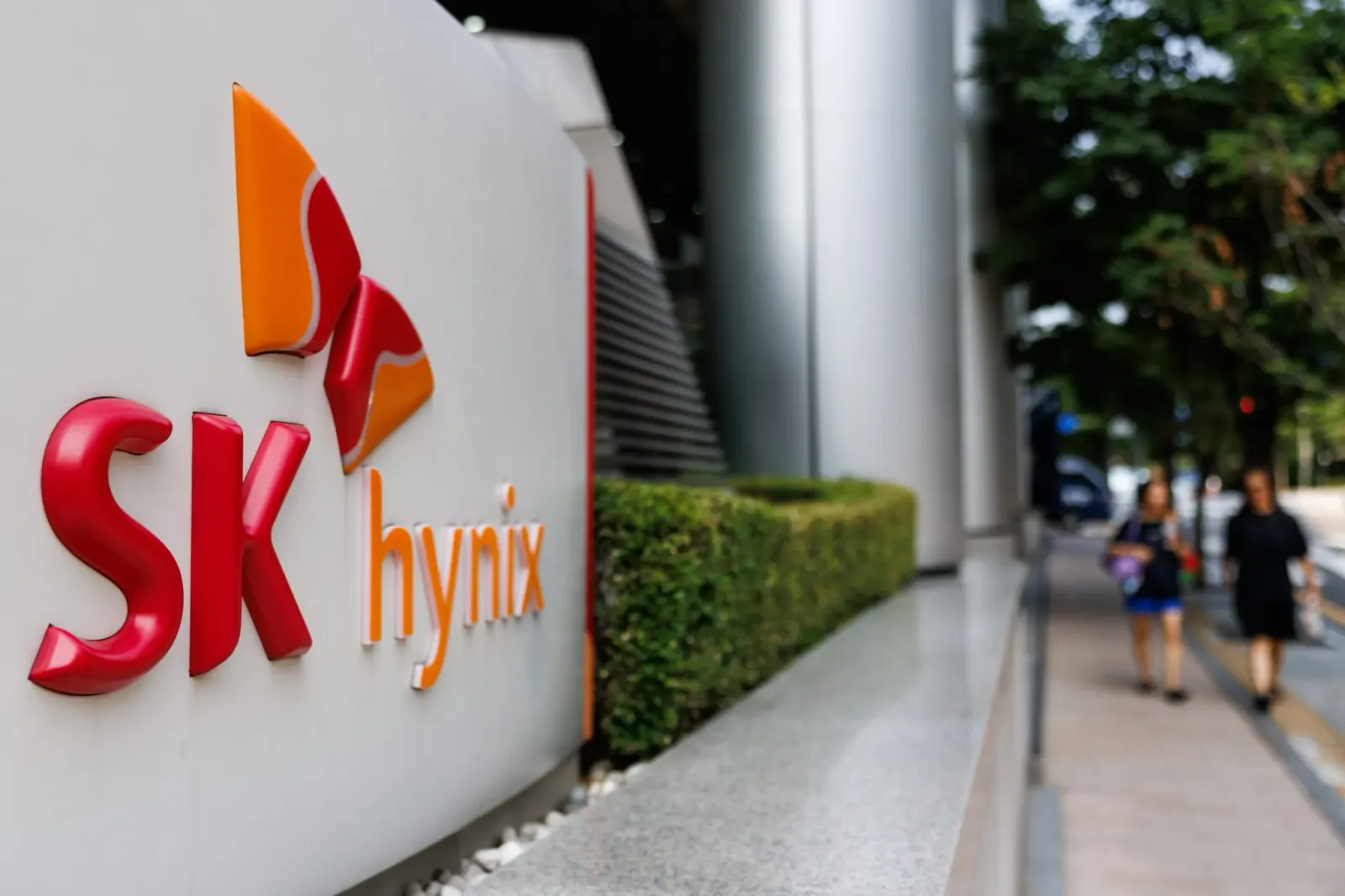
SK Hynix will list on the Nasdaq on Friday, raising about $29 billion in what could be the biggest-ever first-time share sale by a foreign company. The move lands after a 770% jump in Korea over 12 months, renewed volatility, and warnings that extreme speculation could trigger a valuation snapback.
SK Hynix’s Nasdaq debut is arriving with a neon sign that reads: too hot, too fast, and maybe too fragile. Shares of the South Korean chipmaker are expected to start trading on Friday, and the listing could raise about $29 billion, potentially the biggest-ever first-time share sale by a foreign company. That matters to anyone allocating capital, because first listings like this do not just print headlines. They act like a live stress test for whether the market can still absorb major supply without breaking the rally.
The “too hot” part is not hypothetical. SK Hynix’s Korea-listed stock has surged 770% over the last 12 months, even after a 20% selloff from a peak in June. That price action is happening in lockstep with the AI boom, with memory chips turning into critical enablers of AI agents. The market’s excitement is also being helped along by a specific supplier position: SK Hynix is the top supplier of high-bandwidth memory and has become Nvidia’s favorite provider.
And then comes the twist that makes this more than a simple AI winner story. Comments from SK Hynix last month about slowing down its AI memory business were enough to knock the Korea-listed Kospi stock index into its fifth worst daily plunge ever. The ripple effect spread beyond South Korea, and strong earnings from Micron were not enough to revive confidence. For analysts at Capital Economics, the size and speed of the swings raised the red flag that the party might be running ahead of reality. They point out that selloffs of this magnitude have previously occurred during bear markets like the Asian financial crisis, the dot-com bubble, and the Great Financial Crisis.
Capital Economics senior markets economist James Reilly put it bluntly in a note: “This volatility is, in our view, evidence of excessive froth and calls into the question the sustainability of this rally,” according to the source. That is the key tension behind SK Hynix’s U.S. listing. On one hand, demand for AI-linked memory has helped keep prices elevated. On the other hand, when the market reacts violently to a signal about supply or pacing, it implies investors are not pricing the company as a long-term business. They are pricing it as a momentum trade.
The market may be sending that same signal through other recent AI-related debuts. Shares of SpaceX, which is also an AI company after acquiring xAI, have been similarly volatile since going public. The stock jumped in its initial trading sessions, then fell sharply, and is back near its first-day closing price. Even bonds issued by SpaceX soon after the IPO quickly sold off, landing at levels comparable to those of junk-rated borrowers despite getting investment-grade ratings. The source also notes that those wobbles reportedly are factoring into OpenAI’s IPO, which could be pushed out to 2027 instead of later this year. Put differently: when volatility shows up in both equity and debt markets, it makes every future listing more complicated for everyone involved.
This current frenzy is also colliding with a structural mismatch in how the AI boom is financed. The source says the U.S. and Iran ending hostilities helped create a “clearer” path for the AI boom as oil prices and bond yields fell, which should have helped. But estimate-beating earnings reports and buoyant guidance are not doing enough to keep bullishness intact, because investors are starting to doubt whether profits will come in as strong as expected. Meanwhile, spending by hyperscalers has exploded so quickly it could hit $1 trillion next year. In that world, cash flow may not be enough to keep feeding the beast, so companies are issuing bonds and new stock.
For decision-makers, the second-order risk is not just whether SK Hynix’s listing goes smoothly. It is whether the market’s supply-and-demand math for AI capex can stay stable if confidence slips. Demand from Wall Street may be meeting supply for now, but concerns are rising about sustainability when so much of growth relies on debt. Any slowdown in hyperscalers’ capital expenditures could reshape the chip market, including memory. The source adds that hyperscaler demand has contributed to shortages in consumer electronics, forcing Apple and other device makers to hike prices.
SK Hynix, meanwhile, is preparing for scale. It will spend hundreds of billions of dollars for two new production plants in South Korea. In an industry known for boom-and-bust cycles, that capacity could end up fueling oversupply if the pace of spending cools. Analysts at Bank of America warned in a note on Tuesday that stocks are headed lower and reaffirmed their year-end S&P 500 target of 7,100, representing a 5% drop from the week’s closing level. “Our bear market signposts suggest speculation is hitting extreme levels as high multiple stocks have gapped up demonstrably, an event that has historically preceded a valuation ‘snapback,’” the source reports BofA said.
So here is the barometer logic behind SK Hynix’s Nasdaq debut. If the U.S. listing absorbs $29 billion without triggering a broader rethink, it suggests the market still has appetite for new supply tied to AI. If it amplifies the volatility already visible in Korea and in other AI debuts, that would underline the deeper issue: investors may be betting on momentum more than on durable cash generation. Either way, for executives and board members watching capex intensity, financing options, and market sentiment, this listing will likely be less about SK Hynix alone, and more about the market’s tolerance for the next round of risk.
This story's Key Insights and Take-aways are locked.
Create a free account to unlock Executive Actions for one credit.
Register to UnlockAlways free for Executives Club members. Join the Club
More in Business

Anthropic’s Levant Alpöge cracks the Jacobian conjecture after 87 years
A Harvard valedictorian used Claude to hit a 1939 breakthrough, but the missing “why” is the real problem.

Uber buys Delivery Hero for nearly $15B, vaulting to top food delivery outside China
The deal doubles Uber's dual-services footprint and pushes a ride-and-eats bundling play into 50 more markets.

Epic and Google drop settlement bid, forcing rival Android app stores by July 22
Google told the court it is ready to carry third-party app stores starting Wednesday, July 22.