
Somali Pirates Are Back: 8 Hijackings in 4 Months as Regional Chaos Boils Over
A resurgence of Somali piracy is disrupting Red Sea shipping lanes, with eight hijackings since late April and two in August alone, as regional instability and the US-Israel-Iran conflict create a perfect storm.

Somali pirates have staged a dramatic comeback, executing eight hijackings since late April, including two in August, targeting vessels from oil tankers to cargo ships. The resurgence, fueled by political instability in Somalia and the broader US-Israel-Iran war, is forcing shipping companies to reroute and rethink security in one of the world's most critical maritime corridors.
The pirates are back. After nearly a decade of relative quiet, Somali piracy has surged to levels not seen since the heyday of the early 2010s. Since late April, there have been eight hijackings off the Horn of Africa, including two within a fortnight in August. One target was an oil tanker with ties to Iran; the other, a Cameroon-flagged vessel called the Lutuf, was carrying military equipment for Turkey. This is not a random spasm of lawlessness. It is a direct consequence of a perfect storm: the US-Israel war on Iran has disrupted shipping lanes and drawn naval assets away, while political instability inside Somalia has created a vacuum that pirates are exploiting with impunity.
For shipping executives, the numbers are stark. The International Maritime Bureau's piracy reporting center logged eight incidents in the past four months, a dramatic spike from the near-zero levels of recent years. The hijackings are not just a nuisance; they are a direct threat to the $1 trillion annual trade that flows through the Red Sea and the Gulf of Aden. The Bab el-Mandeb strait, the narrow chokepoint connecting the Red Sea to the Indian Ocean, is now a zone of heightened risk. Every rerouted vessel adds days of transit time and millions in fuel costs, and insurers are already hiking war-risk premiums for the region.
The root cause is a toxic mix of regional conflict and state failure. The US-Israel campaign against Iran has escalated tensions across the Middle East, and the resulting naval deployments have thinned out the international patrols that once kept Somali pirates at bay. Meanwhile, Somalia's federal government is struggling to assert control over its coastline, particularly in the semi-autonomous regions of Puntland and Galmudug, where pirate networks have historically operated. Political infighting in Mogadishu, coupled with the withdrawal of some international peacekeeping forces, has left a security gap that criminal syndicates are quick to fill.
The pirates themselves have adapted. They are no longer the ragtag groups of skiffs and AK-47s that plagued the region a decade ago. Today's operations are more sophisticated, often using mother ships to launch attacks far from shore, and they are increasingly targeting vessels with strategic value. The August hijacking of the Iran-linked oil tanker suggests a possible connection to broader geopolitical maneuvering, while the Lutuf, carrying Turkish military equipment, points to the intersection of piracy and regional arms flows. These are not random grabs; they are calculated strikes with potential political and economic ripple effects.
For the shipping industry, the immediate response is a mix of defensive measures and rerouting. Many vessels are now transiting with armed guards, a practice that became standard during the earlier piracy wave but had been scaled back in recent years. Others are choosing to avoid the Red Sea entirely, taking the longer route around the Cape of Good Hope, which adds roughly two weeks to a journey from Asia to Europe. The cost of that detour is significant: an estimated $1 million in extra fuel and operating expenses per voyage, not to mention the carbon emissions and the strain on global supply chains that are still recovering from the pandemic and the Suez Canal blockage of 2021.
The insurance market is reacting swiftly. War-risk underwriters have expanded their high-risk zones to cover the Somali coast and the southern Red Sea, and premiums for vessels transiting the area have climbed by double-digit percentages in recent weeks. Some insurers are now requiring additional security measures, such as the presence of embarked security teams or the installation of citadels, before they will provide coverage. For smaller shipping companies, these added costs could be prohibitive, potentially forcing them out of the region altogether and concentrating trade in the hands of larger, better-capitalized players.
The geopolitical implications are equally serious. The US-Israel-Iran conflict has already disrupted energy flows, and the resurgence of Somali piracy adds another layer of instability to a region that is critical to global oil and gas supplies. The Bab el-Mandeb strait is a transit point for roughly 12% of global seaborne oil, and any sustained disruption could push energy prices higher, feeding inflation and complicating central bank efforts to manage the global economy. Moreover, the piracy resurgence is a reminder that failed states can export their instability far beyond their borders, with consequences that ripple through global markets.
For now, the international community is scrambling to respond. The Combined Maritime Forces, a multinational naval task force, has increased its patrols in the region, and the European Union's Operation Atalanta has extended its mandate. But these efforts are hamstrung by the competing demands of the broader Middle East conflict. Naval assets that might otherwise be deployed to the Horn of Africa are tied up in the Red Sea and the Persian Gulf, leaving gaps that pirates are exploiting. The result is a classic security dilemma: the more resources are diverted to one crisis, the more vulnerable other regions become.
What happens next depends on a fragile set of variables. If the US-Israel-Iran conflict de-escalates and naval patrols are restored to previous levels, the piracy wave could be contained. But if the conflict drags on and Somalia's political instability deepens, the pirates will only grow bolder. For shipping executives, the calculus is clear: the risk is no longer hypothetical, and the cost of inaction is measured in hijacked vessels, ransomed crews, and disrupted supply chains. The question is not whether to respond, but how quickly and how decisively. The pirates are back, and they are not going away on their own.
This story's Key Insights and Take-aways are locked.
Create a free account to unlock Executive Actions for one credit.
Register to UnlockAlways free for Executives Club members. Join the Club
More in Business
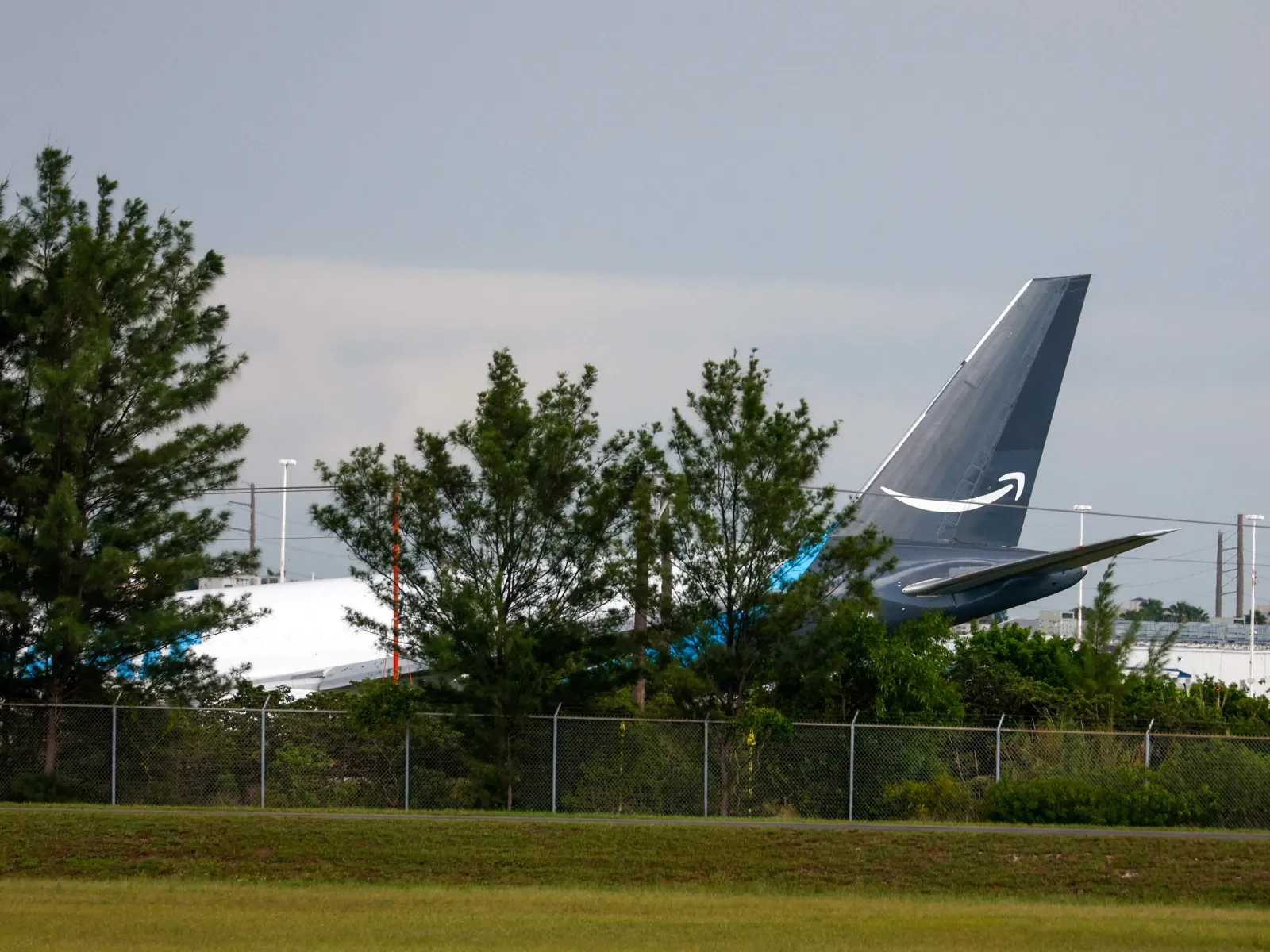
Amazon Prime Air 767 overshoots Miami runway, killing at least 5
The Boeing 767 freighter from San Juan struck vehicles and erupted in flames, prompting a ground stop and a fresh NTSB investigation into Amazon's air cargo network.

Death sentence for TV presenter Sarah Khalifa: Egypt's drug case hits media
The sentencing of Sarah Khalifa and 11 others underscores the severity of Egypt's anti-drug laws and the exposure of public figures to capital punishment.

Tim Cook steps down as Apple CEO, stays on as chair with $45M equity
The 'Trump whisperer' keeps his White House and Beijing access as Apple navigates tariffs and a $4.6 trillion market cap.