

South Koreans are 16% less worried about AI than excited
While the US is spiraling the other way, Seoul is building “AI bus stops” and hiring robots, fast.
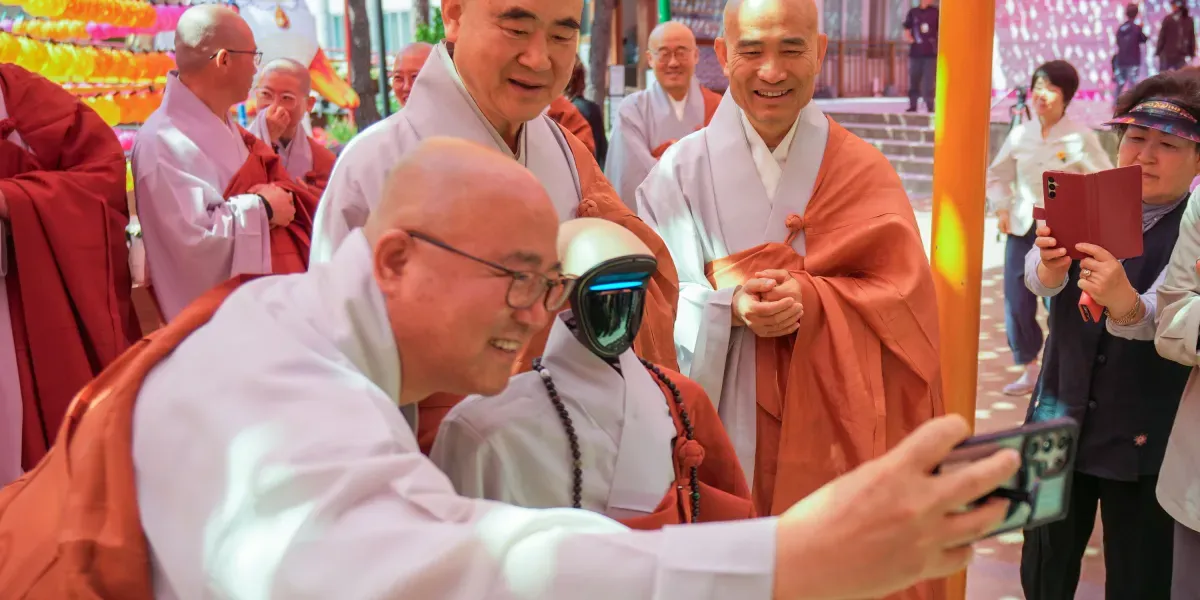
South Korea’s AI push is both cultural and policy-driven, from daily chatbot use to government adoption like AI textbooks and eldercare robots. For executives, it signals a regulatory and demand environment where speed beats caution, even as job displacement fears rise.
A machine scanned the author’s face and passport at an unmanned immigration checkpoint on arrival in Seoul. On the subway, people were glued to their phones on “flawless 5G even underground,” while ads celebrating K-pop idols played on LED screens. Then at a crosswalk, a cartoon-eyed robot on wheels waited to deliver dinner. This is the point: South Korea is treating AI like infrastructure, not a future fantasy.
And the sentiment data matches the street reality. Only 16% of South Koreans say they are more concerned than excited about AI, the lowest of any of the 25 countries surveyed by the Pew Research Center. Meanwhile, 50% of Americans report being more worried than excited. That gap is not just a cultural curiosity. It explains why Seoul is able to street-test everything from AI webcomics and virtual K-pop idols to “AI bus stop” kiosks that answer rider questions in multiple languages, announced by the Gangnam district in June.
Underneath the daily convenience is an aggressive national agenda. South Korea’s government has designated an AI-powered Fourth Industrial Revolution as the country’s path forward and “aggressively promoted and invested in it,” according to Chihyung Jeon, a professor of science and technology policy at the Korea Advanced Institute of Science and Technology. The story of how this works is familiar for anyone who has watched South Korea modernize: it rose from Korean War devastation by turning manufacturing into a platform. In the 1970s it manufactured steel and ships, then semiconductors in the 1980s, broadband in the 1990s, and smartphones in the 2000s.
Today, the AI economy has a physical backbone in memory chips. Samsung and SK Hynix supply most of the world’s high-bandwidth memory chips, which power the cutting-edge Nvidia hardware used to train AI models. South Korea’s stock market also reflects this orbit: Kospi surged to record highs in 2026, powered by soaring shares of both companies, each valued above $1 trillion. That capital gravity matters for executives, because it helps explain why AI adoption can move quickly from pilots to real deployments. When your national economy is tightly linked to the supply chain of the compute that trains models, enthusiasm is not just a mood. It is balance sheet fuel.
The policy push is now explicitly tied to sovereign capability. Lee Jae-myung, president of South Korea, has pledged to vault the country into the ranks of the “top three AI powers” alongside the US and China. After taking office in 2025, he launched the Presidential Council on National AI Strategy to help buy massive amounts of computing power and launched a sovereign AI foundation model project that funds Korean companies to develop homegrown AI models. The government also supported semiconductor titans, including Samsung and SK Hynix, through generous tax credits and low-interest financing.
But there is a tradeoff baked into the approach. South Korea’s policy posture prioritizes accelerating AI development over safety considerations. In 2024, the South Korean legislature passed the AI Basic Act, described in the source as one of the world’s first comprehensive AI laws, intended to promote AI development and establish light-touch regulatory guardrails. The tradeoff shows up in the numbers too. Seventy percent of South Koreans say advancing science and medicine through AI innovation is a bigger priority than protecting industries through regulation, according to the 2026 Stanford AI Index.
That same index ranked South Korea as having the third largest number of notable AI models in the world, based on criteria such as state-of-the-art advancements or high citation rates. The implication for anyone building AI products, deploying enterprise AI, or raising capital: the bar for “real” is lower, because the ecosystem rewards rapid iteration. South Korea is a small country trying to punch above its weight, and AI is the multipliers category.
The blind spot is that speed can crowd out reflection on AI’s broader societal impacts, a point Chihyung Jeon raises directly. “Because the national agenda on AI prioritizes economic development,” he says, “there isn’t much reflection on the social, political, ethical dimensions of the technology.” The source includes a concrete example: in 2025, South Korea faced backlash for rolling out AI textbooks riddled with factual inaccuracies and data privacy risks without testing them first in a pilot program to evaluate how they affect student learning.
At the same time, adoption is not translating into calm. Despite optimism, South Koreans are still worried AI could displace them from their jobs. After Hyundai announced in January that it will deploy Atlas humanoid robots across its car factories, the Hyundai Motor Group union protested vehemently. The union said, “Without labor-management agreement, not a single robot using new technology will be allowed to enter the workplace.” And on the sentiment side, 64% of South Koreans fear AI could displace human labor and exacerbate inequality, though 52% believe it could also increase productivity. That tension is the real operating environment for leaders: the public may be comfortable being early, but it is not comfortable with being replaced.
Even personal life is becoming a playground for AI while job risk stays in the background. On a recent Friday night in the Seoul Central Market, the author went out to a pocha with cousins. A cousin asked if the author had asked ChatGPT about saju, a traditional Korean fortune-telling practice. A 29-year-old insurance agent in Seoul, praying for a new job and a boyfriend, said asking ChatGPT about work and dating was her favorite pastime. The source adds that 46% of South Koreans in their 20s have used a chatbot to read their fortunes, according to a Korea Gallup survey. Another cousin asked ChatGPT for tips on trading stocks. ChatGPT, in this telling, is a portal out of reality into a better future.
The strategic stakes are obvious for executives watching from other markets. If South Korea’s 16% “more concerned than excited” baseline is the early warning system, then other countries that chase Seoul’s speed may also import Seoul’s political and labor friction later. Leaders in adjacent ecosystems should assume the demand for AI will keep rising, but the backlash risk will concentrate in where AI touches education accuracy, privacy, and employment transitions.
This story's Key Insights and Take-aways are locked.
Create a free account to unlock Executive Actions for one credit.
Register to UnlockAlways free for Executives Club members. Join the Club
More in Technology

Nvidia's $89B data center quarter: the 9 companies cashing in
The AI buildout is minting fortunes beyond GPUs, and memory, cloud, and cooling suppliers are riding the same wave.
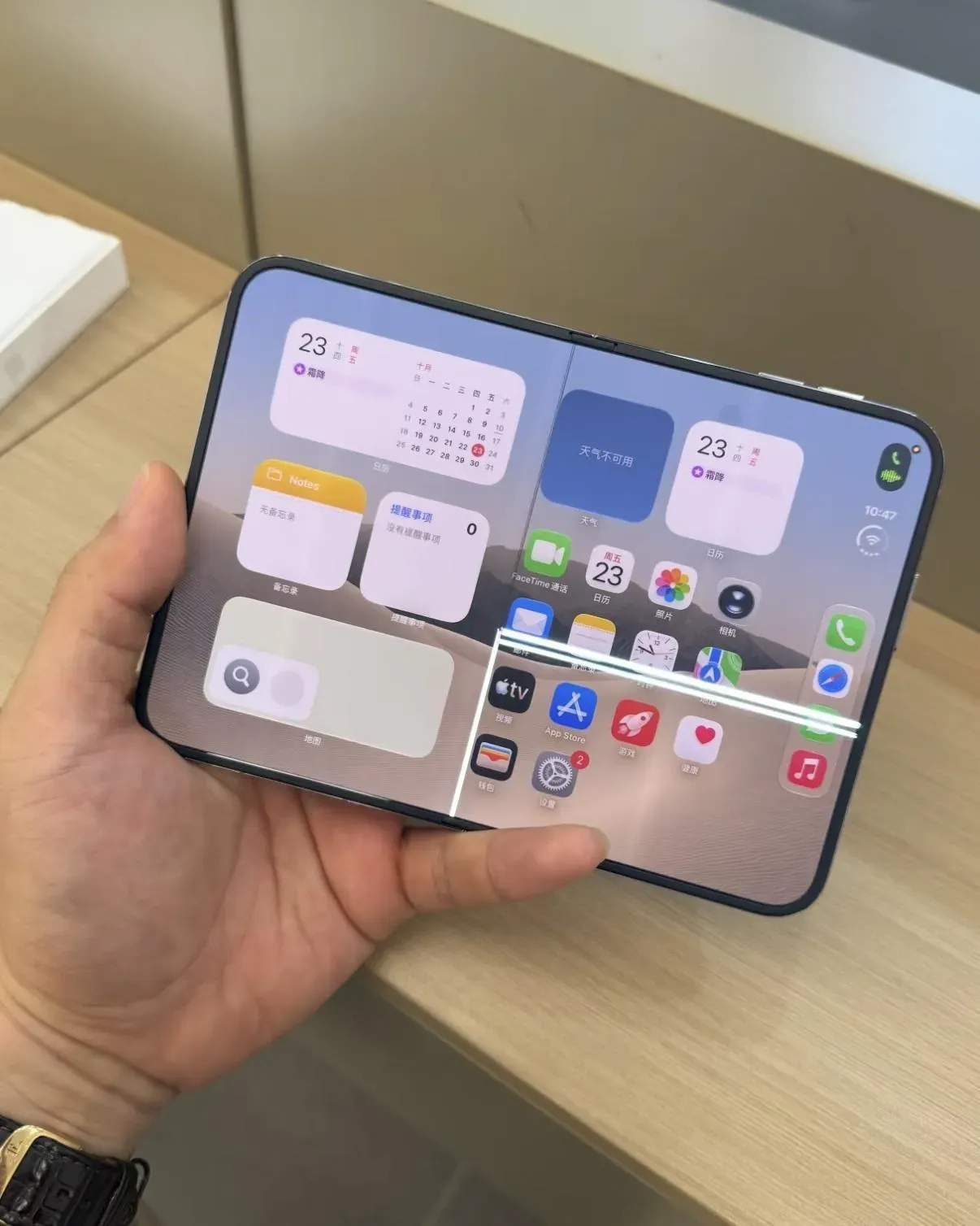
A YouTuber dissected the iPhone Duo and thinks he found crackgate's cause
CuriousHagi's teardown of Apple's foldable reveals a gear-like hinge that may explain why screens crack in the same spot within hours.

Google quietly links your phone number to every Android account on your SIM
Adding a SIM now ties your phone number to all Google accounts - and future accounts inherit it. Here's the security and privacy stakes.