
Southwest ships Texas jet fuel to Los Angeles by boat for first time amid supply worries
The airline hired a Houston-to-LA fuel shipment this spring to add a backup when jet fuel supply gets tight.
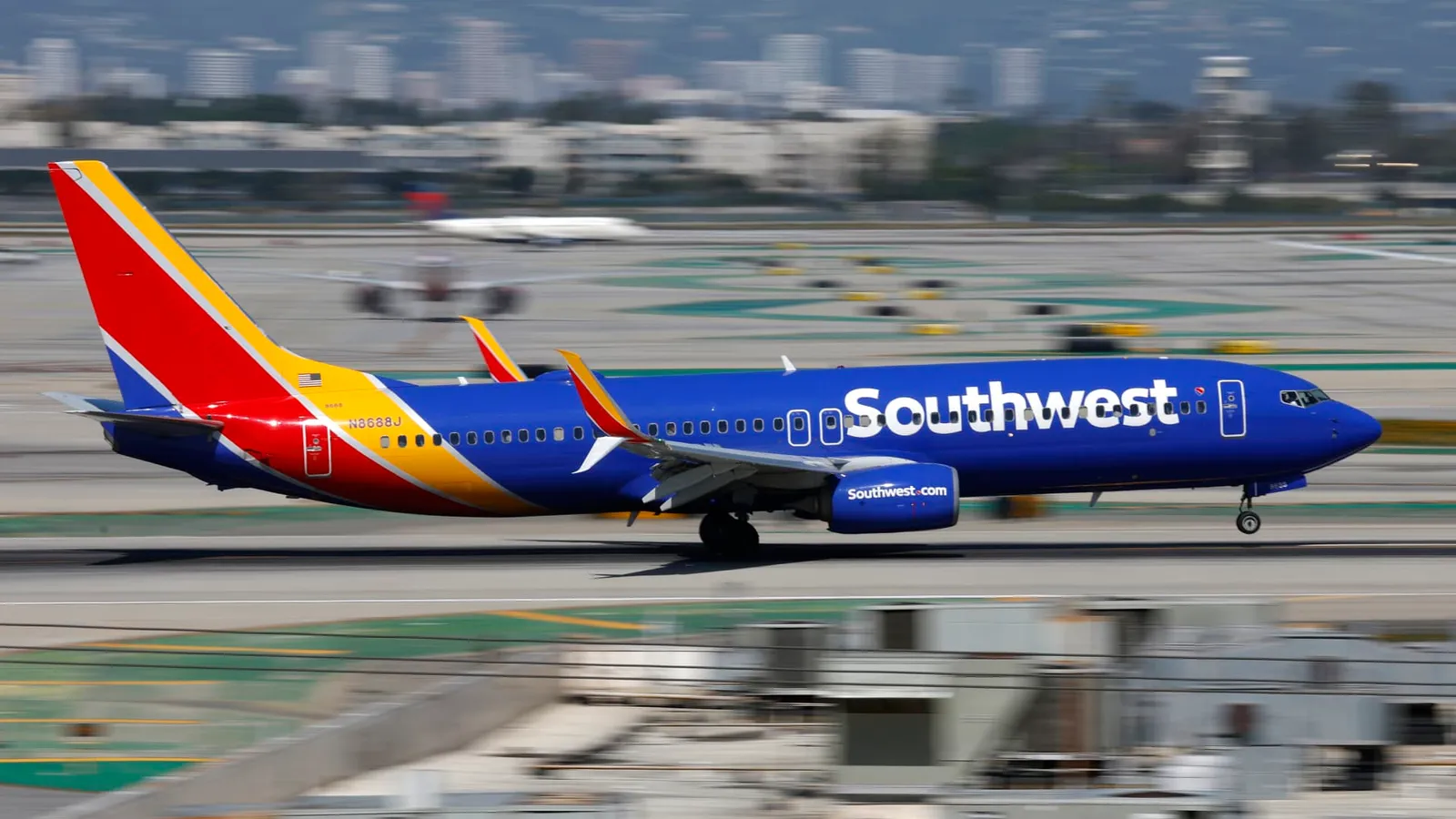
Southwest Airlines hired a ship this spring to send jet fuel from Houston to Los Angeles for the first time amid supply worries. For executives, it signals how quickly airlines are turning contingency logistics into an operational and cost-risk lever.
Southwest Airlines put Texas jet fuel on a ship to Los Angeles for the first time, and it did it this spring as a hedge against potential supply shortages. The basic move is simple: instead of relying only on the normal fuel supply chain, Southwest hired a vessel to route fuel from Houston to LA if conditions tighten. That is not a headline about a dramatic product change or a new route. It is a supply continuity decision, and for airlines, continuity is everything.
Because the original reporting is direct, the stake is direct too. Southwest hired a ship this spring to send fuel from Houston to Los Angeles in case of supply shortages. In practical terms, that means the company was planning for a world where demand or distribution friction could make conventional sourcing harder, slower, or more expensive. Jet fuel is one of the biggest controllable inputs airlines have, and even brief disruptions can ripple through flight schedules, margins, and the reliability expectations customers treat like a baseline.
To understand why Southwest would go through the hassle of maritime logistics, you have to remember how fuel typically flows. Airlines generally buy jet fuel through intermediaries and infrastructure networks that connect producers, pipelines, terminals, and airport fueling systems. When everything runs normally, that network is optimized for speed and predictable delivery. But “optimized” is not the same as “guaranteed.” During supply squeezes, it is not just about whether fuel exists. It is about whether it arrives at the right place, in the right form, on time, with the right counterparties lined up.
That is where the “boat to LA” detail matters. Houston and Los Angeles are both major nodes in the U.S. energy and logistics ecosystem, and maritime shipments are one of the tools companies can use to move bulk commodities when the usual pathways are stressed. Southwest’s decision to hire a ship as a contingency suggests the company was actively managing supply risk, not just tracking it. Even if the backup shipment never becomes necessary, the preparation itself reduces uncertainty in the planning process, especially when flight schedules and hedging strategies depend on assumptions that can be disrupted.
There is also a board and governance angle, even if the source text stays focused on the logistics. Supply disruptions are operational risks, but they can quickly become financial risks. If a shortage forces an airline to pay materially more for fuel, reroute flights, or accept delays, that can feed into everything from investor reporting to labor planning to aircraft utilization. Fuel is not only a cost line. It is also a timing dependency for operations that run on tight schedules. When companies treat logistics as a contingency plan rather than a slow-moving administrative task, it changes how quickly management can respond when conditions shift.
Regulatory and contractual context is part of the backdrop too. Energy supply and transportation involves a web of rules and counterparties. Airlines do not typically have the freedom to manufacture fuel or build their own distribution chain overnight. They operate inside existing infrastructure and contractual frameworks. That makes “hiring a ship” meaningful, because it is an incremental control lever inside a constrained system. It is also a reminder that even highly operational industries are learning to build redundancy like tech companies do, where resilience planning can be as important as core execution.
For peers, the second-order message is not “everyone should start shipping fuel by boat.” It is that contingency logistics is becoming part of standard risk management for airlines facing supply uncertainty. If Southwest can add a backup lane from Houston to Los Angeles, other carriers with similar route networks and exposure to jet fuel availability may pressure their own supply teams to demonstrate flexibility. Executives and finance leaders should assume that fuel procurement strategy is increasingly judged on robustness, not just price.
In the end, this is a story about not getting caught flat-footed. Southwest hired a ship this spring to send fuel from Houston to Los Angeles in case of supply shortages, and that first-time move signals the company was preparing for a scenario where normal supply assumptions might not hold. For decision-makers, the real takeaway is operational: treat fuel supply risk as something you can plan for with concrete logistics options, because markets do not wait for perfect conditions.
This story's Key Insights and Take-aways are locked.
Create a free account to unlock Executive Actions for one credit.
Register to UnlockAlways free for Executives Club members. Join the Club
More in Business

Anthropic’s Levant Alpöge cracks the Jacobian conjecture after 87 years
A Harvard valedictorian used Claude to hit a 1939 breakthrough, but the missing “why” is the real problem.

Uber buys Delivery Hero for nearly $15B, vaulting to top food delivery outside China
The deal doubles Uber's dual-services footprint and pushes a ride-and-eats bundling play into 50 more markets.

Epic and Google drop settlement bid, forcing rival Android app stores by July 22
Google told the court it is ready to carry third-party app stores starting Wednesday, July 22.