

SpaceX, Anthropic IPOs Could Force 401(k)s Into Fast-Track Buying
Index providers are rewriting entry rules for giant IPOs, which could push retirement funds into SpaceX and Anthropic sooner than most savers expect.
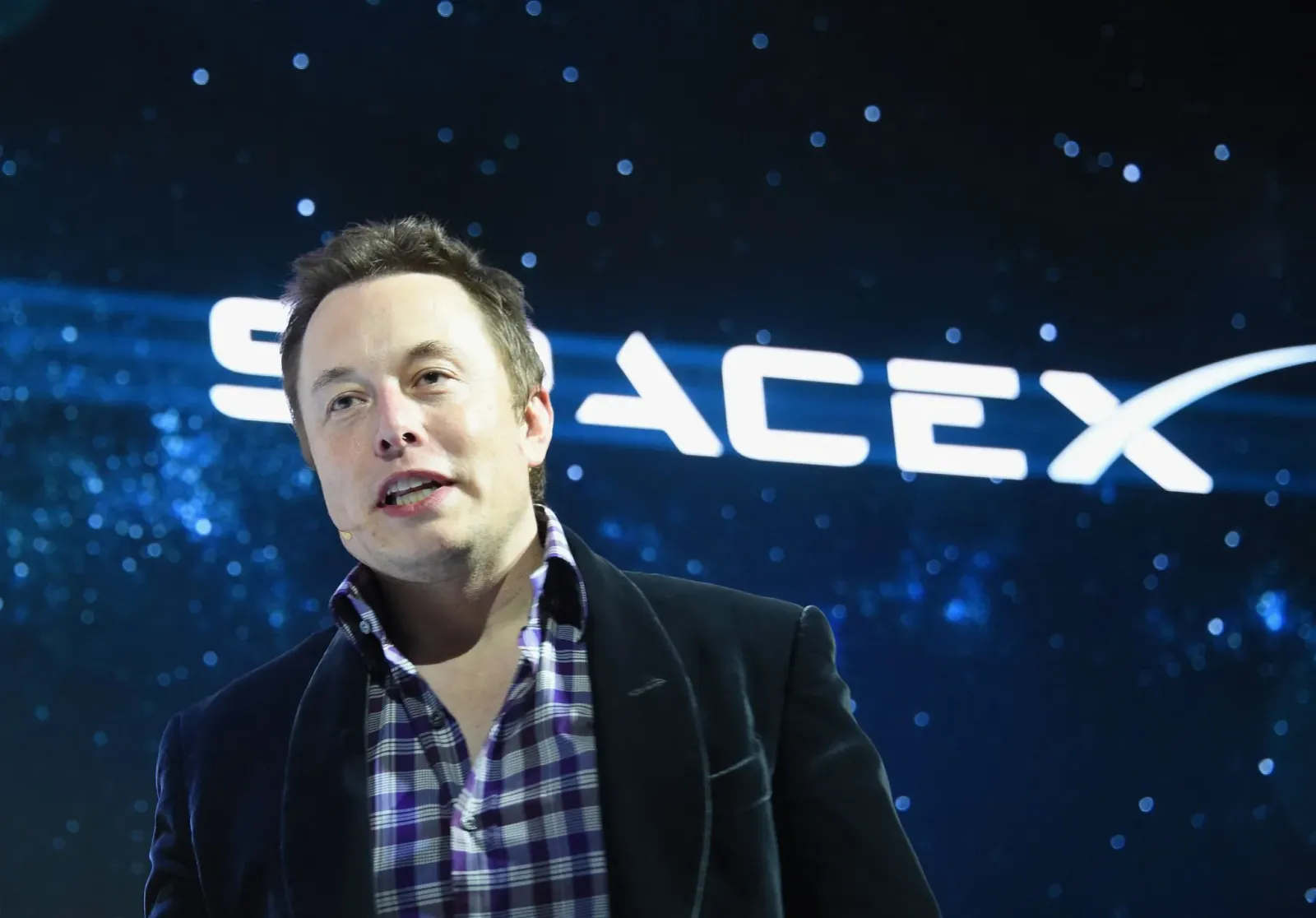
SpaceX and Anthropic are moving toward public listings at valuations so large that index providers are changing the rules to add them faster. That could push index funds inside millions of 401(k)s to buy shares sooner, raising new questions for boards, retirement savers, and regulators.
Two of the most valuable companies in history are heading for public markets, and that is already changing the plumbing of retirement investing. SpaceX is at $1.77 trillion as of Wednesday, Anthropic is expected at nearly $1 trillion, and because those numbers are so large, index providers are rewriting the rules that determine when a new stock can join major benchmarks. In plain English: the companies may not just debut on Wall Street, they may show up inside 401(k)-linked index funds much faster than usual.
That matters because index funds are the backbone of most 401(k)s. These funds are built to track stock market indexes, which means they buy the names that get added to the index whether they have a strong emotional attachment to the company or not. If SpaceX and later Anthropic get fast-tracked into major indexes, ordinary retirement savers could end up with exposure to both, even if they never knowingly decided to own a share. The hook here is not just that these companies are going public. It is that the IPOs may force a structural change in how retirement money gets deployed.
Several index providers have already begun making that shift. Nasdaq and FTSE Russell have recently changed or adopted fast-entry rules that could allow companies like SpaceX to enter major indexes much sooner than they typically would. Under FTSE Russell's new standard, that could happen after as few as five trading days. Nasdaq's version is 15 trading days. Even S&P Dow Jones Indices has reportedly been weighing similar changes. The reason is straightforward: when a company debuts at the scale of SpaceX or Anthropic, leaving it out of the benchmark starts to look less like caution and more like omission.
That creates a powerful downstream effect. If an index adds a stock, the funds that track that index are generally obligated to buy it. So the rule change becomes the mechanism that can push SpaceX, and eventually Anthropic, into retirement portfolios sooner than the old seasoning period would have allowed. Historically, that waiting period existed for a reason. After the dot-com crash, index administrators required companies to trade publicly for a set period, and often show profitability, before inclusion. Tesla, for context, was public for about 10 years before joining the S&P 500. The newer fast-entry rules represent a sharp break from that caution, and critics say the timing is exactly what should worry people.
Elizabeth Wilkins, director of the worker power and economic security program at the Roosevelt Institute, said the old guardrails were built after the dot-com bubble for a reason. "We put in place guardrails after the dot-com bubble for a reason," she told Fortune. "Because we remembered that there's real downside risk to tying retiree savings to the fortunes of not only corporate America generally, but specifically the tech sector." Her concern is not theoretical. If retirement accounts are funneled into indexes that now admit giant IPOs sooner, then savers may get more exposure to high-flying names before the market has had time to sort out whether the hype matches the fundamentals.
Wilkins sees a broader pattern, too. She pointed to a separate Department of Labor proposal that would allow increased investment of retirement savings in private credit and private equity. In her view, these moves reflect the same thing: capital markets' appetite outrunning the protections built for ordinary savers. "In a moment of extreme uncertainty, instead of continuing to rely on those rules to make sure that people are protected from downside risk, we're dismantling them," she said. "We are allowing the kind of insatiable hunger for capital to erode our safeguards for ordinary savers." Her caveat is important, though. Only about six in 10 Americans own retirement accounts at all, so the impact is concentrated among a subset of the population, many of whom are already more financially secure than the average household.
Still, the stakes are bigger than a single IPO. Jesse Fried, a Harvard Law School professor whose recent paper on AI corporate governance scrutinizes the governance structures of OpenAI and Anthropic, said the rule changes make him uneasy. "Changing index rules to accommodate high-profile IPOs makes me uneasy," he told Fortune. "Index fund investors are forced to buy shares that they did not sign up for. The changed rules will also allow index funds to buy shares regardless of price, increasing demand and potentially causing the funds to buy at a temporarily high price." He noted the trade-off is real: if SpaceX or Anthropic performs well after accelerated inclusion, the fast-track decision will look smart in hindsight. But if the shares get added at a frothy moment, index funds could end up amplifying the very enthusiasm that drew attention to the companies in the first place.
Fried also flagged a longer-term governance issue at SpaceX. On Elon Musk's control of the company, he said, "He's locked himself into a position of control of SpaceX forever." That can be a feature for investors in the short or medium term if they value continuity and decisive leadership. But Fried warned that what looks stable now may not look so good in 20 years, because "the world and Elon Musk will have changed considerably." That is the real executive takeaway here: these IPOs are not just a capital markets event. They are a test of whether the rules designed to protect long-term savers can still hold when the companies arriving at the gate are so large that the gate itself starts moving.
For boards, CFOs, and anyone responsible for retirement plan exposure, the question is no longer whether these companies matter. They clearly do. The question is whether the mechanisms that convert public market access into retirement account exposure are still calibrated for a world where a debut can arrive at nearly $1 trillion, or $1.77 trillion, and overwhelm the old waiting period almost by definition. As Wilkins put it, "We have gotten ourselves into a position where we really need to reevaluate: is what's good for SpaceX really good for the vast majority of savers or not?" That is the strategic tension now sitting underneath the IPO buzz.
This story's Key Insights and Take-aways are locked.
Create a free account to unlock Executive Actions for one credit.
Register to UnlockAlways free for Executives Club members. Join the Club
More in Business

Anthropic’s Levant Alpöge cracks the Jacobian conjecture after 87 years
A Harvard valedictorian used Claude to hit a 1939 breakthrough, but the missing “why” is the real problem.

Uber buys Delivery Hero for nearly $15B, vaulting to top food delivery outside China
The deal doubles Uber's dual-services footprint and pushes a ride-and-eats bundling play into 50 more markets.

Epic and Google drop settlement bid, forcing rival Android app stores by July 22
Google told the court it is ready to carry third-party app stores starting Wednesday, July 22.