
SpaceX IPO prices at $1.78tn float, but analysts flag a 'major disconnect' on valuation
Elon Musk's company hits the market Friday at a valuation of $1.78tn after offering at least $75bn.
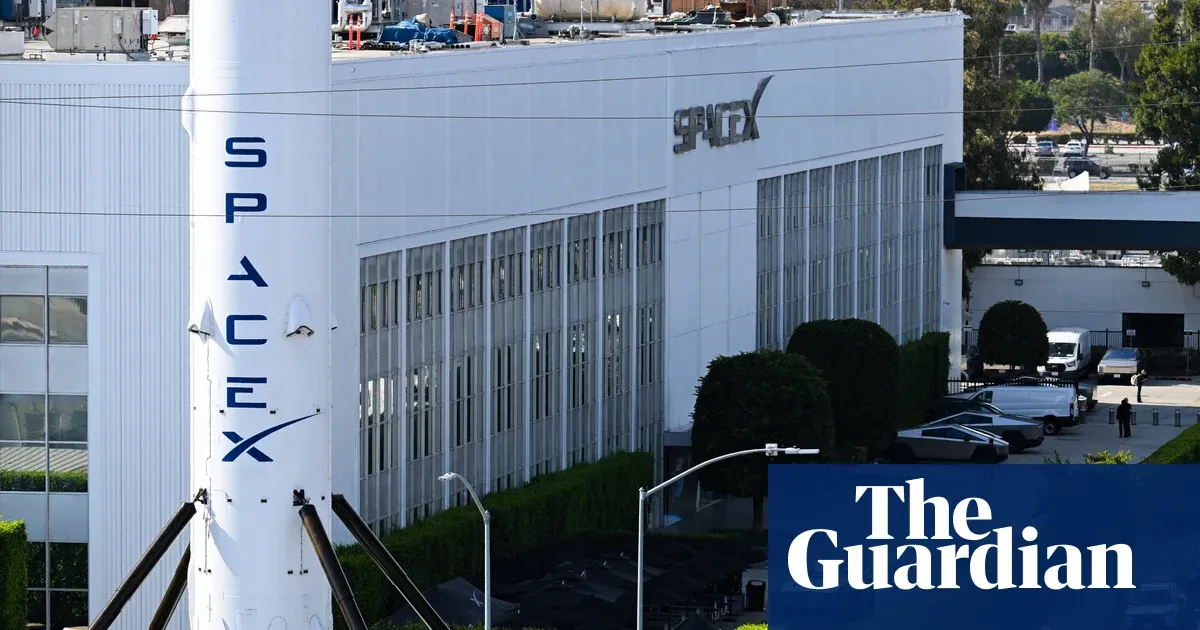
SpaceX, led by Elon Musk, is set to list in the US stock market on Friday at a valuation of $1.78tn after offering at least $75bn of shares via its initial public offering. Analysts warn the pricing may be overvalued, citing a major disconnect between IPO price and underlying fundamentals.
SpaceX is heading for a record $1.78tn float in the US, and Wall Street is already arguing about whether that price makes sense. The space exploration, satellite broadband, and AI company is set to join the US stock market on Friday at a valuation of $1.78tn, after offering at least $75bn of shares to investors through an initial public offering.
This is the part that matters for decision-makers: analysts are warning that there is a “major disconnect” on price. In other words, the size of the float is not just a headline flex. It is a live test of whether public markets are underwriting SpaceX’s future at a level that could prove fragile if expectations do not land exactly where investors are paying them to.
To understand why the valuation is such a flashpoint, it helps to remember what SpaceX represents in the market. It sits at the intersection of space launch economics, satellite broadband distribution, and AI-driven systems. Those areas are often valued on long-dated growth and platform potential rather than near-term earnings, which can create wide gaps between what insiders expect the company will become and what the public market is willing to pay today.
But this IPO is also happening in a very specific capital-market context: the bigger and more hyped the offering, the harder the market has to work to justify the price after trading begins. A record $1.78tn float is not merely “large.” It raises the stakes for everyone who touches the deal, including underwriters, institutional investors, and any board watching comparables get repriced. When a company lists at that scale, subsequent price action becomes a benchmark. Other high-growth issuers do not just watch SpaceX. They feel it.
Regulators and market rules create another layer of pressure, even when they are not driving a story’s day-to-day drama. For an IPO of this magnitude, disclosures and financial reporting standards become the shared language between the company and investors. The market then tries to translate that language into a valuation. If analysts believe there is a disconnect, it is essentially a disagreement about what the disclosed information implies for the company’s long-term value.
The “disconnect” framing also matters because it signals how the story could evolve after the first trading session. If the market interprets the IPO price as overly optimistic, early investors may push for repricing quickly, which can lead to volatility not only for SpaceX but for the broader category it is associated with. That can include satellite broadband peers, launch-adjacent suppliers, and any company investors are using as an “AI plus infrastructure” proxy.
For boards and C-suite teams at other high-growth businesses, the lesson is not that the valuation is automatically wrong. The lesson is that the market’s expectations are now embedded at a valuation level so high that even small deviations from the implied story can become expensive. A $1.78tn valuation means investors are paying in advance for years of progress. When analysts say overvalued, they are essentially warning that those years need to go right, and go right fast.
For executives managing relationships with public market investors, this kind of IPO puts a spotlight on how to communicate progress after listing, and how quickly milestones are needed to match the price investors are underwriting. It also raises the importance of clarity around growth drivers across space exploration, satellite broadband, and AI. Investors will not just ask whether the technology is real. They will ask whether the business model is translating reality into scalable financial outcomes.
SpaceX’s debut, then, is not only an event for one company. It is a referendum on how the market prices ambition, and it is happening at a scale that can bend sentiment across the high-growth spectrum. With an IPO that can make Elon Musk the world’s first trillionaire, the strategic stakes are immediate: this listing will be watched, compared, and used as a pricing reference point as other companies, investors, and boards decide what “worth it” looks like in public markets.
This story's Key Insights and Take-aways are locked.
Create a free account to unlock Executive Actions for one credit.
Register to UnlockAlways free for Executives Club members. Join the Club
More in Business

Anthropic’s Levant Alpöge cracks the Jacobian conjecture after 87 years
A Harvard valedictorian used Claude to hit a 1939 breakthrough, but the missing “why” is the real problem.

Uber buys Delivery Hero for nearly $15B, vaulting to top food delivery outside China
The deal doubles Uber's dual-services footprint and pushes a ride-and-eats bundling play into 50 more markets.

Epic and Google drop settlement bid, forcing rival Android app stores by July 22
Google told the court it is ready to carry third-party app stores starting Wednesday, July 22.