

SpaceX IPO turns into a $1.77T orbital economy bet investors pin around $2T value
The orbital infrastructure thesis is the real IPO story, and it could force regulators and markets to rethink what space funding is for.
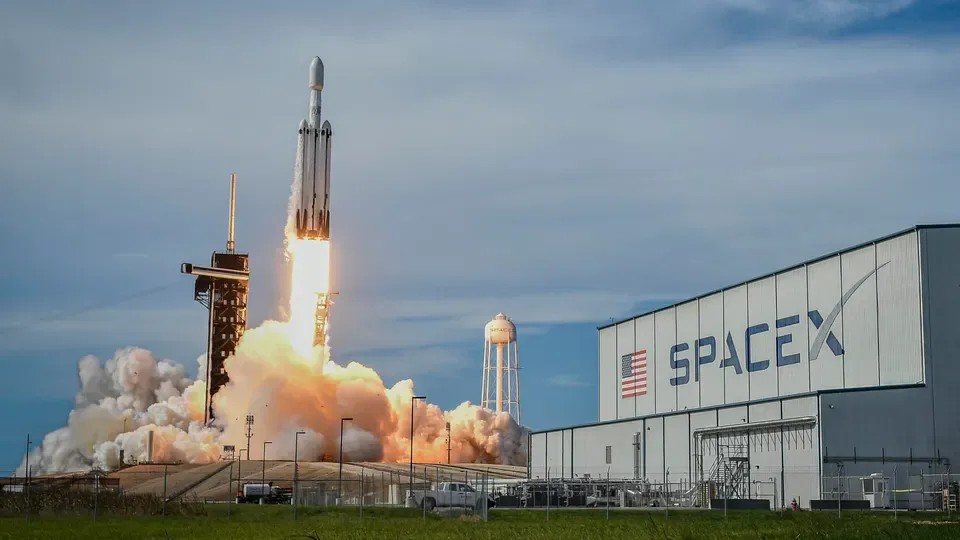
Forbes frames SpaceX's IPO as a massive bet on building infrastructure for a new economy above Earth. The implication: investors are positioning the company for roughly $2 trillion value, reshaping how decision-makers evaluate space as an investable platform business.
SpaceX's IPO, as Forbes describes it, is not just another high-profile public-market moment. It is being pitched as an economic infrastructure play in orbit. The centerpiece is the headline number: a $1.77 trillion bet on an “orbital economy.” In other words, the market narrative is that SpaceX would not merely launch rockets. It would help construct the layers of capability that businesses could build on in space, from transportation to services that depend on reliable access to the orbital environment.
That is why investors are showing up with a staggering valuation framing. Forbes ties the thesis to why SpaceX “could be worth $2 trillion,” essentially treating the IPO as a proxy for a future that looks less like occasional space missions and more like an ongoing utility-like ecosystem operating above Earth. For decision-makers, the immediate question is simple: is the IPO underwriting an industrial platform, or is it underwriting execution risk? Forbes is pointing you at the first interpretation, and it matters because the difference changes how capital, risk, and timelines should be modeled across the entire space sector.
To understand what is really at stake, you have to look at what “infrastructure of an economy” means in this context. Infrastructure businesses earn their money by reducing uncertainty for everyone else. If you believe SpaceX can repeatedly deliver access to orbit and the capabilities that ride on that access, the upside can compound. Customers build around the reliability. Partners integrate around the standard. Over time, the issuer is not just selling launches, it is shaping how the market functions.
Now connect that to why IPO narratives get so aggressive in sectors like this. Public markets price future cash flow expectations, not just current revenue. For a company like SpaceX, where the vision is bigger than a single product cycle, investors are effectively paying today for a long-term system. That is where the $1.77 trillion figure becomes more than a flourish. It signals the magnitude of capital allocation investors believe is ultimately needed for an orbital economy, and therefore the magnitude of enterprise value they believe can be captured by the firm positioned to build the backbone.
Regulatory framing is also part of the subtext, even if Forbes is focused on the valuation thesis rather than new rulemaking. Space is a domain where governments set the guardrails, including licensing and oversight, and where international norms influence what private players can do at scale. When the narrative shifts from “space flights” to “orbital infrastructure,” the regulatory relationship can change in feel. Regulators can go from approving activities to monitoring systems that have broader downstream impact, including safety, spectrum and communications considerations, and the operational reliability that other commercial users depend on.
This matters for boards and executives because the orbital-economy framing changes stakeholder expectations. If investors see SpaceX as a foundational platform, the company will be held to a higher standard of consistency and scalability. That can affect how management prioritizes roadmap execution, how risk is communicated, and how governance debates unfold around capital intensity. A platform thesis often demands patience, but it also demands credibility: milestones become the language of valuation.
There is also a competitive second-order effect. When a company is marketed as a potential $2 trillion asset, it can pull attention away from the rest of the ecosystem. That can be good for the whole category, but it can also concentrate capital and reduce funding diversity for smaller players. If the market believes one dominant provider could capture a large share of the value chain, peers will need to sharpen their differentiation, whether that means specializing in components, services, or downstream applications that do not require the same kind of infrastructure dominance.
The strategic stakes for decision-makers across adjacent industries are immediate. Forbes is telling you that the IPO conversation is really about whether investors think the “above Earth” economy becomes real in a way that looks investable, scalable, and repeatable. If that belief holds, it changes how executives model growth in space-adjacent ventures, how investors underwrite risk, and how regulators anticipate the practical consequences of commercial operations. In that world, SpaceX's public-market moment is not a one-day headline. It is a valuation bet that could set the pricing and expectations for the next decade of orbital business.
This story's Key Insights and Take-aways are locked.
Create a free account to unlock Executive Actions for one credit.
Register to UnlockAlways free for Executives Club members. Join the Club
More in Business

Anthropic’s Levant Alpöge cracks the Jacobian conjecture after 87 years
A Harvard valedictorian used Claude to hit a 1939 breakthrough, but the missing “why” is the real problem.

Uber buys Delivery Hero for nearly $15B, vaulting to top food delivery outside China
The deal doubles Uber's dual-services footprint and pushes a ride-and-eats bundling play into 50 more markets.

Epic and Google drop settlement bid, forcing rival Android app stores by July 22
Google told the court it is ready to carry third-party app stores starting Wednesday, July 22.