
Stacker’s Noah Greenberg turns “viral hiring” into $10M distribution, without venture funding
Fortune breaks down how Greenberg’s LinkedIn job posts argue journalism is changing, and Stacker is scaling it.
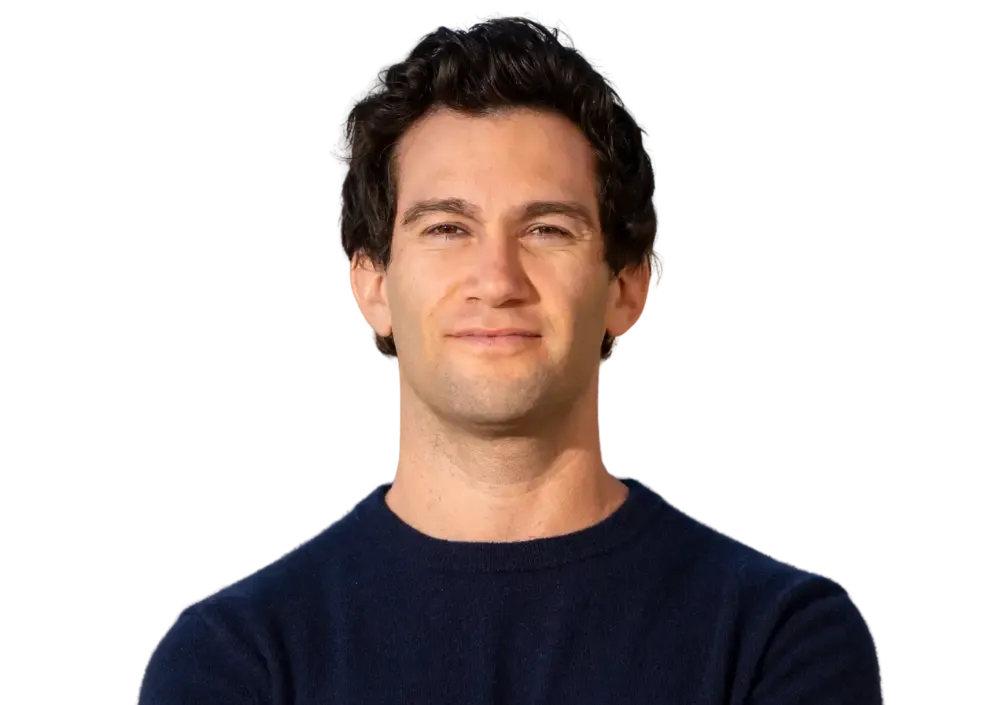
Noah Greenberg, CEO of content syndication company Stacker, says his LinkedIn job-listing marketing started because “no one had heard of us” and “caught fire,” helping Stacker grow from a $3 million run rate to north of $10 million in under two years without venture capital. The shift matters because more editorial roles now sit inside tech and brand organizations, not just traditional newsrooms.
Every few weeks, Noah Greenberg posts job listings on LinkedIn that reliably stop journalists mid-scroll. Not just any listings either. The pattern is specific: editor-in-chief roles, content leadership jobs, and newsroom-adjacent titles showing up at major brands and platforms, sometimes at pay that sounds like it belongs in a different universe.
Greenberg, the CEO of Stacker, openly admits the stunt is a marketing ploy. He told Fortune the reason he started posting “two years ago was because no one had heard of us.” His “cheap trick” was simple: share a list of those kinds of jobs once a week. But the real point is what those job posts have come to represent. Greenberg is essentially cataloging who now funds, builds, and distributes the kind of stories that used to live almost exclusively inside traditional newsrooms.
And Stacker is not a side project. Behind the bait is a business that Fortune reports has grown from a $3 million run rate to north of $10 million in under two years, and has done it “without raising a dollar of venture capital.” In other words, this is not just a social-media thesis. It is a scalable distribution system built around editorial production and syndication.
The jobs Greenberg points to reflect a structural shift in media power. He told Fortune that the “tech editor at the Wall Street Journal is now the managing editor at NVIDIA,” referring to Shara Tibken. He also said Robinhood has purchased multiple newsletters, naming Chartr and MarketSnacks, and that it hired Josh Topolsky, described as a former Verge, Vox, and Bloomberg editor, to be editor-in-chief. In Greenberg’s view, the exact label matters less than the work existing. “To me,” he told Fortune, “it’s less important what it’s called, and more important that the work exists.”
That argument lands, because it is not coming from vibes. Stacker’s model is built to move content efficiently while insisting on editorial standards. Brands pay Stacker to help produce and distribute data-driven features. Stacker then runs each piece through an in-house editorial team before it reaches the newswire. Several thousand news outlets, reported as 90% local, pull from the feed at no cost and without obligation. Fortune lists partners including McClatchy, Lee Enterprises, Gray TV, and the Local Media Consortium.
Last year, Greenberg says Stacker Connect revenue exceeded $5 million and is on pace for $10 million in 2026, based on records Fortune reviewed. The company also makes revenue from a services or studio business and selling advertising on its site. Crucially, Fortune reports Stacker has never raised outside funding. That matters strategically because it suggests the model is being validated through distribution economics and partner adoption, not just investor narrative.
If there is a fear behind the whole “brand journalist” debate, it is that this is less about journalism and more about packaging. Greenberg says he is not “celebrating the death of journalism.” What he is tracking, per his framing, is where the incentives have moved. Brand content, in this ecosystem, is supposed to be improved by distribution. Greenberg described “hanging distribution as a carrot” to incentivize brands to improve quality. Stacker’s internal standards are stricter than some might expect, according to Fortune. For example, Instacart cannot describe itself as “the number one food delivery service in the country.” Experian cannot slip in a line recommending its credit-boosting product. And a recent piece from a shipping logistics company on the impact of tariffs was reportedly sent out untouched because the underlying data was real and the story was newsworthy.
This is where the people featured in Greenberg’s viral postings become the clearest signal that the job labels are real. Tracy Middleton spent about 20 years in magazines, including Men’s Health and Women’s Health, and served as editor-in-chief of Yoga Journal before joining Hone Health, a telehealth clinic and longevity platform, nearly five years ago to build its editorial operation. Middleton calls herself a “brand journalist.” Her team includes an executive editor from Reader’s Digest, Prevention, and U.S. News & World Report and an SEO or GEO specialist who went to journalism school, which she described as a “unicorn.”
Middleton’s proudest story, as Fortune reports, began with patient data, not an editorial meeting. After joining Hone, she noticed many members were military veterans. She started asking why, and the answer became a medical story: traumatic brain injury, chronic stress, and sleep deprivation during service contribute to hormone imbalances. Fortune says the Veterans Affairs Department was reportedly not addressing these issues adequately, based on interviews with veterans. Middleton called the VA for comment, interviewed former servicemembers, used an independent fact-checker, and published a deep dive. She argued the traditional outlets she came from might not have been able to produce it “without the insight” of seeing the backend data.
Middleton also pointed to an external credibility marker: the story won an award from the Association of Health Care Journalists. That matters because it is one of the few bridges between “owned content” and traditional editorial legitimacy. If you are a platform, an investor, or a newsroom leader, awards are not a substitute for trust. But they are evidence that in some cases, brand-funded journalism can mimic the reporting process, not just the publishing format.
At Chime, Anneken Tappe represents a different path. Fortune describes her as a former economics reporter at CNN and Marketwatch who now has a content leadership role at the fintech company, where she is clear about the trade-off. She told Fortune that being on a breaking news desk is “exhilarating,” but she says her new role still uses the same story instincts, just with “corporate storytelling” stakes. The difference, in her framing, is that the work is “at the pulse of your company,” and the stakes are the business itself.
So what is the second-order implication for executives reading this? Greenberg’s LinkedIn job listings are not just a recruiting tactic. They are a public map of where editorial talent is being pulled when budgets, distribution, and product strategy start treating content as infrastructure. The board-level question becomes less “is this journalism?” and more “who owns the pipeline that turns proprietary insight into publishable impact?” As Stacker scales from $5 million to an expected $10 million in 2026, without venture capital backing, the answer looks increasingly like a blend: editorial muscle inside companies, then distribution amplified through syndication networks that place stories into thousands of outlets, often without charging local newsrooms for access.
This story's Key Insights and Take-aways are locked.
Create a free account to unlock Executive Actions for one credit.
Register to UnlockAlways free for Executives Club members. Join the Club
More in Business

Anthropic’s Levant Alpöge cracks the Jacobian conjecture after 87 years
A Harvard valedictorian used Claude to hit a 1939 breakthrough, but the missing “why” is the real problem.

Uber buys Delivery Hero for nearly $15B, vaulting to top food delivery outside China
The deal doubles Uber's dual-services footprint and pushes a ride-and-eats bundling play into 50 more markets.

Epic and Google drop settlement bid, forcing rival Android app stores by July 22
Google told the court it is ready to carry third-party app stores starting Wednesday, July 22.