
Steam Machines start at $1,049 and top at $1,428 as Valve sets the price floor
Valve’s Steam Machine hybrid PC pricing makes the bet explicit: are buyers willing to pay a console premium?
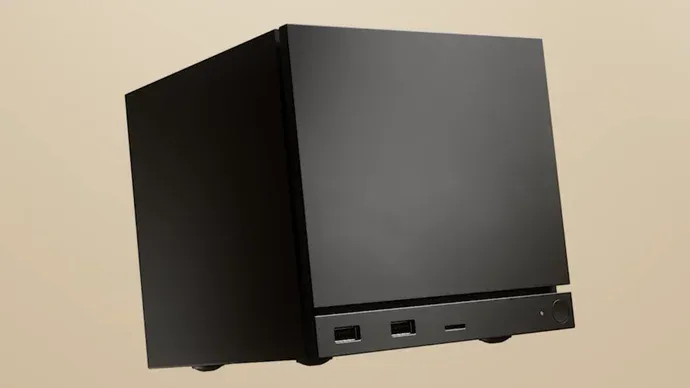
Valve has revealed launch prices for its Steam Machine console/PC hybrid, starting at $1,049 for a 515GB model without a controller and rising to $1,428 for a 2TB machine with a controller. For investors, retailers, and gaming platform operators, the price range sharpens the commercial thesis and limits how broadly this can scale at launch.
Valve finally put a number on its Steam Machine console/PC hybrid ambition, and it is not a rounding error. Launch prices will start at $1,049 for a 515GB machine without a controller, then climb to $1,428 for a 2TB model that includes a controller. In other words: even the “entry” configuration is priced like a serious gaming purchase, not an impulse console replacement.
Those figures matter because Steam Machines are not just hardware. They are a distribution play for Steam in a living-room form factor, and pricing is the clearest signal of how Valve expects demand to work. Analysts quoted in the GamesIndustry.biz piece react to the new price reveal with a blunt framing: “This is going to be a niche device.” That is the crux. If your starting price is $1,049, you are not optimizing for mainstream households, you are optimizing for a smaller segment that already wants a PC-like library, accepts tinkering or variability, and is willing to pay for the convenience of living-room packaging.
To understand why the niche read is so plausible, look at what Steam Machines are trying to combine. Traditional consoles typically bundle hardware, OS, and controller into a tight value proposition. PCs, on the other hand, give customers broad choice, upgrade paths, and a path to performance scaling over time, but often with more complexity. Steam Machines attempt to meet in the middle: a curated PC experience with console-like setup. The problem is that the middle is expensive. When Valve’s configurations start above $1,000, the buyer has to believe the hybrid experience is worth paying for now, not later.
There is also an incentive mismatch lurking underneath the numbers. For Valve, the upside is ecosystem gravity: keep more people in Steam, keep the storefront relevant across devices, and pull hardware into Steam’s orbit. For customers, the upside is access to a Steam library with a simpler front-end. But a $1,049 to $1,428 range shifts the decision from “Do I want Steam on the couch?” to “Am I comfortable paying a premium versus a traditional console or a conventional desktop?” At that price point, buyers can compare performance per dollar, look for game availability and compatibility, and weigh whether they would rather buy a standard PC where upgrades are straightforward.
Retail and partners also feel the pressure. Even when a platform is compelling, initial pricing shapes inventory risk and marketing expectations. A niche device can still succeed, but it typically requires targeted distribution, careful expectations, and messaging that fits the buyer profile. The GamesIndustry.biz coverage centers on analysts reacting to the price reveal, and that reaction is basically a warning label for go-to-market teams: don’t forecast console-level unit velocity on day one. Instead, plan for a smaller funnel, higher scrutiny per buyer, and a longer path to mainstream awareness.
Regulatory and platform-framing questions are not the headline here, but they matter in the background for executives tracking consumer tech. Hardware launches, especially those positioned as gaming devices, tend to intersect with consumer protection scrutiny around pricing clarity, advertised specifications, and after-sales support. Even without any new regulatory moves mentioned in the source, the launch price puts more onus on Valve and partners to deliver what customers believe they are paying for, particularly across different storage tiers like 515GB and 2TB, and across whether a controller is bundled or not.
The second-order implication for the broader industry is that Steam Machines are effectively defining a boundary condition for console-like PC hardware. The price floor tells other platform players: if you want to sell “PC, but for the couch,” you likely need to either bundle enough value to justify the premium or accept a niche starting point. In the short run, that affects investor thinking about TAM assumptions and profitability timelines. In the medium run, it shapes what partnerships look like, how retailers structure promos, and how developers prioritize optimization for specific hardware targets.
For executives in gaming hardware, platform strategy, and commerce, the strategic stakes are straightforward. Valve’s $1,049 starting price and $1,428 top price with a controller do not just tell you the cost of entry. They tell you how Valve expects buyers to behave. If the device is niche, then success will depend on retention, user experience, and game ecosystem strength more than sheer volume. If Valve can keep the Steam promise compelling at that price, Steam Machines can still carve out a loyal audience. If it cannot, the niche label becomes an outcome, not an assessment. Either way, today’s pricing reveal turns what was mostly hype into a real business test.
This story's Key Insights and Take-aways are locked.
Create a free account to unlock Executive Actions for one credit.
Register to UnlockAlways free for Executives Club members. Join the Club
More in Entertainment

Elizabeth Banks is directing the Magic School Bus live-action movie
The 1990s cartoon gets a live-action reboot, and Banks brings credibility, clarity, and a fast route to broad audiences.

Liam Payne’s $29M estate goes by British intestacy to his 9-year-old son
Court documents show Payne died without a will, triggering British intestacy rules and forcing a specific family-first distribution plan.

David Iserson says Peacock is ending Ponies after one season, for now
A co-creator farewell post spells out why the show, led by Haley Lu Richardson and Emilia Clarke, was always a “hard to make” gamble.