

Sundar Pichai says AI pushed Google search queries up, and search revenue rose 17%
Alphabet’s CEO credits AI Overviews and AI mode for search growth, even as publishers warn traffic is sliding.
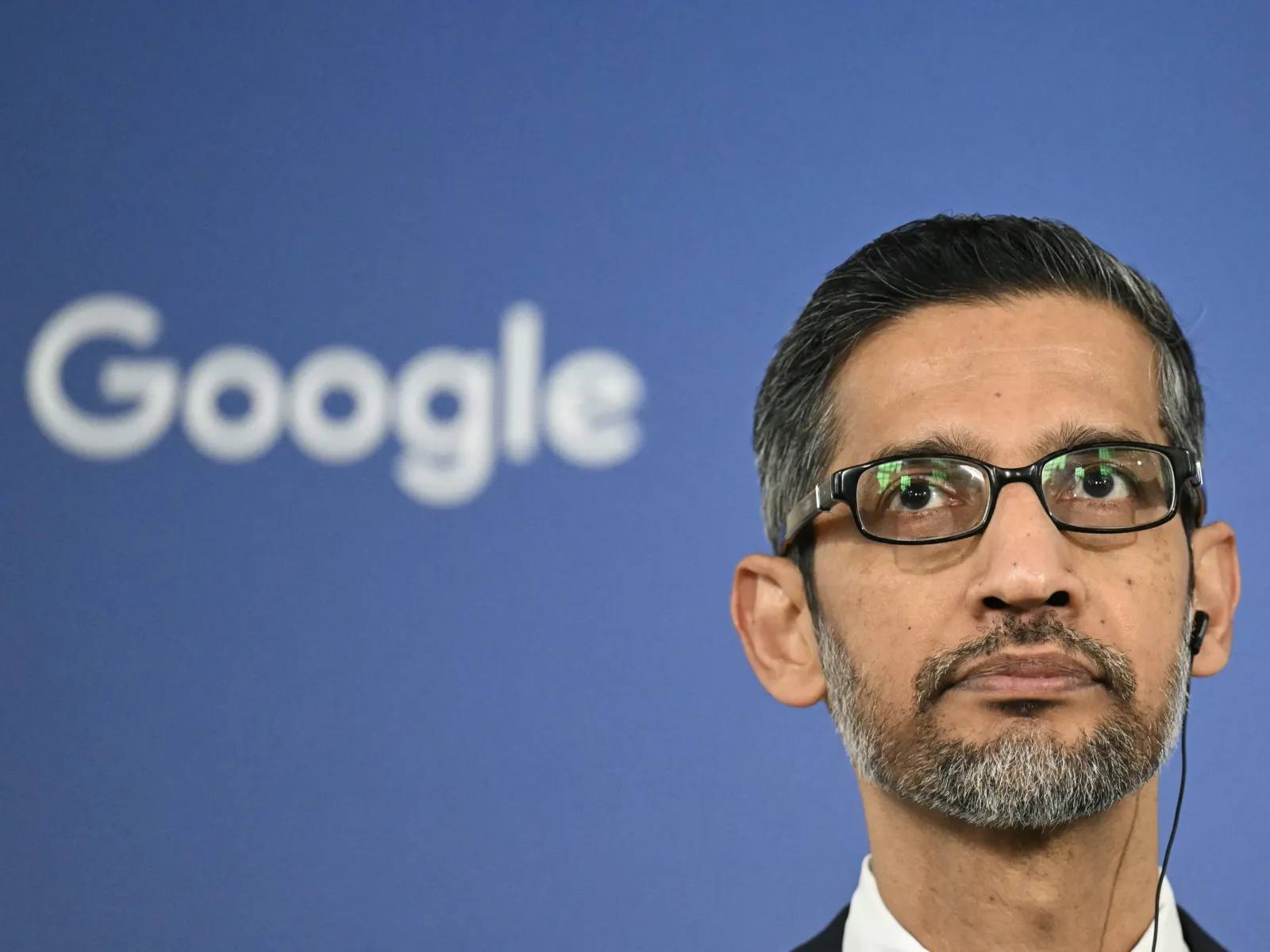
Alphabet CEO Sundar Pichai said AI-powered search features like AI Overviews and AI mode are driving growth in search queries and increasing search revenue by 17%. For decision-makers, this is a direct hit to the publisher narrative that AI answers are cannibalizing referrals.
Alphabet CEO Sundar Pichai used a Wednesday earnings call to deliver a counterintuitive message: AI is making Google search bigger. He said Google’s AI-powered tools, including AI Overviews and AI mode, were driving growth in search queries, and that this translated into 17% search revenue growth.
Pichai also pointed to a real-world stress test that audiences could feel even if they were never thinking about it: the FIFA World Cup, which started in June and wrapped up on Sunday. As he put it, “search usage hit an all-time high during the World Cup this year,” and he said this showed “how much people turn to Google in moments that matter.”
Under the hood, Pichai said Google has seen the impact of AI features at scale. He stated that AI Mode has surpassed a billion monthly active users since it was expanded globally last October. That matters because it moves the story from “a feature some people try” to “a default behavior shaping how people search,” which is exactly the kind of shift that changes traffic patterns, ad budgets, and publishing strategies.
Google’s specific claim is that AI Mode is producing an “incremental increase in search queries overall.” It is also enabling Google to “send billions of clicks to websites every week through AI features in Search,” according to Pichai. If you are a publisher or a platform partner, that last line is the whole fight: not whether users get answers, but whether they still click out to sources when the answer is delivered inside search.
This is where the tension becomes more than semantics. Many publishers had feared that as Google integrated AI more aggressively, their traffic would drop because users might become satisfied with AI answers that are scraped from traditional websites without linking back to their sources. The source material notes that publishers reported their search traffic dropping because of Google’s AI integrations, suggesting that at least some publishers experienced a real-world slowdown during the shift.
So why is Google saying the opposite? From Google’s perspective, search is not replacing the web. Search is evolving the path to the web. Pichai’s framing on the call implies that AI features do not merely deflect users away from sites, they increase engagement and keep the search journey active, which can lead to more queries and more monetization. The fact that Google reported 17% revenue growth in search driven by these tools is the financial proof point Google is offering to back that narrative.
For Alphabet, search is still a cash engine with a massive incentive structure behind it. The source describes search as one of Google’s largest cash cows, the third-highest revenue-producing product in Alphabet’s latest quarter earnings, edged out only by advertising and Google Services. On Wednesday, Alphabet reported latest quarter earnings of $119.8 billion, up 24% from a year earlier, and its stock was down 1.24% at market close. Put plainly, the market reaction was mixed, but the company still has a lot to protect in search economics if AI is truly helping.
The strategic stake for leaders at publishers, ad-tech firms, and media platforms is obvious: if AI-driven search features can sustain or even grow referral behavior, the business models built on organic search traffic may be less fragile than they feared. If, however, the publisher-reported traffic drops persist for certain sites, then growth in aggregate queries and clicks does not automatically fix individual revenue lines. That mismatch is where boardrooms will get uncomfortable, because it means strategy might need to split: double down on content formats that still earn AI-driven clicks, while rethinking distribution beyond classic search referrals.
For peers watching Alphabet, the takeaway is not that AI “wins” or “fails.” It is that Google is explicitly attributing measurable growth in search queries and search revenue to AI Overviews and AI mode, and it is pointing to scale milestones like surpassing a billion monthly active users for AI Mode. If you are operating in search-adjacent ecosystems, this forces a new baseline: AI integration is now part of how search grows, not a side experiment. And as AI features move from novelty to default, the question becomes who benefits from the clicks they generate, and who loses when the conversation happens inside the interface instead of at the publisher’s door.
This story's Key Insights and Take-aways are locked.
Create a free account to unlock Executive Actions for one credit.
Register to UnlockAlways free for Executives Club members. Join the Club
More in Business

Anthropic’s Levant Alpöge cracks the Jacobian conjecture after 87 years
A Harvard valedictorian used Claude to hit a 1939 breakthrough, but the missing “why” is the real problem.

Uber buys Delivery Hero for nearly $15B, vaulting to top food delivery outside China
The deal doubles Uber's dual-services footprint and pushes a ride-and-eats bundling play into 50 more markets.

Epic and Google drop settlement bid, forcing rival Android app stores by July 22
Google told the court it is ready to carry third-party app stores starting Wednesday, July 22.