
Supreme Court blocks Trump pressure campaign against Fed independence
A legal limit just got set on political interference in monetary policy, reshaping how leaders think about Fed oversight.
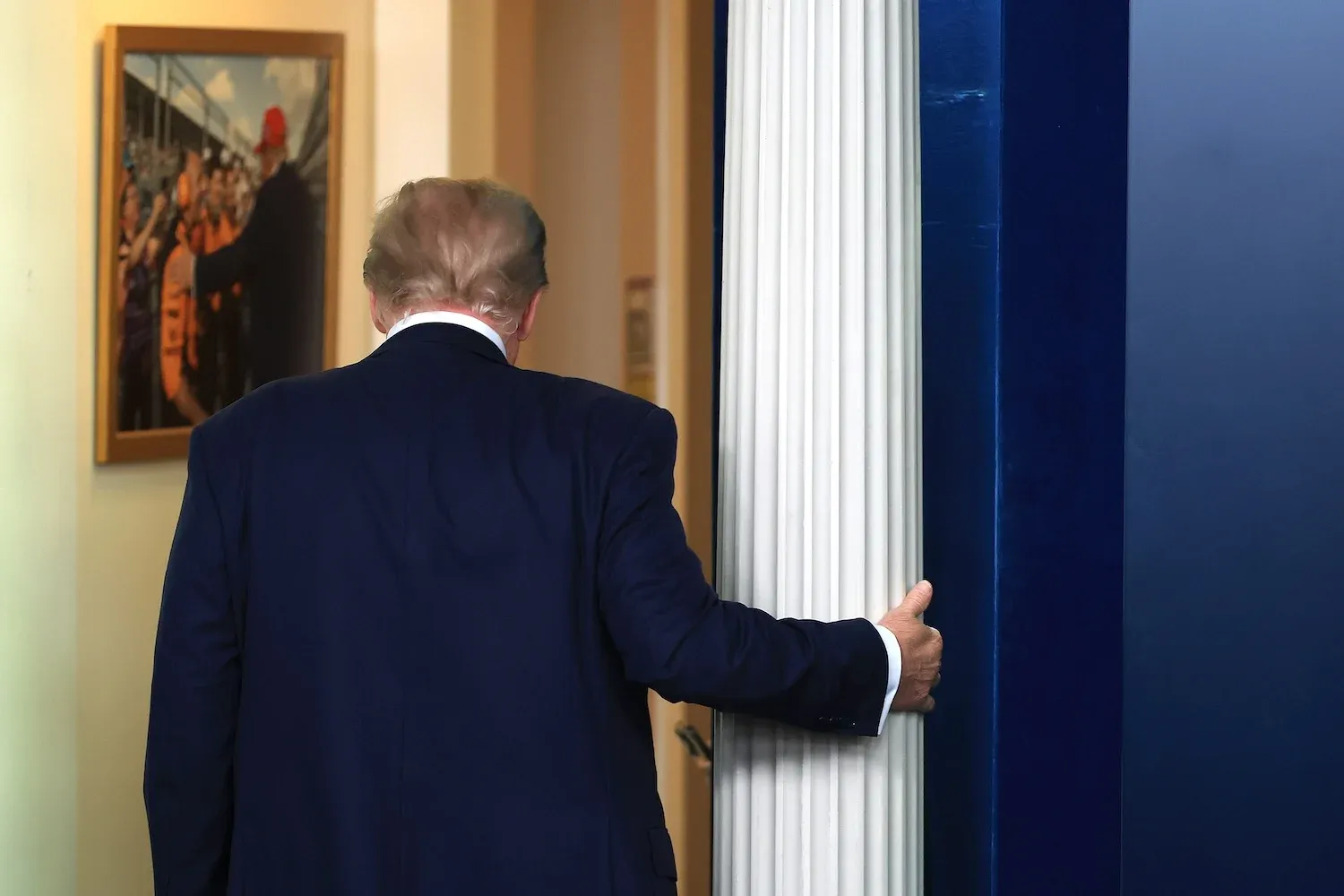
The Supreme Court ruled against the Trump administration’s attempt to push against the Federal Reserve’s independence. The decision matters for decision-makers because it draws a hard line on what political actors can do to the Fed and how capital markets price central-bank credibility.
There is a reason “Fed independence” keeps showing up in boardrooms and investor calls. It is not a slogan. It is the mechanism that keeps monetary policy from swinging with the news cycle.
In the latest episode, the Supreme Court pushed back on President Donald Trump’s Fed assault, effectively signaling that tampering with the Federal Reserve’s independence is a bridge too far. That phrasing may sound abstract, but the consequence is concrete: the highest court is reinforcing that the central bank’s independence is not optional or negotiable depending on politics.
To understand why this is such a big deal, zoom out for a second. The Federal Reserve does not just set interest rates. It influences inflation expectations, credit conditions, employment trends, and the expectations embedded in everything from mortgages to venture funding. If leaders believe the Fed can be pressured for short-term political wins, markets will price in instability. You can almost think of it like a thermostat. If someone can override it whenever the living room gets uncomfortable, the house never reaches a stable temperature. Financial markets do not like thermostats with a political override.
Regulators and central banks live in an ecosystem of incentives. Political actors tend to want outcomes that look good on calendars that matter to voters. Central banks are designed to focus on outcomes that are supposed to work over longer horizons, even when those horizons are inconvenient. That is why “independence” is treated as a structural feature, not a courtesy. The Supreme Court’s pushback is essentially the legal system saying the structure matters.
This is also where governance and messaging get tricky. Boards and executives are used to believing that rules are rules, then learning that practical influence can still bend the edges. Court decisions change that calculus. When the Supreme Court tells political actors that a boundary exists, it gives markets a stronger footing for forecasting. That affects not just interest rates, but also risk premiums, volatility expectations, and planning assumptions across the economy.
There is a second-order implication executives should not miss: credibility is path-dependent. Once investors trust that monetary policy decisions will not be driven by direct political pressure, it becomes easier to underwrite long-term contracts and investment cycles. If that trust is damaged, even temporary, it can leave scars. Even without day-to-day policy swings, the mere possibility of pressure can tighten financial conditions. Lenders ask for more compensation for uncertainty. Companies delay or restructure investments. Investors demand higher yields for taking risk.
The “Fed assault” headline is about more than one political episode. It is about the architecture of checks and balances in economic policy. If the court narrows the space for tampering, it also tells future administrations and political coalitions that attempts to alter the Fed’s posture through pressure will face serious legal hurdles. That can shift how leaders in other agencies think about their own regulatory reach, because it reinforces that independence is enforceable when backed by constitutional or statutory frameworks.
For executives and board members, the practical stakes show up in how you think about cost of capital and scenario planning. When the Supreme Court limits interference, it reduces one class of tail risk: the risk that monetary policy could be bent for political convenience. That does not eliminate macro uncertainty, but it changes what uncertainty investors treat as controllable versus structural. And in markets, “structural” is where pricing power and planning discipline live.
So the takeaway is simple, even if the subject is not. The Supreme Court pushback on tampering with the Federal Reserve’s independence is a real constraint on political action. For decision-makers, that is a signal to calibrate expectations around central-bank credibility, because the legal system just reminded everyone that independence is a bridge, and it only works if you stop trying to set it on fire.
This story's Key Insights and Take-aways are locked.
Create a free account to unlock Executive Actions for one credit.
Register to UnlockAlways free for Executives Club members. Join the Club
More in Politics

12,000 tourists evacuated from Le Porge as wildfire rages in southwest France
A fire starting midday Wednesday triggered a Thursday evacuation, with heatwave conditions since May worsening wildfires nationwide.

Andy Burnham will court social media creators to spread his prime minister message
The UK prime minister plans influencer collaboration, raising questions about platform power, credibility, and political compliance.

Zinedine Zidane ends Deschamps era: signs four-year France deal until 2030 World Cup Tuesday
A new Les Bleus chapter starts Tuesday, with Zidane replacing Didier Deschamps after 2012.