

Supreme Court lets SEC seize illegal gains without proving victim losses
The unanimous ruling strengthens the SEC’s hand in disgorgement cases, giving executives and boards another reason to treat enforcement risk as very real.
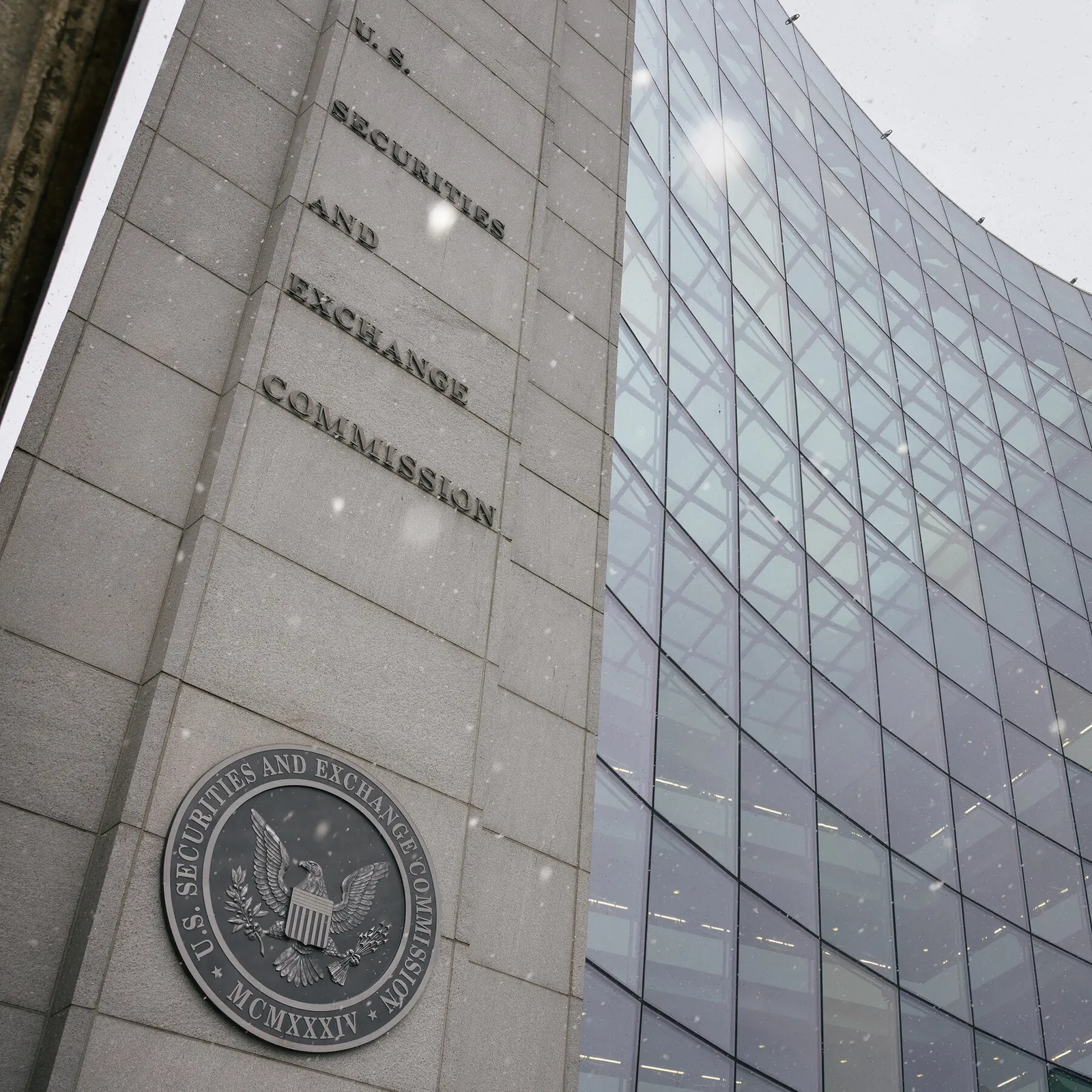
The Supreme Court unanimously ruled that the S.E.C. can strip wrongdoers of illegal financial gains even when it cannot prove victims suffered a loss. For executives and boards, that means enforcement exposure is no longer limited to cases with clearly measurable harmed investors, widening the practical risk of bad conduct.
The Supreme Court just gave the S.E.C. a sharper tool. In a unanimous decision, the justices said the independent financial watchdog can collect ill-gotten money from wrongdoers even when it cannot prove that victims suffered a financial loss. That is a meaningful win for the agency, because it preserves a way to claw back unlawful gains without having to clear the extra hurdle of showing direct investor harm.
For executives, compliance teams, and boards, the message is plain: if money was made illegally, it may still be taken away. The ruling does not just matter to the individual cases that prompted it. It reinforces the idea that the government can focus on the wrongdoer’s gain, not only the victim’s loss, when policing securities violations. In practice, that can expand the S.E.C.’s leverage in enforcement actions, settlement talks, and negotiations over how much a company or individual may have to pay.
The case lands in a regulatory environment where financial enforcement often turns on what can be proven, documented, and quantified. Normally, agencies do not get to punish in the abstract; they need a legal basis for the remedy they want. Here, the court backed the S.E.C.’s ability to seek disgorgement, the process of forcing someone to give up money earned through unlawful conduct. That distinction matters because many cases are messy. The harm may be diffuse. Investors may not be easy to identify. Loss calculations may be disputed. Under this ruling, those complications do not necessarily block the agency from reaching for the money itself.
That makes the decision especially important for people running public companies, financial firms, and any business that lives near securities law. The S.E.C. is the independent watchdog charged with policing the markets, and its enforcement model depends in part on whether it can credibly threaten to take away gains tied to misconduct. If the agency had to prove victim loss every time, some cases could become much harder to pursue. The court’s ruling keeps the enforcement door open in situations where the central fact is not how much investors lost, but how much the wrongdoer improperly made.
There is also a broader governance lesson here. Boards often focus on headline fines, but remedies like disgorgement can be just as consequential because they attack the economic upside of bad behavior. That changes incentives inside companies. When the downside is not merely a penalty but the forced return of profits, the math around risk taking gets less flattering. It also increases the value of strong internal controls, documentation, and fast escalation when something looks off, because once the S.E.C. frames a transaction or practice as unlawful, the agency may have a path to recover the gains even if victim losses are not neatly provable.
The unanimous nature of the ruling matters too. This was not a split decision that leaves a narrow opening for future challenge. It signals a broad agreement among the justices that the S.E.C. may pursue ill-gotten money under these circumstances. For decision-makers, that reduces the odds that this enforcement theory gets quickly blunted by judicial skepticism. In the language of risk management, the position just got sturdier, not shakier.
For peers across markets, the practical takeaway is straightforward. The ruling strengthens the agency’s hand, which means misconduct can carry a cost even when the harm is hard to put in a spreadsheet. That should matter to CEOs, CFOs, general counsel, and directors alike, because it affects how they assess exposure, how they think about settlements, and how seriously they treat the possibility that profits earned through securities violations may not be theirs to keep. In a world where regulatory scrutiny often hinges on paper trails and proof, the S.E.C. just got confirmation that it can still go after the money when the victim-loss math does not cooperate.
This story's Key Insights and Take-aways are locked.
Create a free account to unlock Executive Actions for one credit.
Register to UnlockAlways free for Executives Club members. Join the Club
More in Business

Anthropic’s Levant Alpöge cracks the Jacobian conjecture after 87 years
A Harvard valedictorian used Claude to hit a 1939 breakthrough, but the missing “why” is the real problem.

Uber buys Delivery Hero for nearly $15B, vaulting to top food delivery outside China
The deal doubles Uber's dual-services footprint and pushes a ride-and-eats bundling play into 50 more markets.

Epic and Google drop settlement bid, forcing rival Android app stores by July 22
Google told the court it is ready to carry third-party app stores starting Wednesday, July 22.