
Supreme Court strikes coordinated-spending caps, unleashing a midterm cash flood for parties
A 6-3 ruling removes limits on coordination between candidates and party committees, reshaping TV, donors, and campaign strategy.

The Supreme Court struck down limits on coordinated spending between candidates and political parties in a 6-3 decision on Tuesday. For decision-makers, it means parties can coordinate with candidates using far more money, with near-term impact on the November midterms.
On Tuesday, the Supreme Court struck down limits on coordinated spending between candidates and political parties in a 6-3 decision. The immediate effect is that candidates can control a far greater amount of money spent in their races, because the old caps on how much party committees could coordinate with campaigns are gone.
The ruling will land quickly in the midterms. Removing the coordinated-spending limit effectively changes how tens of millions of dollars get deployed in congressional elections, and it is expected to increase the volume of political advertising hitting airwaves each fall. The case goes to the heart of how campaigns and parties work together, and who gets to pull the financial levers.
Here is what the Court actually held: the limits violate the First Amendment. Justice Brett Kavanaugh wrote for the majority, calling the limits “a severe infringement on First Amendment-protected political speech.” His opinion also argued that upholding coordinated-expenditure limits could reduce political parties to “continued second-tier status as compared to outside groups,” and that weakened political parties “distort[] the political system.” Translation: the Court framed coordination limits as something that unfairly handicaps parties against outside groups.
The split between the Court’s ideological blocs is the backdrop. Democrats argued that eliminating coordination limits would put more power into the hands of large donors, who can cut bigger checks to party committees than to candidates. Republicans brought the case and are widely positioned to benefit because they tend to rely more on large donors. In other words, this is not just a technical decision about what can be counted where. It changes incentives: parties become better funded vehicles for channeling donor money into campaigns.
President Donald Trump hailed the ruling on Truth Social, writing: “The Supreme Court just took restrictions off political spending!” and “A BIG WIN FOR REPUBLICANS and, more importantly, The First Amendment!” The National Republican Senatorial Committee brought the case seeking to overturn the limits in 2022, alongside now-Vice President J.D. Vance’s Senate campaign. Trump’s Justice Department declined to defend the law in court, while Democratic groups intervened to oppose the lawsuit. In a joint statement after the decision, NRSC Chair Tim Scott (R-S.C.) and National Republican Congressional Committee Chair Richard Hudson (R-N.C.) said the Court “restored core political speech and ensured parties can compete on a level playing field,” and they added, “We are ready to fully support our candidates and put them in the strongest possible position to win in 2026 and beyond.”
Democrats responded fast, too. Democratic Senatorial Campaign Committee Chair Kirsten Gillibrand, Democratic Congressional Campaign Committee Chair Suzan DelBene, and Democratic National Committee Chair Ken Martin said in a joint statement that the ruling is “a win for billionaire donors and special interests who want more influence over the GOP agenda and an invitation for corruption.” Whatever your politics, the thrust is clear: Democrats are already worried about a disadvantage in party fundraising this midterm cycle, and they fear the Court’s change will amplify it.
The mechanics of the money matter, because parties have always been different from candidates. Previously, coordinated spending between candidates and party committees, such as the NRCC or the DCCC, was capped, with specific amounts depending on the size of the district or state. Those limits no longer apply. The source also highlights the contrast in contribution rules: $44,300 per year for national party committees compared with $3,500 per cycle for candidates. When coordination limits fall away, candidates can effectively exercise control over a much larger pool of spending that flows through party infrastructure.
That creates a second-order effect on media markets and ad mix. The source notes that candidates get far lower rates on TV ads than other groups. If candidate-and-party coordinated efforts get similar low rates, campaigns could have more cash available to flood television. Meanwhile, super PACs would still have to pay higher rates, so they may shift more spend toward other campaigning costs like mailers and digital advertising. That means the Court’s decision can ripple beyond fundraising into who buys what, and when, across the political advertising ecosystem.
Money advantage is also part of the calculus already underway. The source says Democrats have generally had the advantage in candidate fundraising, which gave them a leg up in battlegrounds when candidate fundraising was the most important. Still, NRSC has slightly more cash on hand than the DSCC, according to recent campaign finance reports, while the Republican National Committee has “wildly outraised” the DNC. With coordinated-spending limits removed, the GOP’s existing party cash position in key states could translate into a real campaign-floor boost.
The decision additionally eliminates the need for parties to mount their own independent expenditure arms, where they have traditionally spent tens of millions of dollars. This matters because parties have had to engineer around regulation; the Court just removed a major constraint, potentially simplifying how parties structure spending and coordination. The ruling is also the latest in a run of campaign finance regulation setbacks by the Roberts Court over the past two decades, starting with Citizens United and Speechnow.org in 2010 (which enabled the rise of super PACs with no limit on donations), followed by other decisions in 2014 and 2022 that struck down additional limits.
Finally, the strategic stakes: this is a regulatory shift that redefines how power is financed in federal elections. Issue One director of money-in-politics reform Michael Beckel said in a statement that “By eliminating the limits that have long governed how much money parties can spend in coordination with candidates, the Supreme Court has further empowered wealthy donors and special interests with outsized influence in elections.” For executives, board members, and leaders at any organizations tied to political, regulatory, and media landscapes, the message is practical: party fundraising and spending operations will likely accelerate, ad spending patterns may change, and influence pathways shift toward large-donor-powered party coordination. If you operate near elections, lobbying, compliance, or media strategy, this is a funding rulebook update with a near-term deadline.
This story's Key Insights and Take-aways are locked.
Create a free account to unlock Executive Actions for one credit.
Register to UnlockAlways free for Executives Club members. Join the Club
More in Politics

12,000 tourists evacuated from Le Porge as wildfire rages in southwest France
A fire starting midday Wednesday triggered a Thursday evacuation, with heatwave conditions since May worsening wildfires nationwide.
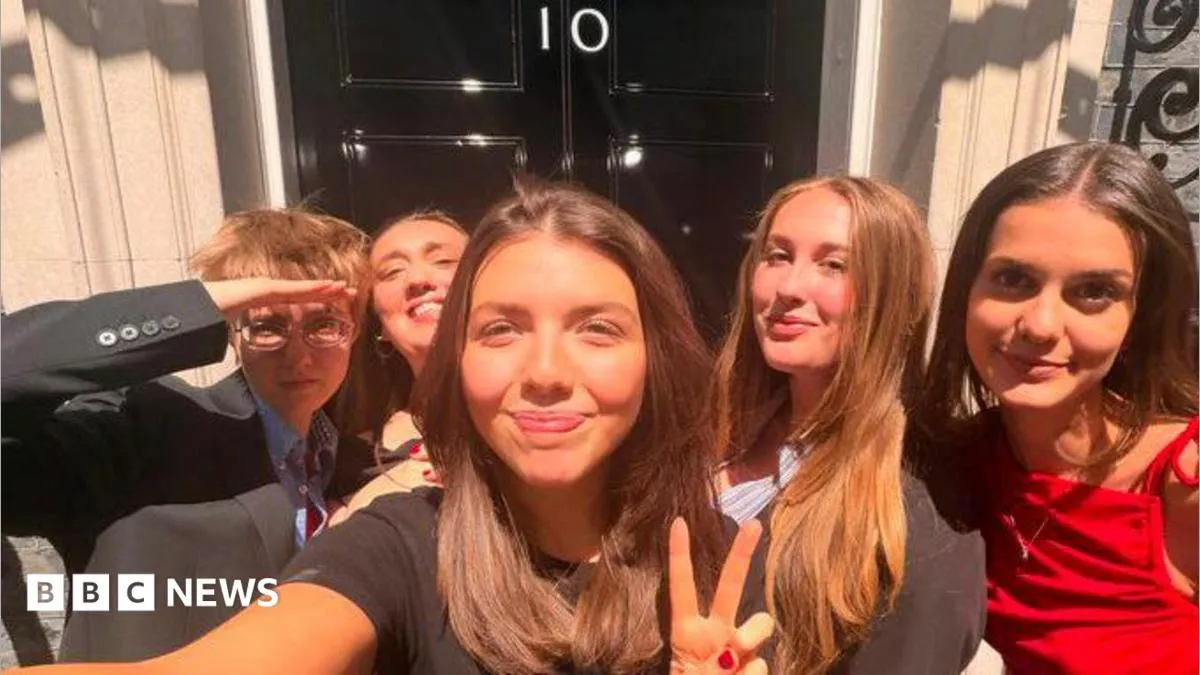
Andy Burnham will court social media creators to spread his prime minister message
The UK prime minister plans influencer collaboration, raising questions about platform power, credibility, and political compliance.

Zinedine Zidane ends Deschamps era: signs four-year France deal until 2030 World Cup Tuesday
A new Les Bleus chapter starts Tuesday, with Zidane replacing Didier Deschamps after 2012.