
Syria's finance minister pushes to grow $493M World Bank lifeline
Mohammed Barnieh met World Bank, Arab Monetary Fund, and Citigroup officials in Bangkok to expand grants for electricity, healthcare, water, and more.
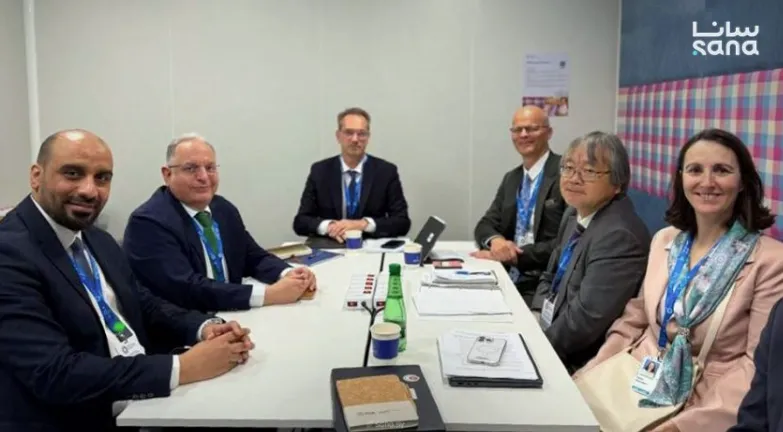
Syria's Finance Minister Mohammed Barnieh met World Bank, Arab Monetary Fund, and Citigroup officials in Bangkok to build on $493 million in grants already received. The push signals Syria's effort to rebuild state finances and basic services after years of conflict.
Syria's Finance Minister Mohammed Barnieh is working to expand the $493 million in World Bank grants the country has already received, using the IMF and World Bank annual meetings in Bangkok as the stage. According to the Syrian Arab News Agency, Barnieh discussed the funding with officials from the World Bank, the Arab Monetary Fund, and Citigroup on the sidelines of the meetings. The talks centered on how to build on the existing grants, which have been directed at electricity, healthcare, water, education, public finances, and the financial sector.
The $493 million figure is not new money; it represents grants already disbursed or committed to Syria. What is new is the explicit push to expand that envelope. Barnieh's meeting with the World Bank focused on implementation, according to SANA, suggesting that the priority now is proving the existing funds are being used effectively before asking for more. That is a classic donor-recipient dynamic, but for Syria it carries extra weight: the country is emerging from more than a decade of conflict, and every dollar of grant funding is scrutinized by Western capitals that still maintain sanctions on the Assad government.
The choice of sectors matters. Electricity, healthcare, and water are the most visible daily needs for a population that has endured severe infrastructure damage. Education is the long-term bet. But the inclusion of public finances and the financial sector in the grant portfolio signals a deeper ambition: to rebuild the state's ability to collect revenue, manage spending, and support a banking system that can intermediate capital. For a country that has been largely cut off from international finance, that is a significant institutional agenda.
The presence of Citigroup in the discussions is worth noting. The US-based bank is not a typical partner for Syria, given US sanctions. However, Citigroup has a large presence in the Gulf and has historically advised governments and central banks across the region. Its participation in the meeting could indicate that Syria is exploring private-sector channels for financing, or at least seeking expertise on how to modernize its financial sector. The Arab Monetary Fund's involvement points in the same direction: regional institutions are often the first to re-engage with a country that Western multilateral lenders approach cautiously.
Syria's relationship with the World Bank has been complicated by years of arrears and sanctions, making grants a more viable channel than loans. That is why the $493 million is structured as grants, and why Barnieh is likely pushing for more of the same. The World Bank's ability to scale up, however, depends on political and governance conditions that are far beyond the finance minister's control.
The venue is also significant. The IMF and World Bank annual meetings in Bangkok bring together finance ministers, central bankers, and private investors from around the world. For Syria, being in the room is a form of diplomatic and economic re-engagement. It allows Barnieh to make the case directly to the institutions that will shape the country's access to capital, and to signal to investors that Syria is open for business in specific sectors. The fact that the meetings were held in Asia, rather than Washington or Europe, may also lower the political temperature for engagement.
For executives and investors, the takeaway is that Syria is actively courting international support for reconstruction, but the path remains narrow. The focus on implementation means that the first-mover advantage will go to companies and organizations that can deliver projects on the ground, not just those that promise financing. The sectors named - electricity, healthcare, water, education, and financial services - are the entry points. But sanctions, security risks, and governance challenges remain formidable barriers.
The strategic stakes extend beyond Syria. Other fragile states and post-conflict economies are watching how the World Bank and regional institutions handle this case. If Syria can successfully expand its grant envelope and demonstrate effective implementation, it could unlock a template for reconstruction financing that does not rely on traditional sovereign lending. For finance ministers in similar situations, the lesson is clear: bring a concrete implementation plan, name the sectors, and get regional and private partners in the room early. Barnieh is doing exactly that.
This story's Key Insights and Take-aways are locked.
Create a free account to unlock Executive Actions for one credit.
Register to UnlockAlways free for Executives Club members. Join the Club
More in Business

Elon Musk unveils a flying car, and SpaceX helped build it
The Tesla CEO's showcase at a SpaceX facility signals a future where road and rocket engineering converge.

Apple's $2,000 iPhone Duo opens preorders, taking on Samsung and Google
Apple's first foldable hits the market at a premium price, reshaping a category Samsung and Google have led.

Pope Leo XIV, first American pope, diagnosed with lung cancer
The 71-year-old Chicago-born pontiff underwent successful surgery on his right lung, and his diagnosis raises new questions about his AI-focused papacy and the Vatican's future.