
System Era’s Adam Bromell says Starseeker is not “Astroneer 2”
The creative director explains why short, mission-based expeditions are built for community goals and hope-forward sci-fi.
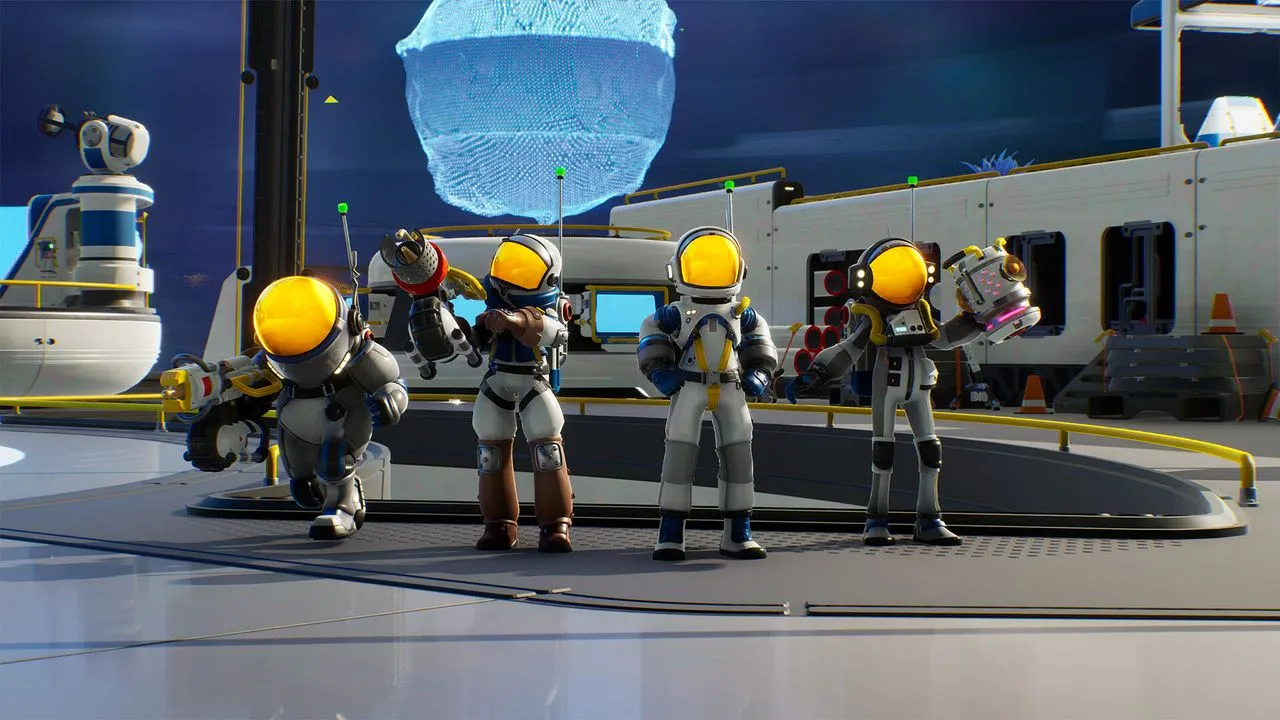
Adam Bromell, System Era’s creative director, CCO, and co-founder, says Starseeker is designed differently than Astroneer and is launching in early access. For decision-makers, it signals a deliberate product pivot toward engagement and co-op community, with a 1.0 narrative plan.
Adam Bromell, System Era’s creative director, CCO, and co-founder, tells Space.com that Starseeker: Astroneer Expeditions is not “Astroneer 2.” Instead of doubling down on Astroneer’s long-running base-building direction, Starseeker leans into shorter, breezier trips focused on discovery and mission-based tasks, even in early access.
And the real stake is not the aesthetics of a sequel. It’s the incentives inside the loop. After a planetside tutorial, players go to the ESS Starseeker, a central hub where explorers meet and then launch missions to recover lost tech, scan materials and life forms, or explore a planet further. Bromell’s pitch is community-forward, with gameplay consequences that feed into “global experience through community goals,” including a common occurrence where players encounter entirely different teams during an expedition.
That design choice is a direct response to what Astroneer already did well. Bromell acknowledges Astroneer as a “chill base-building survival experience,” one that got updates and content packs over time, but he and System Era wanted to connect everyone more strongly through shared accomplishments. His explanation ties the team’s motivation to building “something with friends” across games, from his own Minecraft memory to the communal spirit associated with Star Trek. Bromell frames the game as “hopeful science fiction,” a line attributed to System Era’s COO Veronica Peshterianu in her Medium post, and he explicitly wants players to feel the “Holy shit, look at what we did” moment together.
From a product strategy standpoint, this is basically a community engagement machine disguised as a co-op space exploration game. Early access becomes more than “please be patient while we patch.” Bromell calls early access “the foundation and the bedrock,” describing a platform for engagement so the studio can show players their accomplishments and “push them out onto these journeys together.” That also enables playful experiments on the station, like “morning announcements on the station,” and squad special rewards based on performance out in the world.
It matters because the execution details are designed to reduce the friction that often kills co-op participation. Starseeker is still in the extraction-adjacent space, but Bromell contrasts it with other extraction games where risk and loss can be punishment. In Starseeker, “unlike other games in the extraction genre,” players “trade directly on the station,” so they do not need to go in and “risk it.” Meanwhile, there is still danger, just not the same social dynamic of someone hunting you: natural hazards and alien fauna keep expeditions tense.
The studio also sounds intent on building a feedback flywheel where player behavior is not treated as a bug. Bromell says System Era “aren’t afraid of our players exploiting the rules that we’re putting in front of you.” He cites a PAX West mission where the task was to bring an altimeter “as high as you could go,” and one squad “cheesed the shit out of it” with tools. Bromell calls that his favorite run, and he frames the desired mindset as thinking beyond the golden path the team lays out.
Now zoom out to where the narrative and pacing connect to the commercial plan. Bromell confirms the intention to wrap the game’s larger narrative arc by the time the game hits 1.0, even if exploration continues after release. Between now and 1.0, players will be introduced to different antagonists and “some of the more extrinsic motivations” that keep Astroneers exploring. That suggests System Era is treating 1.0 not just as an art and mechanics milestone, but as a narrative completion point, which can stabilize long-term player retention and reduce the “it’s never done” fatigue that can hit live games.
Finally, there is a quiet but important credibility layer in how Starseeker handles science. Bromell says the team made sure resources in the game are “real things you can find in the world,” even if the shapes and growth look different once translated into gameplay. He also tells a story from Astroneer’s early days: the team picked any color they liked for a material, and later players called out that they were naming it malachite but not matching the right color. The lesson is not heavy education, but staying aligned enough that players do not feel alienated. The theming pulls NASA aesthetic cues with “whites and grays” and more elevated colors, and he says NASA and Russian space programs were on his Pinterest board back in 2015.
For founders, operators, and investors watching where co-op entertainment is heading, the second-order message is clear: System Era is trying to turn the connective tissue of community goals into a core gameplay mechanic, not a marketing add-on. Starseeker has been brewing for roughly seven years, starting with Bromell and one or two engineers playing with the physics sandbox, then growing into a focused experience with short treks and missions completed together. Bromell even says Astroneer 2 is “always there” as a future option, but right now the studio wants to make a creative swing with the momentum of learning how to build the next version of engagement. The strategic question for peers is whether your product roadmap is optimizing for moment-to-moment fun or for how you manufacture “we did this together” energy at scale.
This story's Key Insights and Take-aways are locked.
Create a free account to unlock Executive Actions for one credit.
Register to UnlockAlways free for Executives Club members. Join the Club
More in Business

Anthropic’s Levant Alpöge cracks the Jacobian conjecture after 87 years
A Harvard valedictorian used Claude to hit a 1939 breakthrough, but the missing “why” is the real problem.

Uber buys Delivery Hero for nearly $15B, vaulting to top food delivery outside China
The deal doubles Uber's dual-services footprint and pushes a ride-and-eats bundling play into 50 more markets.

Epic and Google drop settlement bid, forcing rival Android app stores by July 22
Google told the court it is ready to carry third-party app stores starting Wednesday, July 22.