
Taylor Swift drops “I Knew It, I Knew You” video for “Toy Story 5,” spotlighting Jessie
The Friday midnight release and Saturday afternoon video reroute the Toy Story musical spotlight back to Jessie, not the usual center.
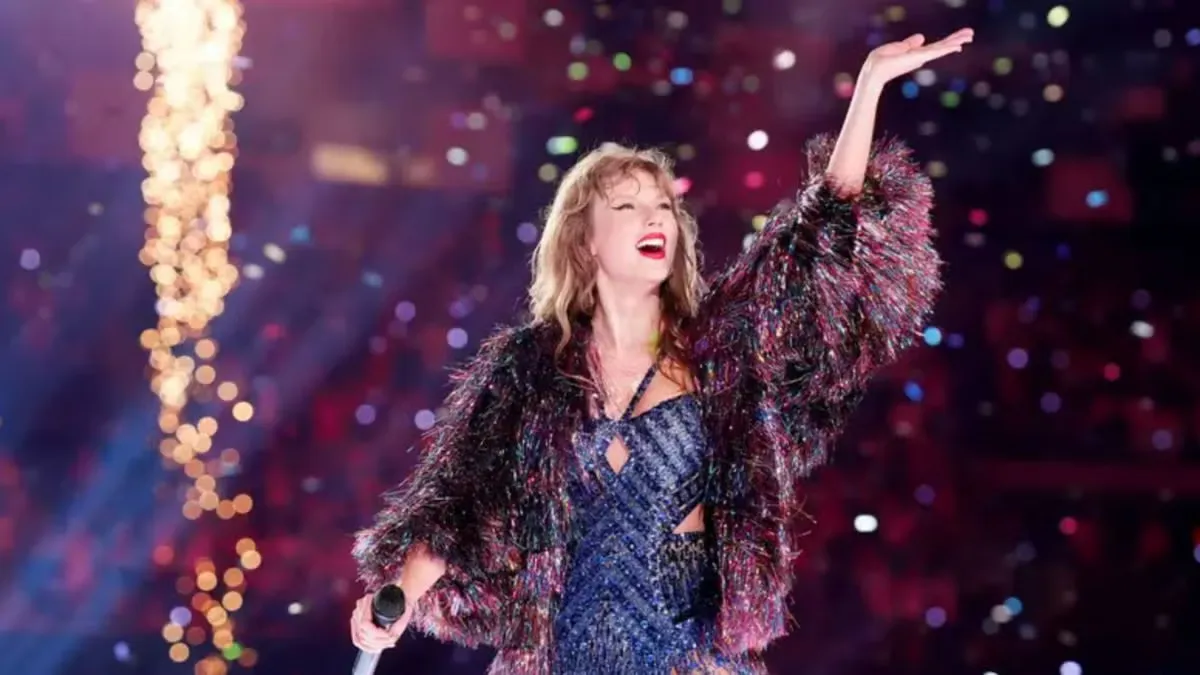
Taylor Swift released her “I Knew It, I Knew You” music video for “Toy Story 5” on Friday, shifting the focus to Jessie, the character introduced in “Toy Story 2.” For decision-makers, it signals how major entertainment brands are packaging cross-audience storytelling with a very specific character as the commercial hook.
Taylor Swift dropped her new music video for “I Knew It, I Knew You” on Friday, and the spotlight is not on Buzz or Woody. It is Jessie, the “Toy Story” character who joined Andy’s toys back in “Toy Story 2.” Swift also confirmed earlier this week that her latest single would be featured in the fifth “Toy Story” film. The song arrived at midnight on Friday, and the music video followed this afternoon, turning a franchise music moment into a character-first media play.
If you are tracking how entertainment studios translate nostalgia into measurable audience attention, this is a useful pattern. “Toy Story 5” releases in theaters on June 19, and Swift’s rollout is carefully staged around that date. Even the supporting material matters: Swift celebrated the release of the new song on Thursday by sharing a home video of herself dressed as a cowgirl as a child, a look that is very reminiscent of Joan Cusack’s Jessie from “Toy Story.” The move is not subtle. It builds familiarity fast, then anchors that familiarity to the Jessie narrative arc the new video is emphasizing.
From an incentives standpoint, this is what franchise partnerships look like when they get serious about cultural packaging. Swift has spent recent album cycles operating across various pop genres, and this new work explicitly harkens back to her country roots. That matters because “Toy Story” is a collage of tonal shifts too. A franchise like “Toy Story” typically depends on emotional continuity, generational fan bases, and recognizable character identities. By centering Jessie, the campaign is doing more than adding a celebrity single. It is selecting a character that already carries a long-running fan memory and then using Swift’s own musical “homecoming” to make the connection feel intentional.
Swift herself framed the creative logic in her Instagram comments. She said, “Writing this song felt like a musical departure and coming home at the same time.” She added that “Creating something for Jessie was a new challenge and also felt like second nature all at once,” and tied her motivation to the franchise by noting, “And being a ‘Toy Story' kid from the age of 5 til now… is an adventure I plan to be on, to infinity and beyond.” Those lines are not just fan service. They clarify that this collaboration is meant to be experienced as both a personal return and a fresh contribution, which is exactly how you keep a mainstream pop rollout from feeling like generic marketing.
There is also a credibility layer that boards and brand executives should recognize. Swift thanks multiple creative pillars by name, including “the brilliant Andrew Stanton” for imagining her for this “newest film.” She also credits “the incomparable [Randy Newman] for the gorgeous sonic tapestry of songs and scores you’ve meticulously woven over the years,” adding that Newman “created the ‘Toy Story' musical world, and we are lucky to get to live in it.” For cross-industry partnerships, that kind of attribution is a signal of process: it implies the music integration is not an afterthought, but built into the franchise’s broader sonic identity.
One more detail worth noting: Swift’s team posted the launch with clear distribution hooks. The post reads, “All we said… The ‘I Knew It, I Knew You’ Music Video is out now! Watch on @Spotify and @AppleMusic.” That distribution language is familiar, but the strategic reason it sits here is simple. When you are launching a music video tied to a tentpole release, you want the “discovery” loop to close quickly across streaming platforms and social feeds before the movie hits theaters on June 19.
Second-order implication: this kind of partnership can influence how studios and labels measure success. Instead of treating the song as a standalone promo, the character focus turns it into a narrative asset. Jessie becomes the visual and emotional entry point, which can shape how fans talk about the film before they see it. In other words, the campaign may steer expectations toward the Jessie spotlight that the video itself is already emphasizing.
For executives at studios, labels, agencies, and investor-adjacent entertainment funds, the strategic stake is straightforward: tentpoles need attention, attention needs a hook, and hooks need specificity. Swift’s rollout uses a specific character, a specific creative return to country roots, and a specific release cadence, from midnight Friday to the afternoon video, with “Toy Story 5” in theaters on June 19. If you are building your next cross-brand entertainment moment, this is a reminder that the most powerful sponsorship is rarely “celebrity plus content.” It is “celebrity plus meaning,” delivered on a timeline that respects how fans actually consume media.
This story's Key Insights and Take-aways are locked.
Create a free account to unlock Executive Actions for one credit.
Register to UnlockAlways free for Executives Club members. Join the Club
More in Entertainment

Christopher Nolan’s “The Odyssey” posts his biggest Tuesday haul, surpassing “The Dark Knight’s” record
The film’s Tuesday breakout reframes Nolan’s box-office ceiling and forces competitors to rethink timing, budgets, and release strategy.

Kacey Musgraves cancels Aug. 20, 29, Sept. 2 Middle of Nowhere shows
Ticketmaster emails are telling fans refunds are coming, while the tour still starts Aug. 21 in Chicago.

Billie Joe Armstrong launches Epiphone Les Paul Junior and Marshall 1959BJA signature gear
Two limited releases turn decades of Green Day’s tone into branded hardware, including Marshall’s first artist amp in 14 years.