

Taylor Swift’s ‘I Knew It, I Knew You’ gets ‘Toy Story 5’ video featuring Jessie’s Joan Cusack
The new music video for the Toy Story 5 song lands on Spotify and Apple Music, leaning hard into Jessie’s Toy Story 2 roots.
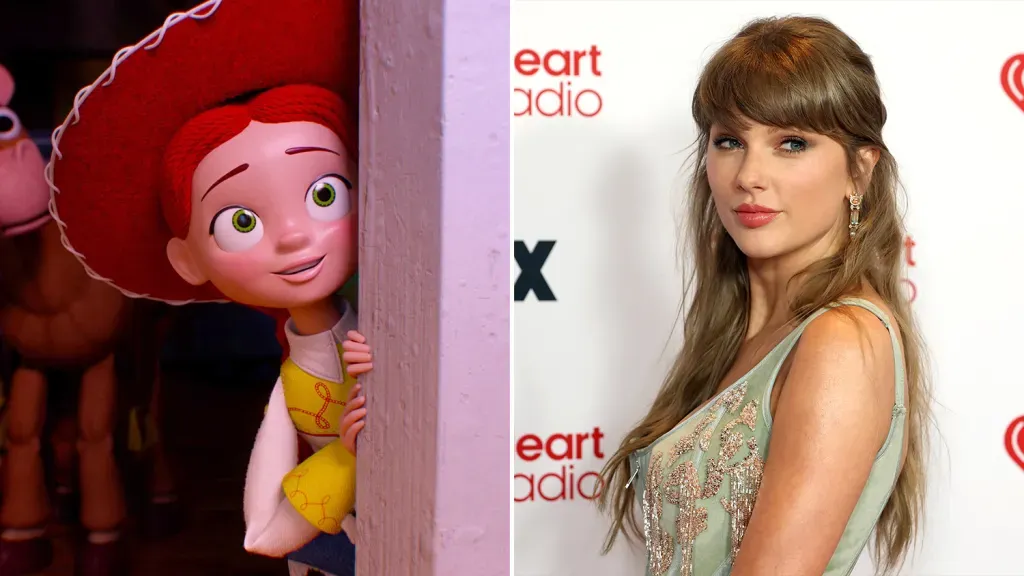
Taylor Swift’s original Toy Story 5 song, “I Knew It, I Knew You,” now has a music video companion available on Spotify and Apple Music. The video pairs footage tied to Jessie, voiced by Joan Cusack, who first entered the playground in Toy Story 2.
Taylor Swift’s original Toy Story 5 song “I Knew It, I Knew You” just got the kind of rollout that screams Disney synergy: a full music video companion, available now on Spotify and Apple Music. And the hook is specific. The video includes footage of Jessie, the fan-favorite character voiced by Joan Cusack.
Deadline reports the music video is available to view on those major streaming platforms, giving the song a second life beyond audio. Swift’s track is also positioned to “align closely” with Jessie’s story, especially the character’s first appearance in Toy Story 2. That matters because it tells you exactly what the creative pitch is selling: nostalgia, character continuity, and a direct emotional callback instead of a generic “Toy Story” branding exercise.
For decision-makers watching the media and entertainment calendar, this is a reminder of how music releases increasingly function like product launches. Streaming platforms are not just distribution pipes anymore. They are the stage where the audience discovers, samples, and then commits time and attention. Adding a music video companion to the same day that the track is easy to find on Spotify and Apple Music compresses the funnel. Listeners can hear first, then immediately move into the visual layer. That visual layer, in this case, is anchored to a recognizable performance by Cusack as Jessie.
It is also a smart piece of narrative packaging. The source ties Jessie’s arrival to Toy Story 2, where the character first “entered the playground.” That detail gives the song a storyline spine: Swift is not just writing a “theme song” in the abstract. The song is framed as matching Jessie’s arc, which makes the listening experience feel earned rather than imposed. In an industry where attention is traded like currency, that sort of alignment is a quiet advantage.
Now zoom out to incentives. For a big franchise like Toy Story, every release has to solve two jobs at once. First, it has to keep existing fans emotionally hooked. Second, it has to attract new viewers who may not have the full context from older installments. A Swift song with a companion video featuring Jessie is built to do both. Diehards get the character continuity. Casuals get a mainstream artist and an immediately legible focal character, voiced by a recognizable name.
There is also a platform reality here. Spotify and Apple Music are different ecosystems, but both operate at scale on the same basic behavior: people queue, shuffle, and follow. When a track comes with video access on the platforms where people already live, you reduce friction. The more friction you remove, the less you rely on fans having to go “somewhere else” to complete the experience. The Deadline update is framed as a simple availability change, but the operational effect is meaningful. It turns a single piece of content into a two-format moment.
You can also read this as a broader signal about how music and film studios collaborate. The source does not claim anything beyond the video availability and the character connection, but the structure is familiar. A pop artist supplies a high-reach anchor. The franchise supplies the story world. The character tie-in supplies specificity. When those three pieces lock, you get a release that looks less like marketing and more like fandom fuel.
For executives and board-level stakeholders in adjacent entertainment businesses, the second-order implication is straightforward: distribution and packaging decisions can matter as much as creative decisions. Adding a video companion on top of a soundtrack-style single is not just extra content. It is a strategic lever over engagement, replay, and cross-audience discovery. And because the song’s narrative focus is tied to Jessie’s Toy Story 2 origin, it is designed to reinforce memory, not just generate novelty.
If you are running a media strategy, the takeaway is not “everyone should do this.” The source is specific to Swift, this song, and this franchise moment. But the pattern is worth noticing. When you pair a high-profile artist with a character-driven visual, and you make it immediately accessible on major audio platforms, you increase the odds that the release becomes part of people’s routine instead of a one-time drop. In other words, you are not just launching a song. You are trying to create a recurring mental bookmark for what comes next in Toy Story 5.
This story's Key Insights and Take-aways are locked.
Create a free account to unlock Executive Actions for one credit.
Register to UnlockAlways free for Executives Club members. Join the Club
More in Entertainment

Christopher Nolan’s “The Odyssey” posts his biggest Tuesday haul, surpassing “The Dark Knight’s” record
The film’s Tuesday breakout reframes Nolan’s box-office ceiling and forces competitors to rethink timing, budgets, and release strategy.

Kacey Musgraves cancels Aug. 20, 29, Sept. 2 Middle of Nowhere shows
Ticketmaster emails are telling fans refunds are coming, while the tour still starts Aug. 21 in Chicago.

Billie Joe Armstrong launches Epiphone Les Paul Junior and Marshall 1959BJA signature gear
Two limited releases turn decades of Green Day’s tone into branded hardware, including Marshall’s first artist amp in 14 years.