

Terras Gauda’s Caíño Blanco bet is paying off as climate pressure reshapes wine.
A decades-old gamble on a Spanish grape is turning into a real-world playbook for growers facing hotter vintages.
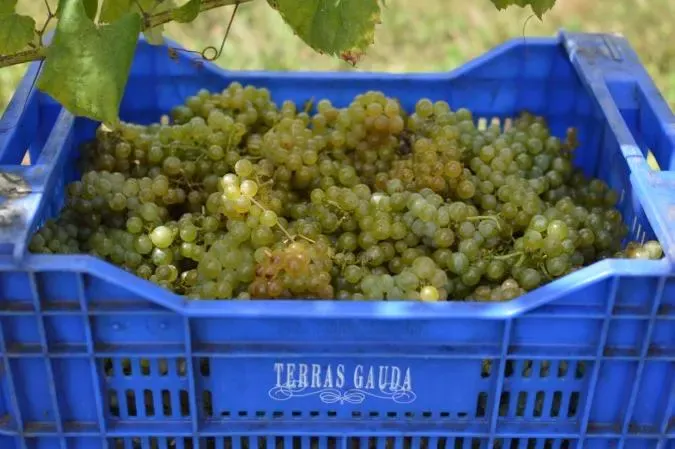
Terras Gauda invested in the grape variety Caíño Blanco long before climate change forced the industry to scramble for hardier vines. As wineries hunt for varieties that can withstand rising temperatures, that long-shot investment is starting to look less like luck and more like foresight.
Terras Gauda’s long-shot investment in Caíño Blanco is paying off right as winemakers face the most immediate climate problem in their business. Rising temperatures are changing when grapes ripen, how they balance sugar and acidity, and whether familiar varieties can perform reliably. In other words, climate change is not a distant risk for wine. It is showing up in the glass, in the harvest schedule, and in the economics of vineyard planning.
The punchline is simple: Caíño Blanco, a variety Terras Gauda backed early, is becoming more relevant as wineries search for grapes that can hold up under hotter conditions. That matters because wine is a slow-motion industry. You cannot just switch grape varieties like you switch suppliers. Planting, training, and getting to full production takes years, and any vineyard strategy has to survive changing weather patterns for more than one business cycle. So when a winery has a variety already in its orbit, it gains optionality at the exact moment the market starts rewarding resilience.
Zoom out and the incentive structure becomes clear. When temperatures rise, the industry does not just worry about yields. It worries about consistency. Buyers, distributors, and premium brands all rely on a certain product profile, and vintage variability is already a known tension in wine. But hotter vintages can push grapes toward ripeness patterns that shift flavor, alcohol levels, and acidity. That can force wineries to adjust practices across the board, from canopy management to harvest timing, and even to blending decisions that protect brand identity. So grape selection becomes more than an agronomy choice. It becomes risk management.
This is why a “long-shot” investment can suddenly look like a competitive advantage. Terras Gauda is not merely experimenting in a lab. It is tied to a specific grape variety that winemakers are actively looking for as the industry’s climate assumptions change. Even if different regions and soils behave differently, the underlying logic is the same: growers need varieties that maintain performance where the old baseline no longer works. Caíño Blanco enters that conversation as rising temperatures increase the urgency.
There is also a regulatory and market-shaping angle, even when the story is not about a regulation headline. Wine is heavily organized around protected appellations and rules that govern what can be grown and how wine is labeled and produced. Those frameworks can slow down change. If you are in a system with defined standards, your ability to switch varieties is constrained, and growers have to think carefully about what is permitted and how quickly new plantings can fit into compliance and branding. That makes early investments particularly valuable. A winery that is already aligned with allowed practices and has experience with a variety is better positioned to respond when climate pressure turns from forecasting to decision-making.
Boards and finance teams feel this too. Vineyard strategies require capital with long payback periods, which increases the cost of being late. If climate change forces a scramble for better-suited grapes, the wineries that must start from scratch are facing both biological timelines and competitive scarcity. Meanwhile, wineries with an established pipeline can potentially reduce uncertainty. That is not just operational advantage. It can show up in planning, inventory forecasting, procurement strategies, and brand-level negotiations.
For peers tracking this space, the second-order implication is that the “winners” in climate adaptation may not always be the loudest innovators. They may be the ones who quietly funded the right experiments decades earlier. When the broader market finally catches up, those experiments become assets instead of curiosities.
In the end, Terras Gauda’s Caíño Blanco bet is paying off because the climate story for wine is shifting from debate to operational reality. As temperatures rise, wineries are searching for varieties that can withstand those conditions, and a decades-old investment can translate into resilience. If you are running a winery, investing in one, or governing one, this is a reminder that time horizon is strategy in agriculture. The decisions made long ago are the capabilities that show up when the weather stops cooperating.
This story's Key Insights and Take-aways are locked.
Create a free account to unlock Executive Actions for one credit.
Register to UnlockAlways free for Executives Club members. Join the Club
More in Business

Anthropic’s Levant Alpöge cracks the Jacobian conjecture after 87 years
A Harvard valedictorian used Claude to hit a 1939 breakthrough, but the missing “why” is the real problem.

Uber buys Delivery Hero for nearly $15B, vaulting to top food delivery outside China
The deal doubles Uber's dual-services footprint and pushes a ride-and-eats bundling play into 50 more markets.

Epic and Google drop settlement bid, forcing rival Android app stores by July 22
Google told the court it is ready to carry third-party app stores starting Wednesday, July 22.