

Tesla’s capex jumps to $5.8B in Q2 as free cash flow sinks $1.1B
Elon Musk calls it Tesla’s biggest investment stretch, but investors are watching the bill and the burn.
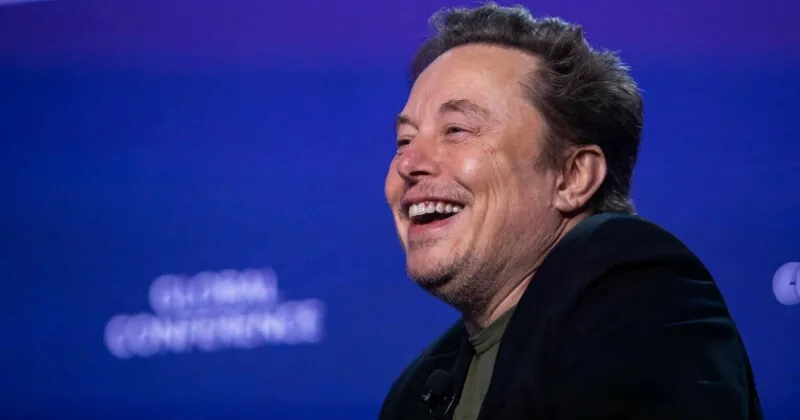
Tesla reported calendar Q2 capex of $5.8 billion after $2.5 billion in the prior quarter, pushing free cash flow to negative $1.1 billion. For decision-makers, the key question is how fast the company can turn AI chips and robotics bets into cash and margins under heavy regulatory and competitive pressure.
Tesla’s numbers in calendar Q2 are a loud signal: capex more than doubled to $5.8 billion from $2.5 billion the prior quarter, and free cash flow fell to negative $1.1 billion. That is down 848 percent year-on-year, and it is happening while the company says it is entering what it calls its “largest and most exciting period of investment.”
The money is largely tied to AI silicon and robotics, and it shows up in how Tesla framed its spending trajectory. Tesla expects spending to keep rising and exceed $25 billion for the year, and the underlying logic is straightforward even if the execution is not: Tesla needs more AI chips to scale Optimus. In other words, the capex is not just “spend more,” it is “spend now so we can build what we need later.”
Elon Musk used the earnings call to talk up Tesla’s Terafab ambitions, but he did not supply much beyond direction and intent. He described Terafab as an effort where equipment orders have already been placed for the development fab in Austin. The plan is also specific in scope: lithography mask production, plus logic, memory, and packaging, and chip testing all under one roof. The promise, in Musk’s words, is a “very fast iterative cycle,” meaning Tesla wants to shorten the time between design, fabrication, testing, and improvement. That matters in AI, where performance and cost curves can shift quickly, and where teams need to iterate faster than they can if every step depends on outside partners.
The bet is not subtle. Musk acknowledged Terafab is a “high-risk, high-payoff bet on AI chips.” And that framing matters for boards and CFOs because it puts the company on the hook for capex-heavy execution while returns may arrive late, unevenly, or not in a straight line. For context, Tesla also reported that its automaker side is still producing real revenue: vehicle deliveries rose 25 percent year-on-year in Q2 to 480,126, and total automotive revenues surpassed $20 billion. But operating margin fell to 1.4 percent from 4.1 percent a year ago, which is the tell that this is not a clean story of growth funding the future. It is growth happening alongside margin compression, while investment accelerates.
On Optimus, Tesla basically telegraphed two realities at once. First, Musk reiterated that it believes Optimus, the humanoid robot, will be its biggest product. Second, he warned it is a “very complex problem to solve,” and Tesla’s messaging leans into complexity rather than timelines. That tension is important for executives because humanoid robotics is not just a hardware problem. It combines perception, actuation, control software, safety, and manufacturing repeatability, and it also requires the operational credibility to sell deployments or subscriptions without turning the tech into a headline risk machine.
Tesla also faces competition from China, which is also talking up humanoid robots. Musk claimed Optimus will be the first “able to do generalized tasks,” a statement that raises the bar for what “generalized” must mean in practice. If the first meaningful deployments are narrow and brittle, investors could interpret it as “demo-first” rather than “productization-first.” That is especially relevant when the company is simultaneously scaling capex, since capital markets tend to punish gaps between narrative and measurable milestones.
Then there is Robotaxi, where the regulatory overlay is not an afterthought, it is part of the product definition. Musk said Tesla is “going as fast as humanly possible in scaling Robotaxi… while trying to ensure that we do not harm anyone at all and ideally do not even run over a pet.” The regulator angle is why Robotaxi timelines can shift even when engineering improves, because approvals, testing conditions, and safety requirements are negotiated in public and enforced in practice. Tesla’s challenge is to keep momentum without creating outcomes that trigger political or regulatory slowdowns.
Even the SpaceX angle has consequences for how stakeholders read Tesla’s strategy. In response to a question about combining Tesla and another Musk company, SpaceX, Musk acknowledged overlap but said it was not possible to talk about a combination on Tesla’s results call. Brandon Ehrhart, Tesla’s general counsel, instead said Tesla continues to benefit from its relationship with SpaceX and has “numerous beneficial transactions.” For decision-makers, this is a reminder that capital allocation and corporate structure are not separate from execution. If the market suspects resource entanglement, it may treat delays in one area as risk in another.
The market reaction reflected that uncertainty. Shares fell in after-hours trading, while SpaceX continued its downward trajectory, standing at just over $115 by yesterday’s close, below its $135 IPO price and far from its $225 high. The shared theme is simple: investors may like the vision, but they are forced to price the timing, margins, and cash burn today. Tesla’s current setup asks the toughest question that founders and boards face in AI and robotics: can you build the compute and manufacturing backbone fast enough to defend margins and credibility, while regulators watch safety and competition accelerates?
This story's Key Insights and Take-aways are locked.
Create a free account to unlock Executive Actions for one credit.
Register to UnlockAlways free for Executives Club members. Join the Club
More in Business

Anthropic’s Levant Alpöge cracks the Jacobian conjecture after 87 years
A Harvard valedictorian used Claude to hit a 1939 breakthrough, but the missing “why” is the real problem.

Uber buys Delivery Hero for nearly $15B, vaulting to top food delivery outside China
The deal doubles Uber's dual-services footprint and pushes a ride-and-eats bundling play into 50 more markets.

Epic and Google drop settlement bid, forcing rival Android app stores by July 22
Google told the court it is ready to carry third-party app stores starting Wednesday, July 22.