
Tesla's SpaceX-powered Roadster leaps over five vehicles at Texas demo
The long-promised Roadster finally performed live, using cold-gas thrusters to clear Tesla's own lineup in a single bound.
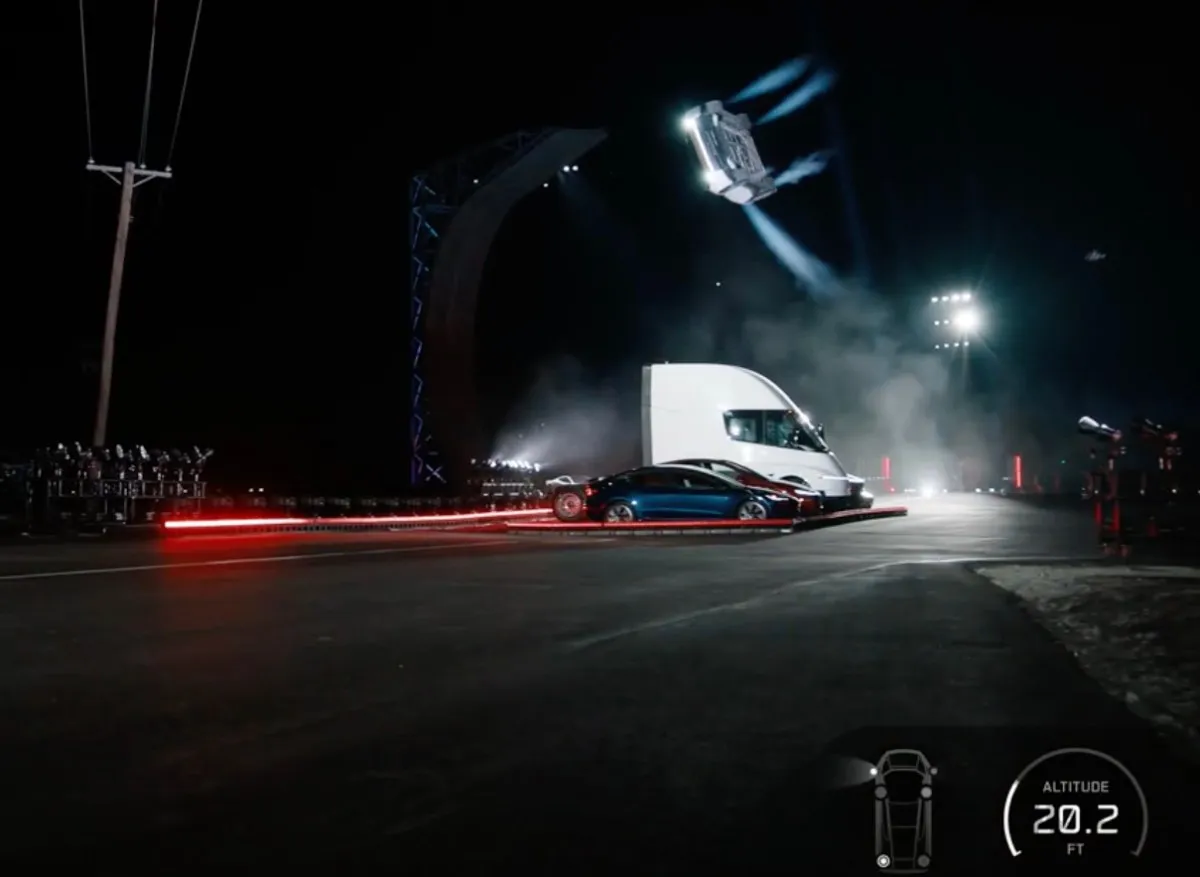
Tesla revealed its next-generation Roadster at a Texas demo, where the car used SpaceX-supplied thrusters to leap over five vehicles from its own lineup. The stunt turns a long-hyped product into a visible proof point, signaling that Tesla is still leaning on spectacle and cross-company engineering to sell its future.
Tesla's SpaceX-powered Roadster is real, and it jumps. At a demo in Texas, the next-generation sports car used thrusters to leap over a Cybercab, a Cybertruck, a Tesla Semi, a Model Y, and a Model 3, clearing five vehicles from the company's current lineup in a single rolling showcase. The moment was captured as a reveal, not a sales event, but it packed the punch of a product launch: Tesla is still willing to use raw spectacle to prove its engineering ambitions.
The Roadster has been in Tesla's pipeline since 2017, when the company first showed a prototype and promised a rocket-inspired package. This Texas demo is the most concrete public proof yet that the concept is still alive, and that the SpaceX collaboration is more than a branding exercise. The car did not just roll across the stage; it vaulted over a collection of Tesla's own products, a self-referential statement that the company's future lineup includes both mass-market EVs and a halo car with aerospace-grade hardware.
Cold-gas thrusters, like the ones SpaceX uses for attitude control on its rockets, expel pressurized gas to generate thrust without combustion. On a car, they can push the vehicle down, forward, or sideways, which is how a heavy sports car can briefly leave the ground and then settle back down. The 'falls with style' part of the original reveal is the key engineering trick: thrusters don't just launch the car, they manage the landing. That is what separates this demo from a simple jump stunt, and it is why the Roadster has become a proof point for how SpaceX technology can bleed into Tesla's passenger vehicles.
For executives watching the auto and aerospace industries, the demo is a reminder that Tesla's competitive moat is not just battery chemistry or software; it is also the ability to borrow rocket science from a sister company. SpaceX has spent years perfecting precision control of spacecraft, and now Tesla is applying that expertise to a car that is designed to hug the road and, occasionally, leave it. The cross-pollination is a structural advantage that traditional automakers cannot easily replicate, because few of them own a rocket company.
The timing matters as much as the technology. Tesla is facing slower EV demand in key markets, a crowded field of challengers in China, and an aging lineup in some segments. The Roadster is not a volume product, but it is a perception product. A demo like this resets the narrative: Tesla is not just a carmaker that is defending market share; it is a company that can still produce moments of genuine astonishment. That has outsize value for brand loyalty and for the CEO's longer-term story about Tesla as a robotics and AI company, even if the Roadster itself will sell in tiny numbers.
There are also regulatory and practical questions that this demo does not answer. Thrusters that fire on public roads would likely face safety scrutiny from regulators, and no production version of the Roadster has been officially priced or dated beyond Tesla's earlier promises. The company has a history of showing dramatic prototypes that take years to reach customers, and the Roadster is the most extreme example of that pattern. Still, the fact that Tesla chose to demonstrate the thruster system on a live vehicle, rather than in a rendered video, suggests the engineering is further along than many skeptics assumed.
For decision-makers at other automakers and mobility startups, the takeaway is not that every company needs a thruster-equipped halo car. It is that Tesla continues to use product reveals as a strategic weapon to dominate attention at a time when EV news is increasingly about price cuts and production delays. The Roadster demo is a reminder that, in a crowded market, the company that can make people look up from their feeds still sets the conversation. And with SpaceX as a sibling, Tesla has a source of technology and theater that no other car company can simply buy or license.
The demo also hints at what a future Roadster could mean for Tesla's brand architecture. A car that can leap over a Semi is not just a sports car; it is a statement of intent. It tells customers that Tesla is still the company that does what others say is impossible, and it gives the broader lineup a halo effect that no traditional advertising budget can buy. Whether the Roadster reaches production this year, next year, or later, the message is already clear: Tesla is not done surprising people, and it is using rocket-grade hardware to make sure everyone watches the next move.
This story's Key Insights and Take-aways are locked.
Create a free account to unlock Executive Actions for one credit.
Register to UnlockAlways free for Executives Club members. Join the Club
More in Technology

Cop fired after sharing Flock login with ICE husband: 983 searches
A Savannah officer's shared credential let an ICE agent run hundreds of plate searches on Hispanic drivers, exposing a surveillance backdoor.

Elizabeth Holmes doc 'You Can See Everything' posts second-biggest doc debut ever
The true-crime draw shows fraud narratives still sell - a signal for media execs and a caution for founders.
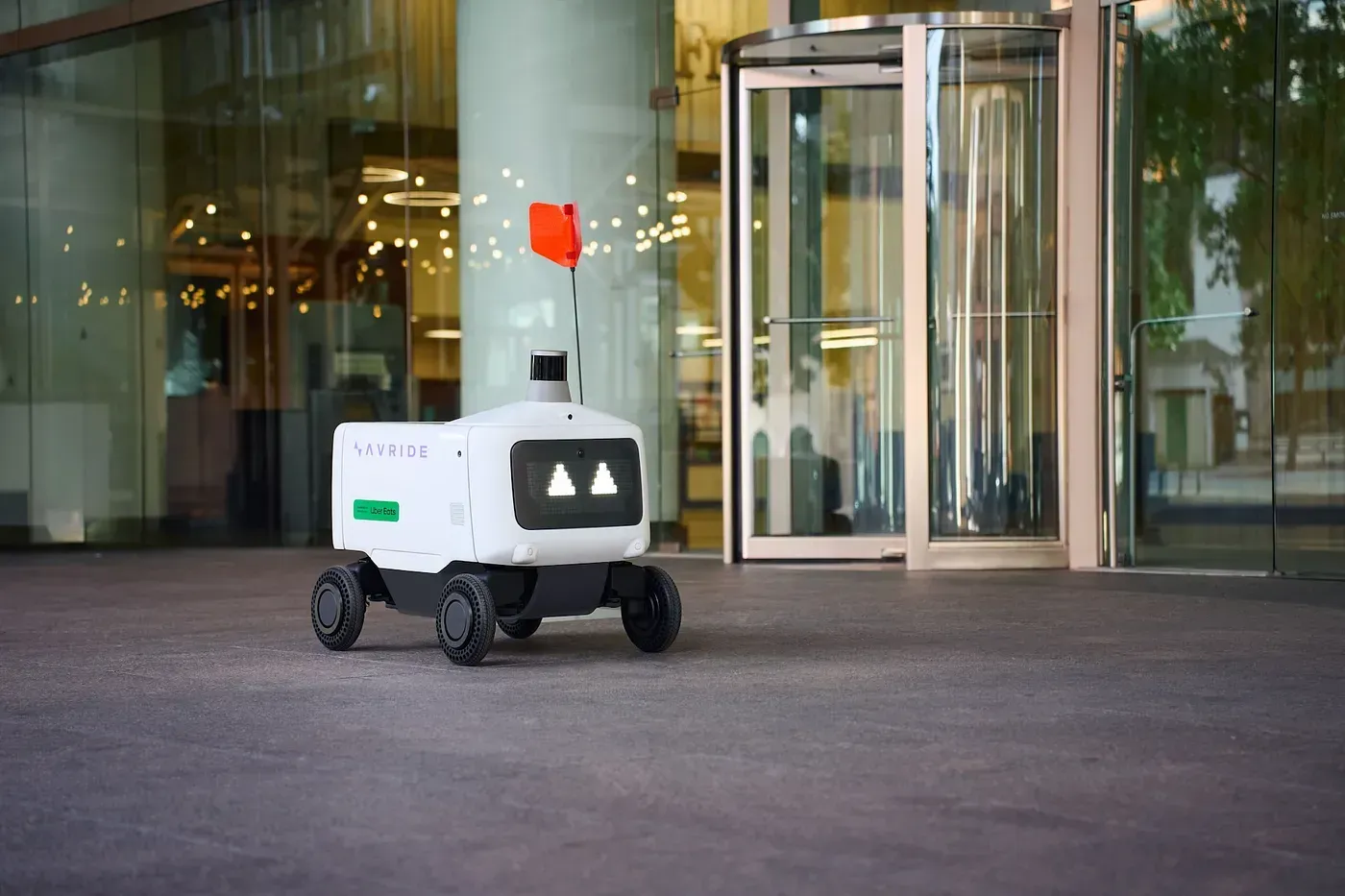
She blocked an Uber delivery robot to save jobs. Police arrested her.
Carolyn Marvin's disorderly conduct arrest turns a sidewalk standoff into a test case for how cities police the automation-versus-workforce debate.