
Tesla stock drops 13.5% Thursday after weak profits and heavy AI spending
A one-day selloff erased about a quarter of value, forcing investors to reprice Tesla’s spending discipline.
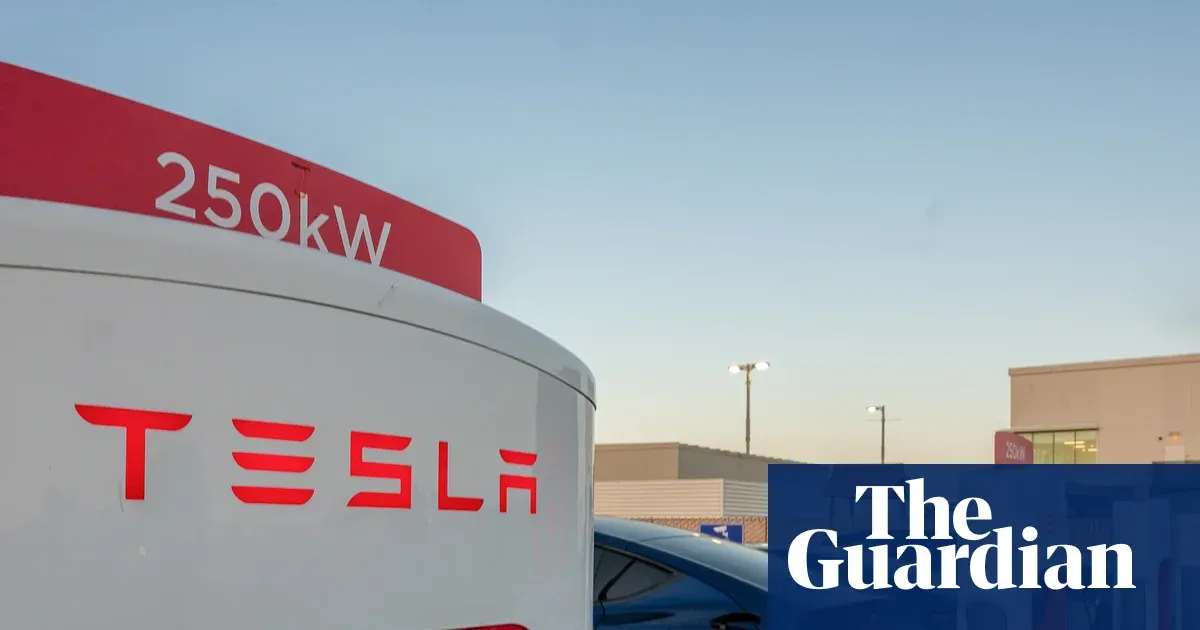
Elon Musk's Tesla stock fell about 13.5% on Thursday after the company revealed weak profits and high spending tied to AI and robotics. The move signals to decision-makers that markets are getting stricter about capital expenditures and near-term earnings.
Tesla stock took a gut-punch on Thursday, sliding about 13.5% in one of the biggest single-day market losses in the company’s history. The selloff came right after the company revealed weak profits alongside high spending on AI and robotics. In one session, the market effectively decided that Tesla’s latest bets are arriving with too much cost and not enough payoff.
The immediate consequence is blunt: the company lost roughly a quarter of its value following that disclosure. And if you are an executive trying to read the subtext, the message is just as clear. Investors were already wary coming into the report, and the numbers confirmed their worry: Tesla has struggled throughout the year and has lost about 27% of its market value, driven by huge capital expenditures plus profits that were weaker than expected.
To understand why this matters, you have to remember what “capital expenditures plus weak profits” does to a public company’s valuation. Capex is not automatically bad. In fact, it can be the fuel for future scale. But markets treat heavy spending as a bet on timelines. When profits disappoint at the same time, investors stop arguing about the technology and start arguing about execution risk and timing risk. Tesla’s AI and robotics spending is the kind of narrative category that can soak up skepticism for a while, but only if near-term financial performance holds up or improves in step. Thursday’s move suggests that the tolerance window narrowed.
That narrowing shows up in how quickly the market reprices expectations. A double-digit single-day drop is rare for a megacap automaker, and “one of the biggest single-day market losses” is not a label companies earn every quarter. Tesla’s share price reaction tells you the market was waiting for the earnings profile to either validate the spending story or force a downgrade. With weak profits on the table, investors chose the second path, and they did it immediately.
There is also an incentive story behind the headlines. Tesla has been making large bets, and public-company dynamics mean those bets become a standing negotiation with shareholders. The negotiation has two levers: the pace and the proof. Spend faster, but show improving margins or improving operating performance. Spend more on future-facing initiatives, but demonstrate that current operations can absorb the cost. Thursday’s selloff implies investors thought Tesla did neither sufficiently, or not yet.
Board-level implications follow from that. When a stock drops about a quarter of its value after a disclosure, it is rarely just about that day’s headlines. It pressures management credibility, not in a theoretical way, but in a practical way: investors demand clearer spending cadence, more tangible progress metrics, and stronger linkage between AI and robotics investments and measurable business outcomes. Even without assuming any internal disagreements, the market reaction itself increases the urgency for management to explain the “why now” behind high spending and the “when” behind expected results.
Regulatory background can also shape investor sentiment for automakers and for technology-forward initiatives, because safety, compliance, and governance become extra scrutiny when companies pursue ambitious, hardware-adjacent systems. While this particular source focuses on weak profits and AI and robotics spending, the broader reality is that when companies bet big in AI, they become more exposed to external standards and oversight, whether in product safety, data practices, or operational compliance. That means the cost of getting things right can rise, and the market tends to price that risk upfront.
For peers, the strategic stakes are bigger than Tesla-specific drama. Tesla is a bellwether for how capital markets reward or punish “future-first” narratives when financial fundamentals wobble. If you lead an automaker, a hardware platform, or any company blending physical products with high-velocity R&D, Thursday’s move is a case study in what happens when spending runs ahead of profits. Investors are not necessarily rejecting AI or robotics as categories. They are reacting to the combination of high spending and weaker-than-expected profits, and they are doing it with fast, sometimes unforgiving repricing. That is the playbook executives must internalize: the market will let you build, but it also wants proof that building is paying off on a timeline it can trust.
This story's Key Insights and Take-aways are locked.
Create a free account to unlock Executive Actions for one credit.
Register to UnlockAlways free for Executives Club members. Join the Club
More in Business

Anthropic’s Levant Alpöge cracks the Jacobian conjecture after 87 years
A Harvard valedictorian used Claude to hit a 1939 breakthrough, but the missing “why” is the real problem.

Uber buys Delivery Hero for nearly $15B, vaulting to top food delivery outside China
The deal doubles Uber's dual-services footprint and pushes a ride-and-eats bundling play into 50 more markets.

Epic and Google drop settlement bid, forcing rival Android app stores by July 22
Google told the court it is ready to carry third-party app stores starting Wednesday, July 22.