
Three new Helicobacter types were found in 4 pygmy sperm whales' stomachs
Digestive damage was severe in all four infected whales, but scientists could not confirm the bacteria caused death.
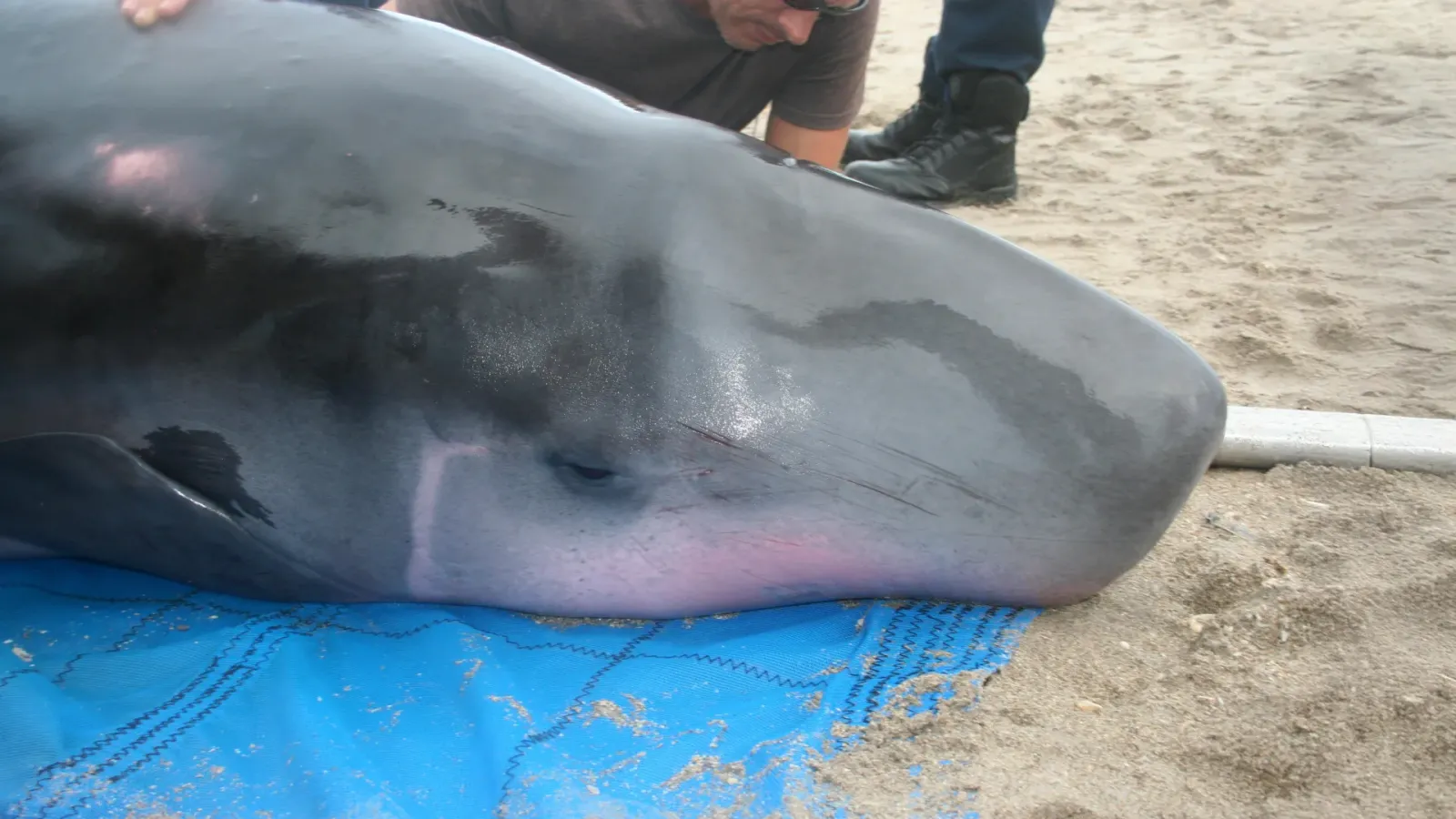
Scientists investigating decades of pygmy sperm whale strandings found three previously unknown Helicobacter bacterial types inside the animals' stomachs. In all four infected whales, the bacteria were associated with serious digestive injuries, while the study did not confirm they caused death.
Scientists studying decades of pygmy sperm whale strandings say they found three previously unknown types of Helicobacter bacteria hiding in the animals' stomachs. The discovery shows up in four infected whales, and it came with a blunt warning sign: all four showed serious digestive damage.
According to the report, those stomach injuries included inflammation, ulcers, scarring, and parasite infestations. But here is the key limit that matters for how the science gets used: the bacteria were not confirmed as the cause of death. In other words, the findings point to a real biological mystery inside one of the ocean's most elusive whales, without crossing the line into proof of fatal causation.
Why should executives care, even if you are not running a marine biology lab? Because this kind of work is a reminder that “elusive” animals do not just disappear from data. They also concentrate risk in hard to reach places. When a species is difficult to study, strandings become a rare, high-value window into what is going on in the wild. That turns each recovered body into something closer to a case file than a one-off tragedy. For conservation teams, insurers of biodiversity-linked assets, and research funders, the incentive is to invest in the fastest, most rigorous ways to convert strandings into answers.
The science also lands in a regulatory and governance world where evidence standards matter. If regulators ever have to decide whether to treat a particular pathogen or gut condition as a contributing factor in mortality, they will want more than “was found in infected animals.” They will want causal chains: timing, mechanisms, prevalence across healthy controls, and whether disease patterns track with environmental drivers. This study, by its own framing, stops short of confirming causation. That is not a failure. It is exactly the kind of evidence boundary that keeps environmental policy from being steered by correlation alone.
There is also a practical second-order effect for anyone funding or overseeing animal health investigations: the report suggests the digestive ecosystem can be rough, even when the organism you are testing is not clearly the sole villain. The whales had both the newly identified Helicobacter types and other complications, including parasite infestations. From a systems perspective, that matters because it widens the set of hypotheses leadership teams must be prepared to support. Sometimes the real “root cause” is a chain of stressors. In the ocean context, stressors can include changing food availability, temperature shifts, pollution exposure, or other environmental pressures. The source does not claim which of those apply here, but it does show how intertwined gut pathology can become.
If you are an operator or investor overseeing research programs, the takeaway is about how to design follow-on work when the initial discovery is strong but causal certainty is missing. The finding of three previously unknown Helicobacter types is a concrete starting point, not the final destination. The next phase of scrutiny would logically focus on whether these bacteria appear in other strandings, whether healthy individuals carry them, and how the severity of inflammation, ulcers, scarring, and parasite burdens aligns with age, sex, location, and time of year. Without that, organizations risk overreacting to compelling visuals, like “serious digestive damage,” without knowing what actually tipped the outcome.
And for boards and decision-makers, there is a broader lesson. Marine conservation and wildlife health programs often live under public attention cycles and limited budgets. When new discoveries emerge, it is tempting to treat them as verdicts. This report is more useful than a verdict. It shows a tight association between newly identified Helicobacter types and severe digestive damage in all four infected pygmy sperm whales, while explicitly not confirming bacteria as the cause of death. That framing is the difference between building durable scientific priorities and chasing headlines that burn out.
For peers working on animal health, conservation strategy, or ecosystem risk, the stakes are immediate. If the goal is to reduce mortality or improve species resilience, you need both: discoveries that reveal hidden biological actors, and disciplined evidence standards that tell you where your certainty ends. This study gives you both components, with a reminder that the ocean still holds more than one mystery at a time.
This story's Key Insights and Take-aways are locked.
Create a free account to unlock Executive Actions for one credit.
Register to UnlockAlways free for Executives Club members. Join the Club
More in Science

NASA-backed engineers shrink high-fidelity energetic particle sensing into CubeSats
A compact, multiview particle-detection instrument could turn CubeSats into near-Earth science platforms without sacrificing data quality.

Stage 4 lung cancer at 44: a never-smoker’s ALK story that beat the odds
Summer Farmen turned an ALK-positive diagnosis into a six-year survival case study on targeted therapy and patient power.
Zoo elephants live longer now: study shows steady life expectancy gains since the 1960s
A multi-institution study in Scientific Reports finds modern zoo care is extending elephant lifespans, decade by decade.