

Timbaland Sues Ex-Managers for $15M Over Fraud, Foreclosure
Producer claims Gary Marella and Bruce Seckendorf hid $900,000 in self-payments while his home neared foreclosure.
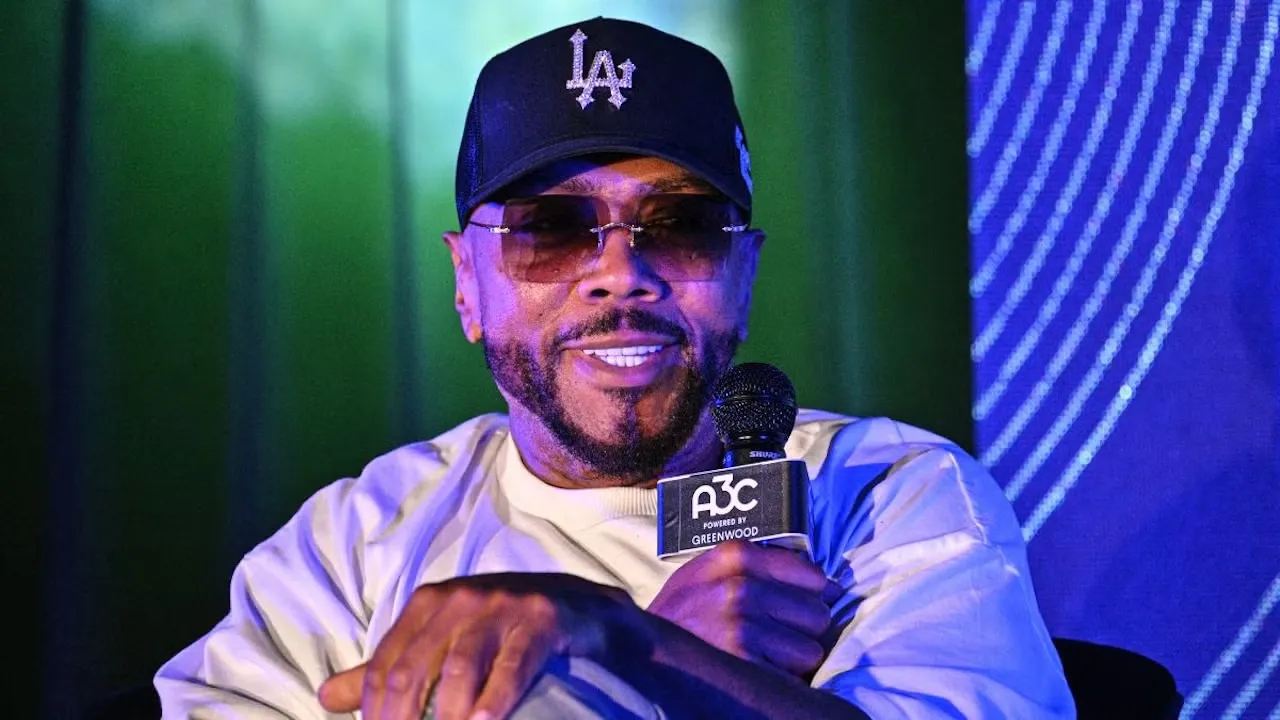
Timbaland (Timothy Mosley) sued former manager Gary Marella and business manager Bruce Seckendorf for over $15 million, alleging fraud, civil theft, and breach of fiduciary duty. The case exposes how trusted financial gatekeepers can silently erode a star's assets until a single foreclosure notice cracks the facade.
Timbaland, the Grammy-winning producer and rapper born Timothy Mosley, filed a lawsuit on Friday seeking over $15 million from his former manager Gary Marella and former business manager Bruce Seckendorf, accusing them of fraud, breach of fiduciary duty, and civil theft. The filing, obtained and reviewed by TheWrap, alleges that Marella "stole millions in unauthorized commissions, fees and reimbursements" while Seckendorf failed to pay Mosley's mortgage, allowing his home to reach "the brink of foreclosure."
The complaint paints a picture of systematic concealment. It claims the pair "used their entrusted authority to enrich themselves and others, conceal financial misconduct and deplete Timbaland's valuable assets." Most striking is the alleged prioritization: Seckendorf's firm supposedly funneled nearly $900,000 to themselves and to attorneys they engaged over a five-month span, while leaving twelve months of mortgage arrears unpaid and concealed from Mosley. The same document also says the firm failed to pay substantial federal taxes on time, triggering millions in penalties and interest, all while continuing to pay themselves and other professionals millions in commissions, fees, and purported loan repayments.
The trigger for the lawsuit was a 2025 foreclosure notice on Timbaland's home. According to the filing, the producer reached out to Seckendorf after receiving the notice, but Seckendorf could not clearly explain why his office had failed to make mortgage payments without informing Mosley. Timbaland then hired independent legal counsel and new financial representatives, who allegedly uncovered a web of unauthorized payments, concealed credit-card arrangements, falsified communications, undisclosed liabilities, and purported loans Mosley says he never knowingly agreed to. The complaint emphasizes that the foreclosure was not caused by a simple lack of funds, but by the defendants' alleged choices to pay themselves first.
Legally, the case rests on a familiar but powerful trio of claims: fraud, breach of fiduciary duty, and civil theft. In the music industry, where artists often delegate complete financial control to managers and business managers, the fiduciary bar is supposed to be high. Managers are expected to act in the artist's best interest, disclose conflicts, and obtain consent before taking commissions or loans. Timbaland's suit alleges all of that was cast aside. The complaint's language, including "deplete Timbaland's valuable assets" and "stop the continuing unauthorized use of Timbaland's name," suggests the alleged misconduct went beyond simple mismanagement into active self-dealing.
Marella, for his part, disputes the allegations in blunt terms. He told TheWrap, "I dispute these allegations. Unfortunately, Tim is attempting to shift responsibility for his own overspending and financial decisions onto someone else (again) as he did before we managed him." Marella says that when he began managing Timbaland in 2017, long after the producer's biggest hits, Timbaland was already broke, in debt, and living in a rental. Over roughly nine years, Marella claims they generated about $75 million in business, but Timbaland continued spending beyond his means, eventually selling his home last year and moving into a rental in Coral Gables. Marella insists artist management was his role, not handling finances, and that the idea he paid himself without knowledge is "simply absurd." A representative for Seckendorf did not immediately respond to TheWrap's request for comment.
This clash highlights a structural vulnerability baked into the artist-manager relationship. Creators at the peak of their careers often hand over bank accounts, bill payments, tax filings, and investment decisions to a small inner circle. That trust can be efficient, but it also creates an information asymmetry that is ripe for abuse. For every $75 million in gross business generated, the difference between authorized and unauthorized deductions can blur easily, especially when the artist is not personally reviewing monthly statements. The fact that Timbaland only discovered the alleged pattern after a foreclosure notice is a stark reminder that in many jurisdictions, mortgage servicers and tax authorities are not required to notify a secondary party until delinquency has spiraled. By then, the damage is already done.
The second-order implications extend far beyond celebrity gossip. For any executive, founder, or board member who delegates financial operations to a trusted lieutenant, the story is a cautionary tale about separation of duties. Forensic accountants often cite the "red flags" of unexplained reimbursements, late tax payments, and a reluctance to show itemized invoices. Here, the alleged pattern included falsified communications designed to mislead, which suggests that even periodic check-ins may not be enough if the gatekeeper controls the narrative. The solution is not micromanagement, but independent verification: regular audits, direct notification from banks and mortgage servicers, and a clear policy that no self-dealing transaction is permitted without written approval.
For the music industry, the lawsuit lands at a moment when catalog sales and streaming royalties make catalog owners like Timbaland especially vulnerable to aggressive financial manipulation. If the allegations hold, the case could prompt more artists to require third-party oversight of their business managers, and it could pressure management firms to carry stronger fiduciary liability insurance. The complaint's request for an accounting is particularly important: it asks the court to trace every dollar the defendants received, which could reveal a pattern of unauthorized payments that stretched for years. The outcome may ultimately be as much about deterrence as it is about recovering the $15 million. For every Timbaland, there are likely many smaller artists and creators whose finances never make the news, quietly drained by the very people they trusted to protect their wealth.
This story's Key Insights and Take-aways are locked.
Create a free account to unlock Executive Actions for one credit.
Register to UnlockAlways free for Executives Club members. Join the Club
More in Business

Binance scrambles to claw back $6.3B stolen in North Korea-linked hack
The world's largest crypto exchange faces the biggest heist on record, and the recovery effort will test the limits of blockchain forensics.
North Korea's TraderTraitor unit blamed for Binance's record $6.3bn heist
The largest crypto theft on record has rattled markets, slashed billions from token values, and put Binance's security revamp under the spotlight.

Binance freezes $3B of record $6.3B hack, but $3.3B is already gone
The world's largest crypto exchange halted all withdrawals after a suspected North Korean heist, and analysts say most of the stolen funds are already beyond reach.