
Tom Coll launches Inis Records, staking an Irish-only label infrastructure on vinyl and reissues
Fontaines D.C.’s drummer builds an independent label and record store with Richter Collective’s Michael Roe and Faction’s Ken Allen.
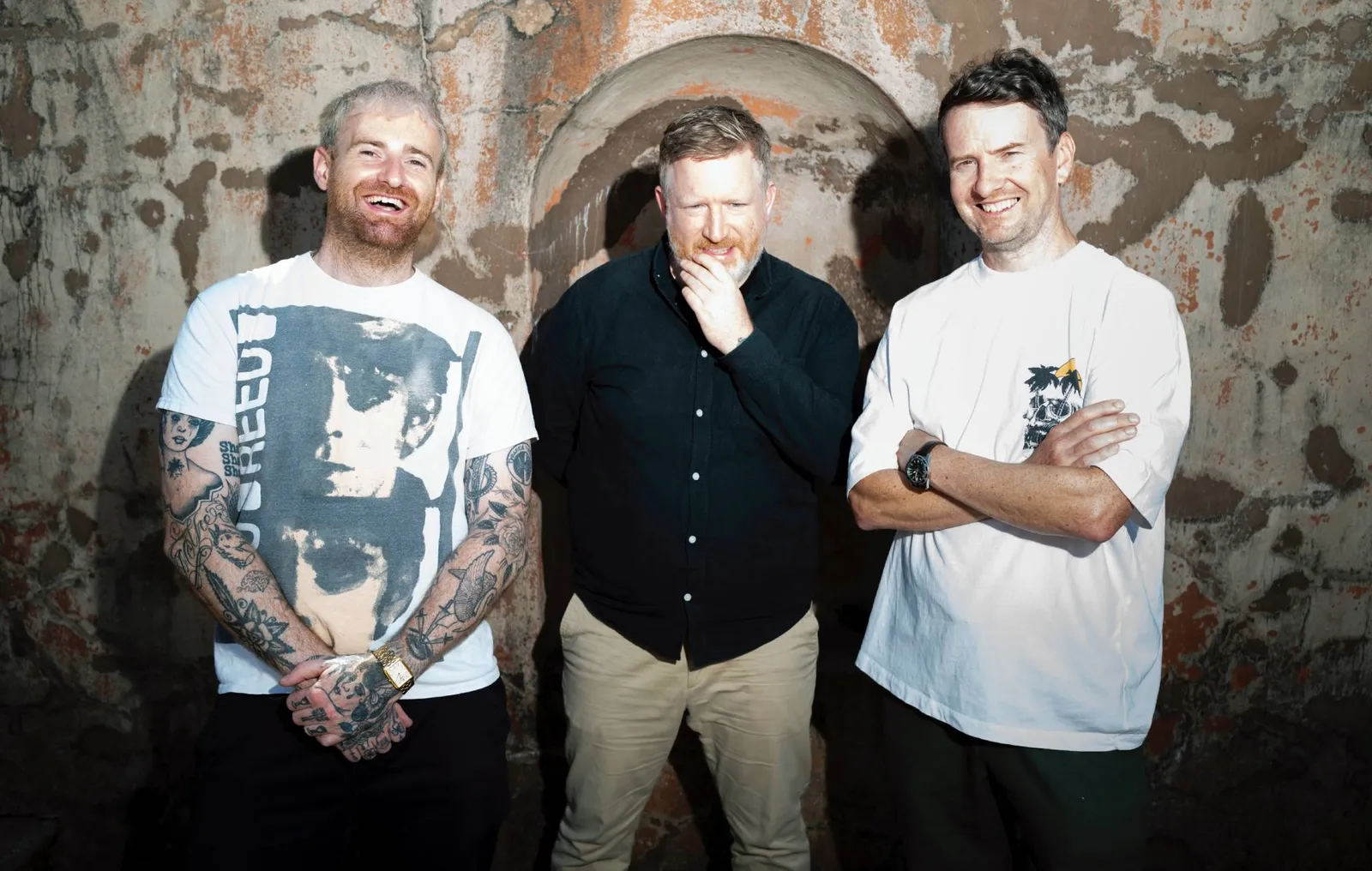
Tom Coll has launched Inis Records, an independent label and record store dedicated exclusively to Irish music, alongside Michael Roe and Ken Allen. The move aims to strengthen Ireland’s independent music infrastructure through original releases, out-of-print reissues, and services for select labels.
Fontaines D.C. drummer Tom Coll is launching Inis Records, a new independent label and record store dedicated exclusively to Irish music, with Richter Collective’s Michael Roe and Faction Records’ Ken Allen. Coll is not just putting out records. He is building an infrastructure play: a physical-focused store, a reissue pipeline, and distribution and behind-the-scenes services that can help other Irish independent labels and artists grow.
That “infrastructure” emphasis is the whole point of the project, according to Coll. He frames Inis as providing an independent label infrastructure in Ireland, giving Irish music a platform to grow and create unique physical music for Irish artists. If you are used to thinking of labels as just catalogs and marketing budgets, this is a reminder that in music, distribution, physical supply, and brand credibility are often the bottlenecks. Inis is positioning itself to be the bottleneck-breaker by owning the channel it wants to control: an online store that exclusively stocks Irish music across eras and genres, plus label services for selected independent labels.
The practical model is fairly specific. Inis will release new music from both emerging and established Irish artists. It will also do landmark reissues and overlooked records that are currently out of print. That reissue focus matters because out-of-print catalog is where fans tend to churn to imports, bootlegs, or streaming-only substitutes. By bringing older titles back in physical formats, Inis is creating a “complete the collection” incentive that streaming cannot replicate. It is also, implicitly, a risk management strategy: reissues often lean on proven demand and cultural relevance, even if the market still needs a credible storefront.
The launch slate makes the intention crystal clear: Inis will kick off with a new edition of “Against Nature,” the currently out-of-print 1989 debut album by cult Cork art-rock band The Fatima Mansions. Later this year, Inis plans a traditional Irish music compilation assembled by Coll, plus a collection of showband recordings curated by The Mary Wallopers’ Charles Hendy. This is not random A&R sampling. It is an editorial commitment to Irish musical identity as a category, with different sub-genres and histories under one physical umbrella.
Coll also wants the store to be more than a passive shelf. Inis has invited independent and rising artists without their own distribution arrangements to submit physical releases for consideration by its store. That is essentially a back-end offer disguised as a front-end retail decision. If Inis can convert “we have music” into “we have physical distribution,” it becomes a funnel. And once a store becomes the default funnel, you get more submissions, more inventory depth, and better odds of identifying the next wave of Irish acts that otherwise might not have a viable physical pathway.
Roe’s and Allen’s involvement points to why this could be more durable than a typical side project. Michael Roe is the drummer of Irish math-rock band Adebisi Shank and a co-founder of the Richter Collective label, an influential independent label that released music by acts including And So I Watch You From Afar, The Redneck Manifesto, and Enemies before closing in 2012. Ken Allen’s Faction Records roster has included James Vincent McMorrow, Sorcha Richardson, and Niamh Regan. Their shared experience is the same lesson Coll is repeating: “infrastructure” is not abstract. It is who gets pressed, who gets distributed, who gets the right shelf space, and who has the operational know-how to do it repeatedly.
Roe explicitly ties the project to Ireland’s longer-run dependence on outside infrastructure. Over the last 30 years, the country has relied heavily on infrastructure from outside the country. Roe hopes Inis Records can help build a stronger independent music infrastructure, giving a generation of new artists and labels the support they need to grow their businesses in Ireland while reaching audiences internationally. That international audience ambition is key for decision-makers watching this from outside the Irish scene. A store that exclusively stocks Irish music is only as powerful as its ability to reach beyond the local market. Inis’s promise of distribution and behind-the-scenes services suggests it is trying to turn local cultural curation into a scalable distribution advantage.
For anyone thinking about the second-order implications, Inis is also a signal about what happens when “brand” and “operations” merge. The Inis store is already stocking records by Fontaines D.C., Gilla Band, Just Mustard, Gurriers, Enya, John Francis Flynn, and Bicep, among many others. That early lineup matters because it can establish retailer credibility fast, which is often the hardest thing for new label-store hybrids. Meanwhile, Coll and Fontaines D.C. are active across projects: Coll and bandmate Carlos O’Connell have worked on the upcoming second album by French indie group Film Noir, previewed via the double single “VIENS TIENS TOI” and “VEGITA.” Coll and O’Connell also contributed original music to the soundtrack for Peaky Blinders: The Immortal Man alongside Fontaines bandmate Grian Chatten.
So what should executives and board-level operators take from this? Inis is betting that physical music, local identity, and independent label infrastructure can be built as a system, not a hobby. The strategic stake is straightforward: Ireland’s independent scene needs a stronger infrastructure, and Inis aims to provide it through releases, reissues, a dedicated Irish-only online store, and services for other independents. If it works, it becomes a template for how region-specific labels can compete globally: curate with editorial discipline, reduce distribution friction, and convert cultural archives into modern physical demand.
This story's Key Insights and Take-aways are locked.
Create a free account to unlock Executive Actions for one credit.
Register to UnlockAlways free for Executives Club members. Join the Club
More in Business

Anthropic’s Levant Alpöge cracks the Jacobian conjecture after 87 years
A Harvard valedictorian used Claude to hit a 1939 breakthrough, but the missing “why” is the real problem.

Uber buys Delivery Hero for nearly $15B, vaulting to top food delivery outside China
The deal doubles Uber's dual-services footprint and pushes a ride-and-eats bundling play into 50 more markets.

Epic and Google drop settlement bid, forcing rival Android app stores by July 22
Google told the court it is ready to carry third-party app stores starting Wednesday, July 22.