

Tony Hawk says “every ollie is a gift” at 58, and he’s built his risk around it
The skate legend turned entrepreneur explains why saying no, and staying in movement, matters more as the stakes rise.
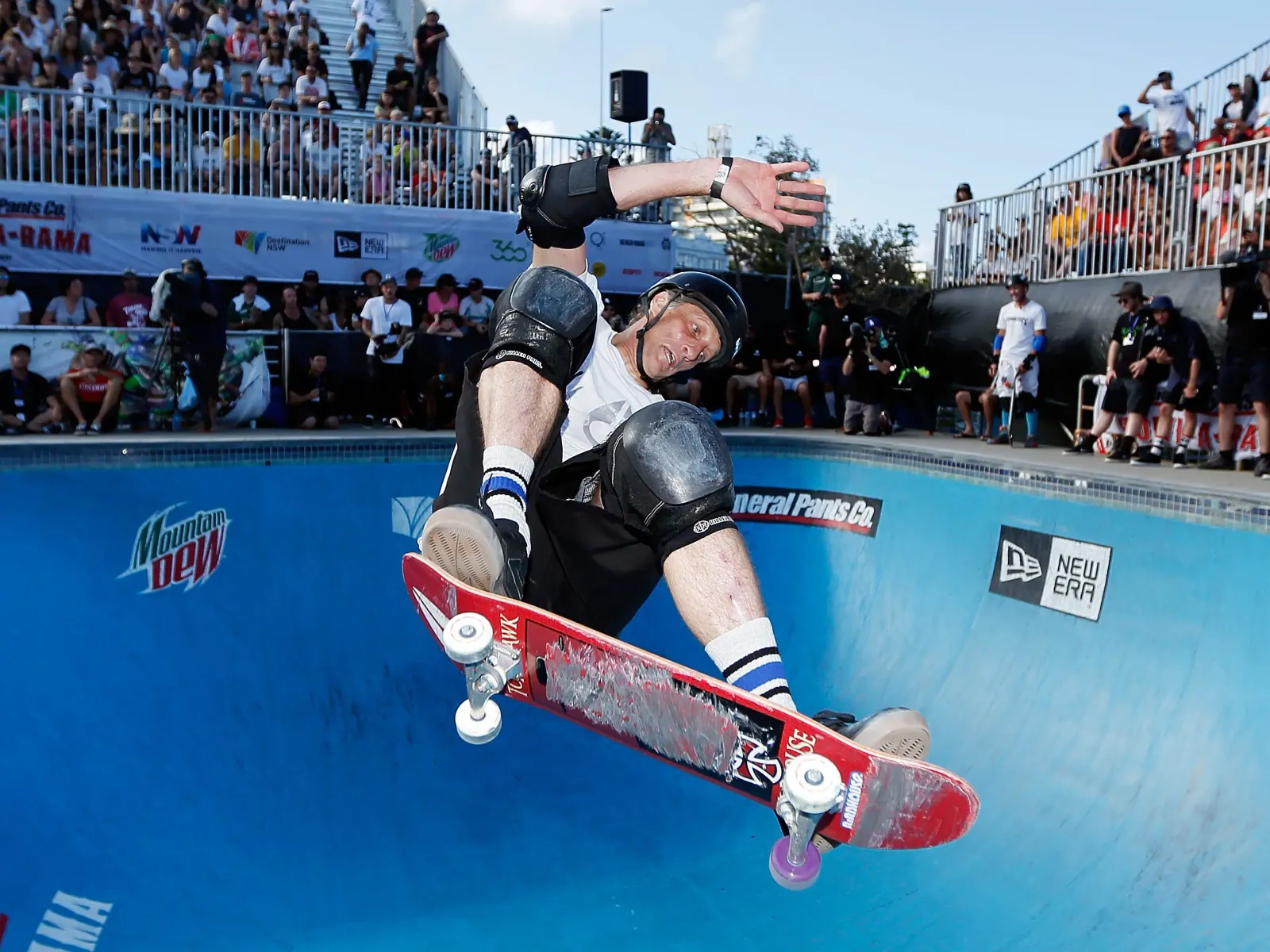
Skateboard legend and entrepreneur Tony Hawk, in an as-told-to essay with Qunol, says he learned to say no and reworked his approach to risk as he ages. For decision-makers, his framework is a practical template for prioritizing time, opportunities, and “risk-versus-reward” choices without losing what made you effective.
Tony Hawk is 58, and he says the meaning has shifted: “For a long time, I took my ability for granted. Now that I'm 58, every ollie is a gift.” In the same conversation, he connects that gratitude to a broader change in how he calculates risk. He is no longer doing the biggest, riskiest aerial spinning moves because the risk is “too great,” and instead he focuses on complicated techniques and tricks that still deliver the thrill.
He also describes a second, quieter decision he has made in life and business: learning to say no to more things. Hawk says being a businessman and athlete made time protection hard when he was raising his children, and as opportunities kept stacking up, he started evaluating each one. These days, he asks what the benefit is “not for me, but for skating as a whole,” and he frames empowerment as the ability to refuse the shiny option when it steals attention from what matters.
To understand why this hits, you have to notice the incentives underneath his story. Hawk is not just a celebrity talking about getting older. He describes an ecosystem where opportunities are constant, and every yes has an opportunity cost. He mentions trips to New York and premieres that “seems fantastic,” but also explains that at some point you “start losing yourself in all those opportunities.” That is the same tradeoff executives recognize when they run lean bandwidth operations and still get asked to sponsor, attend, speak, travel, or take on side quests that do not move the core mission.
Parenting and grandparenting are his personal case study for prioritization. Hawk and his wife, he says, have “ushered five kids into adulthood,” and he describes how raising kids required trial and error because their temperaments differed. Some had natural talent for skating but not the daredevil instinct; others had daredevil energy but not the experience. He says being a grandparent is “different,” because you get to be “fun, not just the fun police,” and he has gotten better at protecting family time. He even jokes that he still has not figured out how to get his youngest to clean her room, adding the very human reminder that “being available” is not just calendar math, it is relationship time.
Those details matter because Hawk’s business principle is really a time principle. He says it was difficult to be “efficient” at parenting while also being a businessman and athlete, but as he aged he learned better prioritization. He also describes how, over time, his risk management changed in the skate context: when he skates, he thinks about risk versus reward, and he chooses routes where the reward is still real without the same level of danger. That is a strikingly executive way to talk about product development or strategy. Big aerial moves, in his framing, are like high-variance bets. Smaller complicated tricks become like scaled execution, where you keep the core value while reducing catastrophic tail risk.
There is another layer here: movement as health infrastructure. Hawk says he started weightlifting and stretching outside of skating, explaining that he “didn't do those extracurricular exercises for years” during his career but now sees how important they are. He ties that shift to partnership and messaging via Qunol’s “Move Like A Champion” campaign, but the substance of the argument is plain. You do not have to be a professional skater. As you get older, he says, people want “to keep moving,” whether that is dancing, walking a dog, or chasing a grandkid. He also calls out play as a mental health asset, saying it helps keep you young.
He grounds that in a family scene at the beach, tossing a Frisbee and hearing his kids laugh and dig into the sand. The point is not sentimental fluff. It is second-order strategy: the best “risk management” sometimes means preserving the capacity to show up in your best state. Hawk describes movement, strength, and stretching as practical supports that keep him able to do what he loves, and he frames play and family togetherness as the emotional fuel that makes the whole system last.
And for decision-makers reading this, the takeaway is not that you should ollie. It is that Hawk’s late-life adjustment is a repeatable decision framework: he learned to say no, he rebalanced what level of risk is acceptable, and he made sure the opportunities he accepted benefited the mission, not just his calendar. In corporate terms, that is a board-level question. When bandwidth is limited and attention is the scarcest resource, leaders need a method to filter offers, travel, and side projects. Hawk’s method is explicit: he thinks about impact on skating as a whole, he checks risk versus reward, and he prioritizes time with people who anchor his purpose. In a world of constant requests and constant “yes” pressure, his story is a reminder that the smartest moves can be the ones you decline.
This story's Key Insights and Take-aways are locked.
Create a free account to unlock Executive Actions for one credit.
Register to UnlockAlways free for Executives Club members. Join the Club
More in Business

Anthropic’s Levant Alpöge cracks the Jacobian conjecture after 87 years
A Harvard valedictorian used Claude to hit a 1939 breakthrough, but the missing “why” is the real problem.

Uber buys Delivery Hero for nearly $15B, vaulting to top food delivery outside China
The deal doubles Uber's dual-services footprint and pushes a ride-and-eats bundling play into 50 more markets.

Epic and Google drop settlement bid, forcing rival Android app stores by July 22
Google told the court it is ready to carry third-party app stores starting Wednesday, July 22.