

Town raises $108M at $1B so AI assistants can work as a team
The Series B, co-led by Forerunner and Menlo, signals a shift from solo AI copilots to collaborative agent workforces.
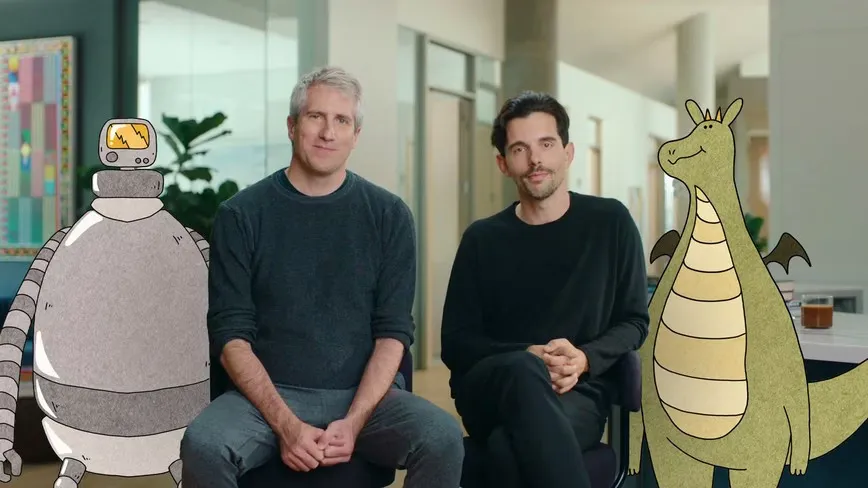
Town, a San Francisco startup, raised $108M in a Series B at a $1B valuation to give every employee an AI work assistant that collaborates as a team. The round, co-led by Forerunner Ventures and Menlo Ventures, signals investor appetite for multi-agent AI systems over single-user copilots.
Town, the San Francisco startup building AI work assistants for every employee, has raised $108 million in a Series B that values the company at $1 billion. Forerunner Ventures and Menlo Ventures co-led the round, with existing investors a16z and First Round Capital participating, along with Better Tomorrow Ventures and Precedent.vc. The headline number is the valuation: Town is now a unicorn before most enterprises have even standardized on single-user AI copilots.
The twist that separates Town from the crowded assistant market is the 'team' part. Instead of giving each worker a chatbot that answers questions, Town's AI assistants are designed to coordinate with each other, share context, and execute work as a group. That is the bet the $108 million is backing: that the next phase of enterprise AI is not a smarter copilot, but a workforce of agents that can collaborate the way humans do.
The investor lineup is a signal in itself. Forerunner and Menlo are known for spotting consumer and enterprise shifts early, and a16z and First Round have backed some of the defining companies of the last two decades. Their participation suggests the 'agentic AI' category is moving from demo to deployment. For founders and operators, the round is another data point that capital is flowing to startups that can show a path beyond chat-based interfaces.
Town's premise is a direct challenge to the current enterprise AI playbook. Most tools today are built around individual productivity: draft an email, summarize a document, generate code. But work is rarely solo. Projects move across teams, decisions require handoffs, and context gets lost in the gaps. Town's model treats the AI assistant as a teammate, not a tool. That means the unit of value shifts from a single user's output to the throughput of an entire team.
For context, the broader AI agent market is heating up. Major cloud providers and a wave of startups are all racing to ship agents that can take actions, not just generate text. Town's $1 billion valuation puts it in the upper tier of that race, but the real test is adoption. Enterprises are still figuring out how to trust AI with autonomous tasks, let alone a network of AI agents talking to each other. The round gives Town the runway to prove the model works in production.
The second-order implications for buyers are significant. If AI assistants work as a team, procurement changes. Instead of buying per-seat licenses for individual copilots, companies may buy per-team or per-workflow subscriptions. That affects budgeting, security reviews, and vendor management. CFOs and CTOs will need to ask new questions: How do you audit a decision made by multiple AI agents? Who is accountable when an AI-to-AI handoff fails? These are not hypotheticals; they are the governance issues that will define the category.
There are also open questions that the source does not answer. Multi-agent systems are still early, and known challenges include coordination failures, hallucination cascades, and the difficulty of debugging a conversation between machines. Town's investors are betting that the company can solve these problems faster than incumbents. But the enterprise market is unforgiving: a single high-profile failure can stall procurement cycles for years. The company will need to move carefully from pilot to scale.
For executives watching from the sidelines, the strategic takeaway is clear. The AI assistant market is bifurcating into single-player tools and multi-agent platforms. Town is staking its claim on the latter, and the $108 million round gives it the resources to build the category. Peers in similar roles should watch how Town's go-to-market evolves, because if team-based AI assistants gain traction, every vendor with a solo copilot will need to answer the collaboration question. The next wave of enterprise software may not be about the smartest AI, but the best AI team.
This story's Key Insights and Take-aways are locked.
Create a free account to unlock Executive Actions for one credit.
Register to UnlockAlways free for Executives Club members. Join the Club
More in Business

Elon Musk unveils a flying car, and SpaceX helped build it
The Tesla CEO's showcase at a SpaceX facility signals a future where road and rocket engineering converge.

Apple's $2,000 iPhone Duo opens preorders, taking on Samsung and Google
Apple's first foldable hits the market at a premium price, reshaping a category Samsung and Google have led.

Pope Leo XIV, first American pope, diagnosed with lung cancer
The 71-year-old Chicago-born pontiff underwent successful surgery on his right lung, and his diagnosis raises new questions about his AI-focused papacy and the Vatican's future.