
Toyota quietly builds a racing kart plant to pull in Gen Z fans
The automaker is setting up a new kart production site aimed at capturing a younger audience and refreshing its fan base.
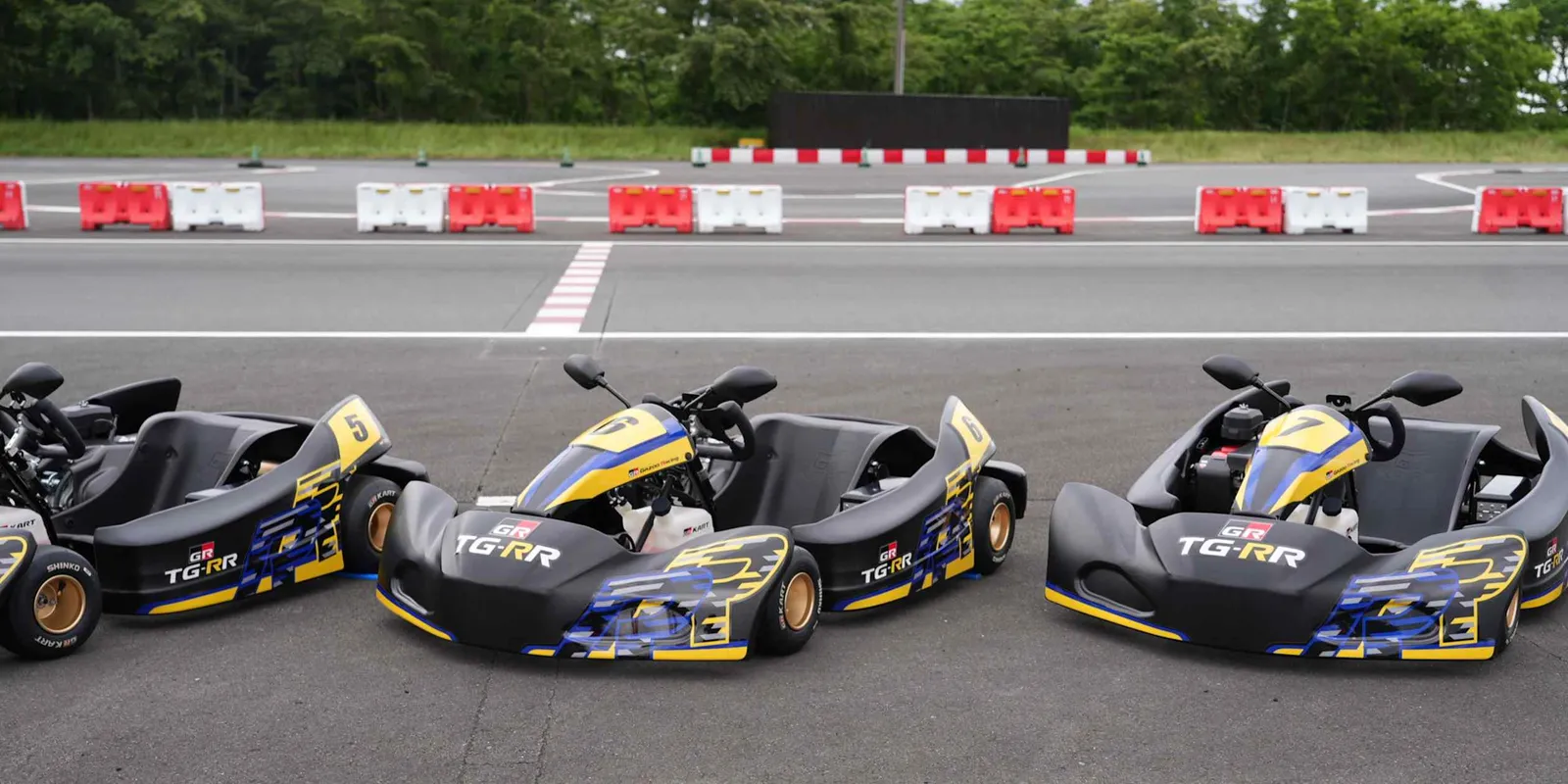
Toyota is preparing to launch a racing kart plant designed to hook a new generation of fans. For executives, the move signals how automakers may diversify brand engagement beyond cars and into lifestyle motorsport experiences.
Toyota is moving into a very specific kind of fandom: racing karts. The company plans to launch a racing kart plant to attract a new generation of fans, a step that reframes how an auto brand tries to stay culturally relevant. Instead of relying only on dealerships, big game ads, or flagship race sponsorships, this is about manufacturing the thing that gets people into racing in the first place. And for younger fans, that matters because the “first taste” of motorsport often comes through hands-on participation, not just watching cars go fast.
The key business idea here is simple: karts are entry-level motorsport. They are cheaper to start, easier to access locally, and they turn passive viewers into active participants. Toyota’s decision to launch a racing kart plant is therefore not just a production story. It is a funnel strategy. If you can build the bikes, toys, and training ground that convert new participants into lifelong fans, you can strengthen brand loyalty long before those fans ever cross into “new car buyer” territory. That is why a plant matters. It suggests Toyota is thinking beyond one-off events and toward a repeatable engine for engagement.
To understand why an automaker is doing this, it helps to look at what the modern car brand competes with. The attention economy is brutal, and automotive is not inherently “shareable” the way gaming, creator culture, and community-driven sports are. Racing, however, is. Motorsport has a built-in narrative: skill, competition, and a clear path to improvement. Karts sit at the early end of that ecosystem. They can be used for local racing series, training programs, and community leagues, all of which give brands repeated touchpoints. Put differently, Toyota is trying to attach itself to the habit-forming moments that create fans.
There is also a second-order implication for business strategy: making the product you need for the ecosystem rather than outsourcing it. Launching a dedicated kart plant can be interpreted as Toyota trying to control quality, supply, and brand consistency. If your goal is to build a coherent experience for a new generation, you cannot treat the hardware as an afterthought. Specs and reliability matter because a broken experience kills momentum. Fans will forgive a lot in marketing, but they do not forgive broken equipment in the garage. A plant gives Toyota more control over that critical early-stage experience.
Executives should also think about how this fits into broader automotive industry behavior. Automakers have been experimenting with adjacent “mobility” identities for years, from subscriptions to new vehicle concepts and partnerships. But motorsport offers a clean bridge between identity and engineering. It lets a company prove performance values in a world where performance is the language. By targeting karts, Toyota is choosing a format that is closer to grassroots racing than top-tier professional series. That choice is meaningful because grassroots communities spread through networks. If Toyota can embed itself in those networks, it can generate brand recall that feels earned rather than advertised.
From a governance and capital allocation perspective, the move also hints at how boards may be evaluating brand strategy as a long-term asset. A production plant is not a meme campaign. It is a commitment that usually requires coordination across manufacturing, product planning, safety standards, and partnerships. Even if the plant is sized for a specific niche, the organizational effort signals that the company views the younger fan pipeline as strategically material. This is the kind of decision that can show up as a “small initiative” from the outside but becomes a meaningful internal alignment project.
For regulators and compliance, motorsport and vehicle-adjacent equipment typically involve safety and standards considerations. While the source does not lay out regulatory details, any manufacturing activity connected to racing equipment will generally require attention to safety, labeling, and quality controls. The bigger takeaway for decision-makers is that brand engagement through racing does not remove compliance work. It reshapes it. Instead of thinking only about consumer vehicles and dealer experiences, Toyota is likely working across a different set of operational requirements, which can affect timelines and partnership design.
So what should peers take from this? The stake is not just Toyota’s new kart plant. It is the playbook: automakers may increasingly treat fan development as an ecosystem, not a campaign. For founders, operators, and investors watching mobility, that means evaluating which brands are building communities that start earlier, grow faster, and convert more reliably. If Toyota successfully pulls in a new generation of fans through karts, it could redefine what “engagement” looks like in auto. The plant would then be more than manufacturing. It would be the physical foundation for a long-term relationship between the brand and the next cohort of motorsport believers.
This story's Key Insights and Take-aways are locked.
Create a free account to unlock Executive Actions for one credit.
Register to UnlockAlways free for Executives Club members. Join the Club
More in Business

Anthropic’s Levant Alpöge cracks the Jacobian conjecture after 87 years
A Harvard valedictorian used Claude to hit a 1939 breakthrough, but the missing “why” is the real problem.

Uber buys Delivery Hero for nearly $15B, vaulting to top food delivery outside China
The deal doubles Uber's dual-services footprint and pushes a ride-and-eats bundling play into 50 more markets.

Epic and Google drop settlement bid, forcing rival Android app stores by July 22
Google told the court it is ready to carry third-party app stores starting Wednesday, July 22.