

Treasury fines Bank of America $1.2B for missing $5B in Chinese money-laundering flows
The third-largest penalty in Treasury history also hits Q3 earnings by $0.17 per share and forces an independent compliance review.
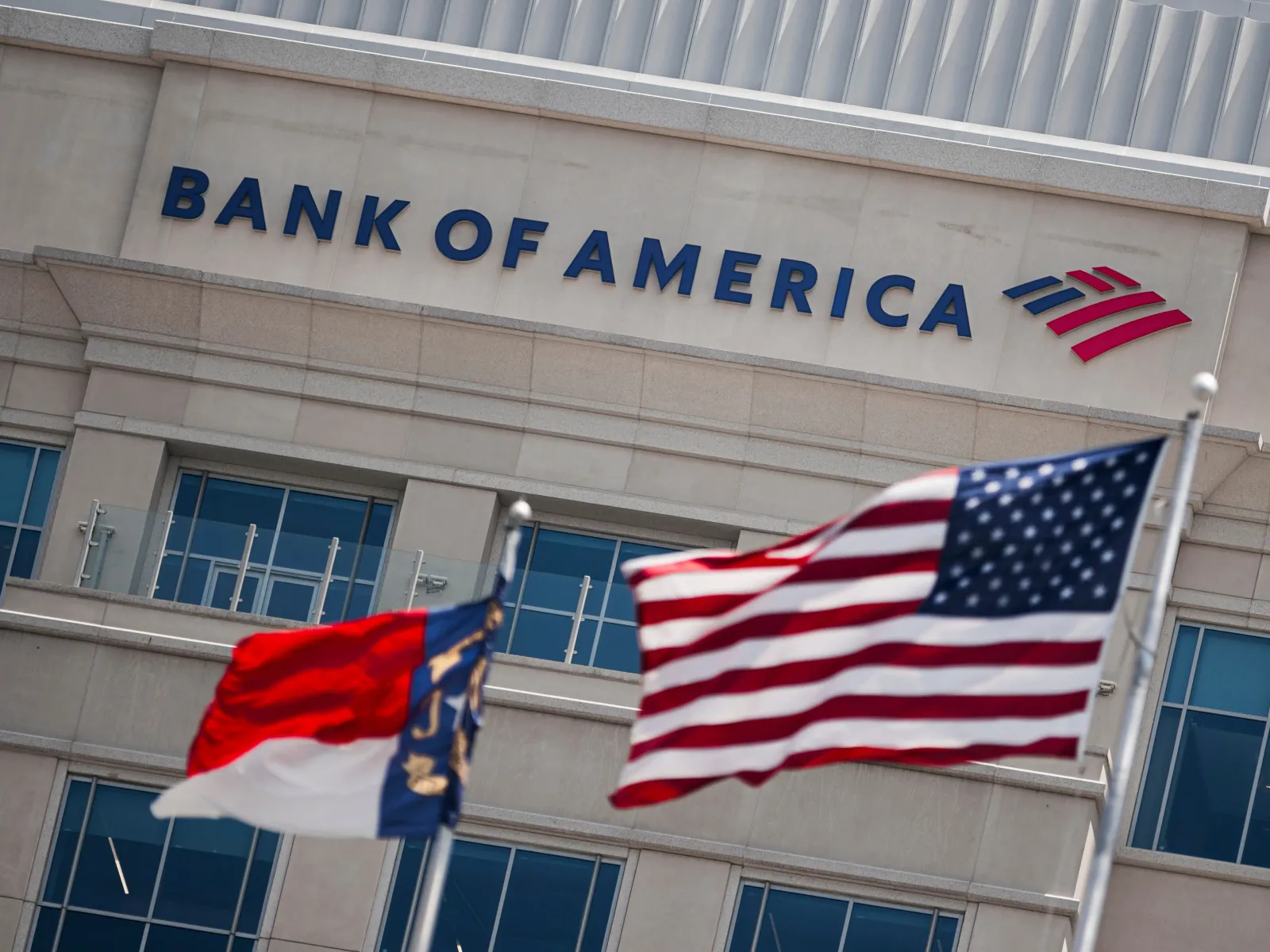
The US Treasury fined Bank of America more than $1.2 billion for failing to report over $5 billion in suspicious transactions tied to Chinese money-laundering networks and for violating sanctions programs. The penalty, the third-largest in Treasury history, will cut BofA's Q3 net income by approximately 17 cents per share and require an independent review of its suspicious activity identification.
The Treasury Department has fined Bank of America more than $1.2 billion, saying the nation's second-largest bank failed to report over $5 billion in suspicious transactions tied to Chinese money-laundering networks along the US southwestern border. The penalty, announced Tuesday, is the third-largest in Treasury history and also flags violations of sanctions programs covering Iran, Russia, narcotics, and global terrorism. The fine lands directly on BofA's bottom line: a bank spokesperson said it will impact the upcoming third-quarter earnings, cutting net income by approximately 17 cents per share.
Treasury Secretary Scott Bessent framed the action as a warning to the entire industry. "When a bank of this size fails to meet its anti-money laundering and sanctions obligations, the consequences extend far beyond its own walls, exposing the entire US financial system to significant illicit finance risks," he said in the release. "Today's actions send a clear message that even the biggest financial institutions are not above the law," he added. The Treasury did not provide details of when the missteps occurred, but the agency said BofA lacked trained staff who could monitor suspicious activity, a compliance failure that allowed billions to flow through undetected.
Alongside the fine, the Treasury ordered the bank to work with a third party to identify and report previously undetected suspicious transactions, and to undergo an independent review of its suspicious activity identification. That means BofA is not just writing a check; it is opening its compliance operations to outside scrutiny, with the explicit goal of finding problems the bank itself missed. For a bank of this scale, that process can take years and cost hundreds of millions more in consulting, technology, and remediation expenses.
For context, the Financial Crimes Enforcement Network, or FinCEN, is the Treasury bureau that collects and analyzes data on financial transactions to combat money laundering, terrorist financing, and other illicit finance. Banks are legally required to file suspicious activity reports, or SARs, when they spot potentially criminal transactions. Failing to do so is not a paperwork technicality; it is a systemic risk that regulators have increasingly punished with record penalties. The $1.2 billion fine is the third-largest the Treasury has ever imposed, a signal that enforcement is escalating even against the most established institutions.
Bank of America's response was measured and did not dispute the findings. "We have invested billions of dollars in technology and dedicated thousands of employees to combat financial crime, and our team is far along with and committed to completing the work required to address the issues raised by our regulators," a spokesperson said. The bank also said it is working with regulators on the issue. The statement acknowledges the scale of the problem while emphasizing the resources already deployed, a common posture for banks facing regulatory action.
The penalty is a reminder that compliance is not a cost center; it is a balance-sheet risk. For peer banks, the takeaway is that regulators are scrutinizing not just whether suspicious activity is reported, but whether the staffing and training exist to catch it in the first place. Treasury's action signals that the bar for anti-money laundering programs is rising, and the cost of falling short is now measured in billions. The specific mention of Chinese money-laundering networks along the southwestern border also points to a geographic and thematic focus that other banks with cross-border operations should examine closely.
For executives and boards, the BofA case offers a concrete stress test: if your bank were audited tomorrow, would it have the trained staff and systems to identify and report suspicious transactions across every border and sanctions regime? The answer, for many institutions, may be uncomfortable. The $1.2 billion fine is not just a penalty for BofA; it is a price tag for the industry's collective compliance gap. And with the Treasury explicitly naming Iran, Russia, narcotics, and global terrorism in the same action, the scope of expected vigilance is broader than ever.
This story's Key Insights and Take-aways are locked.
Create a free account to unlock Executive Actions for one credit.
Register to UnlockAlways free for Executives Club members. Join the Club
More in Business

Elon Musk unveils a flying car, and SpaceX helped build it
The Tesla CEO's showcase at a SpaceX facility signals a future where road and rocket engineering converge.

Apple's $2,000 iPhone Duo opens preorders, taking on Samsung and Google
Apple's first foldable hits the market at a premium price, reshaping a category Samsung and Google have led.

Pope Leo XIV, first American pope, diagnosed with lung cancer
The 71-year-old Chicago-born pontiff underwent successful surgery on his right lung, and his diagnosis raises new questions about his AI-focused papacy and the Vatican's future.