
Two VW engineers charged for insider trading after buying Rivian stock pre-announcement
Michael Stamp and Marcus Plank allegedly bought Rivian before VW’s JV with Rivian went public.
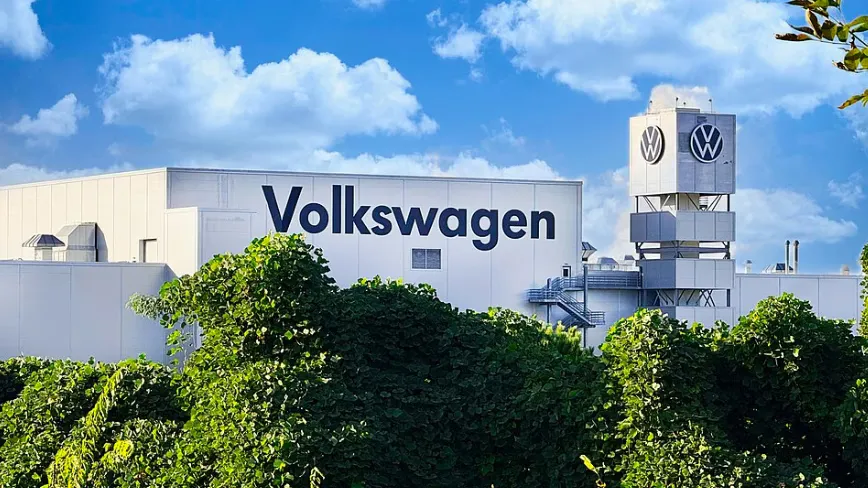
Federal prosecutors charged Michael Stamp and Marcus Plank, two Volkswagen engineers in the US, with insider trading tied to Rivian stock. The case centers on purchases made before Volkswagen’s multibillion-dollar joint venture with Rivian was publicly announced.
Federal prosecutors arrested two Volkswagen engineers in San Jose, California, and charged them with insider trading for buying Rivian stock before VW’s multibillion-dollar joint venture with the electric vehicle maker was publicly announced. The engineers are Michael Stamp and Marcus Plank, both based at VW’s US operations.
According to the charges, each man faces one count of federal securities fraud. The alleged scheme is straightforward in its outline: purchases of Rivian stock occurred before the announcement of the joint venture that Stamp and Plank helped build. In other words, the information advantage prosecutors are pointing to is not vague market gossip. It is tied to the timing of a specific corporate deal involving VW and Rivian.
For executives and boards, the timing is where these cases get dangerous. In public markets, “material nonpublic information” can be a deal, a partnership, an earnings surprise, a regulatory decision, or any other development that could reasonably move a stock. The law is built around the idea that some information cannot be traded on until it becomes public. A joint venture announcement is a classic example because it can reprice expectations quickly: it signals strategy, capital allocation, and near-term operational direction. When prosecutors allege the trades happened before that public signal, they effectively argue that the engineers traded on the deal while it was still internal.
This is also why insiders’ stock trading policies are such a board-level obsession. Companies typically use blackout periods, pre-clearance rules, and trading windows to reduce the risk that someone trades on something they are working on. The core compliance goal is to ensure that employees are not making trades based on knowledge that is not available to ordinary investors. When regulators bring insider trading charges tied to employees who are actively building or supporting a transaction, it puts extra scrutiny on whether the company’s compliance process actually prevented “knowledge-to-trade” connections, not just paperwork-to-cover-you.
The alleged relationship between VW’s engineers and the Rivian joint venture matters for another reason: VW is not a casual participant here. The source describes VW’s JV as “multibillion-dollar,” which signals the kind of corporate commitment that can shift investor expectations about product lines, technology roadmaps, and manufacturing strategy. Deals at that scale often take months, sometimes longer, to shape internally before they are announced publicly. That creates the exact window where employees may learn details before the world sees headlines. If prosecutors can show that Stamp and Plank knew enough to consider the information material and nonpublic, then the trades before the announcement become the legal pivot.
The legal framework also helps explain why this case is being taken seriously. The charges are federal securities fraud counts. That is not a civil warning or a minor compliance dispute; it is a criminal-aligned enforcement posture that can carry major consequences. Even though the source does not provide the details of the trades beyond the timing and the stock involved, it establishes the essential elements prosecutors generally target: a defendant, a specific security, purchases tied to a meaningful internal event, and an announcement event that later made the information public.
For peers in similar roles, the second-order implication is uncomfortable: “I’m just an engineer” or “I wasn’t on the negotiating team” often does not fully protect anyone. Engineers can be deeply involved in designing the technical and operational pieces that make a joint venture real. Prosecutors do not need to prove someone was the face of the deal. They need to show the person had access to material nonpublic information and traded before that information became available to the market. This case, as described, puts that question squarely on Stamp and Plank.
And for decision-makers, there is a practical takeaway even beyond this specific pair. Deal-driven trading risk does not only come from CEOs and CFOs. It can also come from employees located in the US who are working on joint venture implementation. Boards and compliance teams typically evaluate insider trading risk at the top, but cases like this suggest the operational layer matters too. In fast-moving industries like electric vehicles, where partnerships and capital commitments can reshape competitive positions quickly, the “announcement timing” gap is where enforcement lives. If you lead a company with major partnerships in flight, the strategic stakes are simple: how well can you prevent employees from inadvertently turning deal knowledge into market orders before the public gets the signal?
This story's Key Insights and Take-aways are locked.
Create a free account to unlock Executive Actions for one credit.
Register to UnlockAlways free for Executives Club members. Join the Club
More in Business

Anthropic’s Levant Alpöge cracks the Jacobian conjecture after 87 years
A Harvard valedictorian used Claude to hit a 1939 breakthrough, but the missing “why” is the real problem.

Uber buys Delivery Hero for nearly $15B, vaulting to top food delivery outside China
The deal doubles Uber's dual-services footprint and pushes a ride-and-eats bundling play into 50 more markets.

Epic and Google drop settlement bid, forcing rival Android app stores by July 22
Google told the court it is ready to carry third-party app stores starting Wednesday, July 22.