

U.S. shot down Iranian drones, and Strait traffic is higher than expected
About 1,000 commercial vessels transited in two months, with Central Command guiding ships “dark” for safe passage.
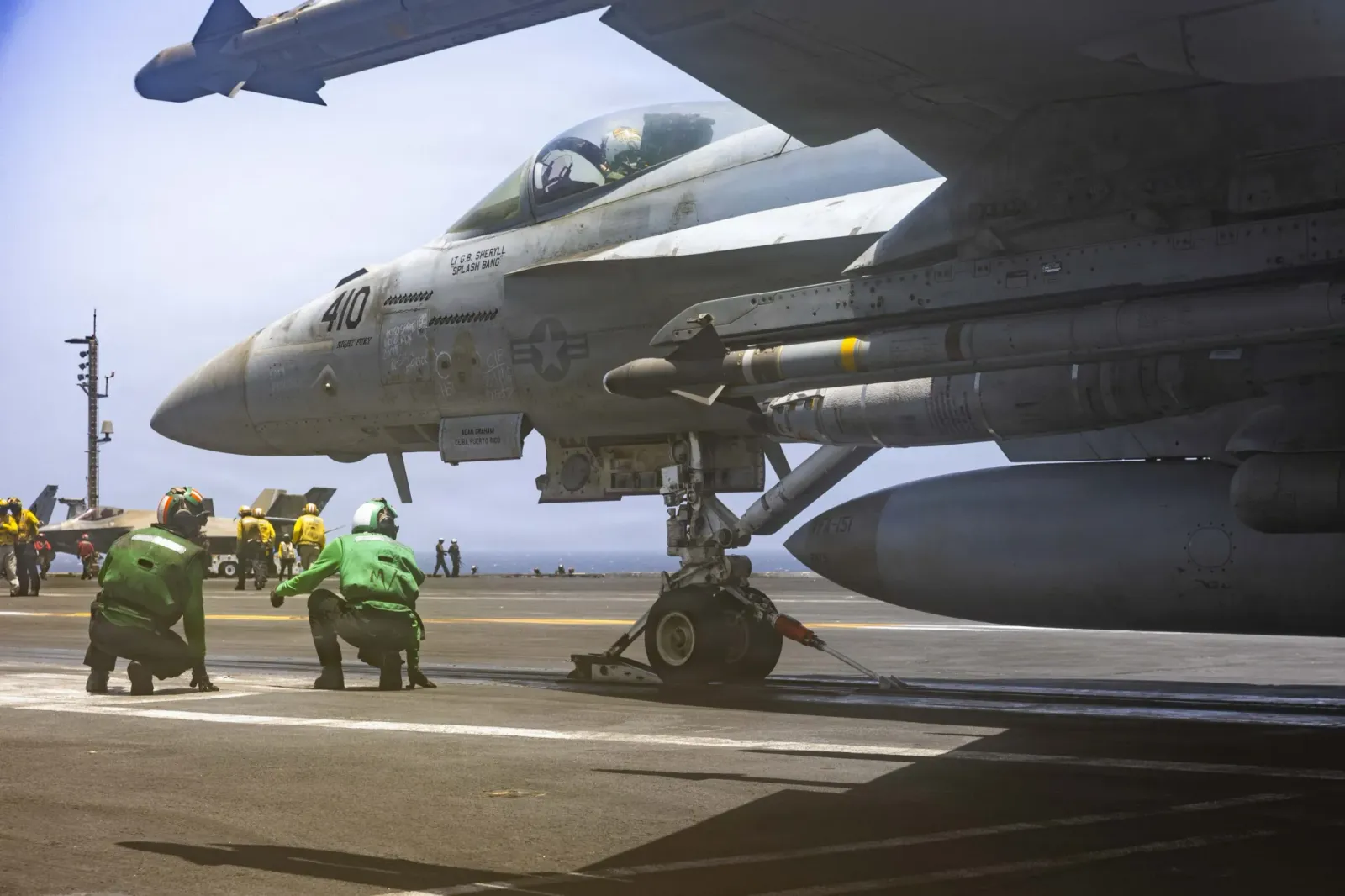
U.S. Central Command said Iranian attack drones posed an immediate threat to regional maritime traffic before U.S. forces shot them down and struck coastal surveillance radar sites in Goruk and on Qeshm Island. The result is a busier-than-expected Strait of Hormuz, where U.S. “naval overwatch” is changing the risk calculus for shipping and oil.
Talks to extend the ceasefire between the U.S. and Iran are “dead in the water,” but the Strait of Hormuz is moving more than many people assumed it would. Fresh reporting says U.S. forces have counted nearly 1,000 commercial vessels transiting the contested waterway in the last two months, roughly the time the ceasefire has been in place. That works out to about 17 ships per day.
Here is the key correction to the common narrative: even though transits are still a fraction of pre-war levels, that pace is meaningfully higher than some other datasets show. Bloomberg-reported counts point to busier routing, mostly large cargo and container ships, while U.S. Navy data published by the Joint Maritime Information Center tallied 558 cargo ships and oil tankers crossing the strait between March 1 and June 3. Maritime data company Kpler counted 895 ships between March 1 and May 19. The gap between figures likely reflects how much shipping “goes dark” in response to risk.
In other words, the Strait may be safer than it looks in public dashboards, not safer than it is in reality. The Islamic Revolutionary Guard Corps established a controlled lane soon after the war started, charging tolls to ships granted permission and attacking those that tried to cross unauthorized. To bypass the IRGC-controlled lane, the U.S. Navy began mine-clearing operations in April and sent two destroyers through the strait to re-establish freedom of navigation near Oman’s coast. That followed Project Freedom last month, which aimed to get more ships out with U.S. help but ended after only a few days.
The “how” behind the higher traffic number matters for executives thinking about supply chains, insurance risk, and commodity exposure. Central Command has insisted it’s not escorting ships, framing its role as advice to commercial vessels in the region. The U.S. military watches traffic with radar, drones, and other tools, while advising when to turn off Automatic Identification Systems, the broadcasts that show a ship’s position. It also advises how to respond to Iranian threats, according to the Wall Street Journal. Over a recent three-week span, U.S. Central Command guided about 70 ships in and out of the Persian Gulf, sources told the New York Times late last month. And Lloyd’s List reported on Wednesday that nearly 40 non-Iranian linked vessels have exited the Gulf in the past three weeks, bringing total departures of once-stranded ships since March to 142.
So where do the drone strikes and shoot-downs fit? They are the enforcement layer behind the new operating reality. Central Command said the attack drones posed an immediate threat to regional maritime traffic. It then struck Iranian coastal surveillance radar sites in Goruk and on Qeshm Island to defend against further maritime attacks. This comes after a wider pattern of escalation despite the ceasefire, including last month’s IRGC attacks into the Gulf and attempted placement of new underwater mines. The U.S. response included destroying Iranian boats and bombing missile sites in Iran that tried to shoot down U.S. aircraft.
Just last weekend, the U.S. disabled a ship attempting to breach its naval blockade by firing a missile into the engine room. Central Command also reported self-defense strikes in Goruk, Iran, and Qeshm Island. After Iran shot down a U.S. drone, fighter aircraft destroyed Iranian air defenses, a ground control station, and two attack drones that threatened ships in transit, according to Central Command. On Friday, Central Command said U.S. forces shot down Iranian missiles and drones launched toward the Strait of Hormuz and Gulf neighbors, again signaling its protective posture toward commercial shipping.
The market stakes are not abstract. The alternate Omani route has grown more important as global oil markets face a potential shock, with crude reserves expected to reach critically low levels in a matter of weeks. In that world, the Strait becomes leverage, and leverage is hard to give up. Iran’s ability to stop Hormuz traffic has emerged as its key source of leverage over the U.S., and the regime has not relinquished it, turning the Persian Gulf into more of a combat zone even with a ceasefire.
For boards and senior operators, the second-order implication is uncomfortable: “higher-than-expected” transits can still coexist with persistent danger. Shipowners told Bloomberg Iranian fast boats approached groups of vessels transiting through the strait, but turned away after helicopters appeared. Central Command declined to comment when asked if those helicopters were U.S. military assets. That kind of uncertainty, paired with guidance on going “dark,” can create a new normal where ship operators thread the needle rather than stop it entirely.
And if you care about the broader macro narrative, a New York Times op-ed by Christopher Smart, a former trade adviser and Treasury official in the Obama administration, put it plainly: it is hard to imagine the Strait never reopens, and also hard to imagine the world economy never again depending on the region for 20% of its oil and gas needs. In the meantime, “desperate buyers” look for other sellers, and the longer the world lives without Gulf supplies, the easier it gets for new supply to stick. The executive takeaway is straightforward: risk management here is not just about whether the Strait is open. It is about how fast the operating playbook changes when enforcement escalates, routes shift, and reporting itself becomes less reliable because ships turn their signals off.
This story's Key Insights and Take-aways are locked.
Create a free account to unlock Executive Actions for one credit.
Register to UnlockAlways free for Executives Club members. Join the Club
More in Business

Anthropic’s Levant Alpöge cracks the Jacobian conjecture after 87 years
A Harvard valedictorian used Claude to hit a 1939 breakthrough, but the missing “why” is the real problem.

Uber buys Delivery Hero for nearly $15B, vaulting to top food delivery outside China
The deal doubles Uber's dual-services footprint and pushes a ride-and-eats bundling play into 50 more markets.

Epic and Google drop settlement bid, forcing rival Android app stores by July 22
Google told the court it is ready to carry third-party app stores starting Wednesday, July 22.