
Upper East Side bar hedges Knicks tabs on Kalshi after a $4,000 hit
The Jeffrey turned a risky Knicks promotion into a live case study in event-driven hedging, showing how small businesses can offset bad bets with prediction markets.
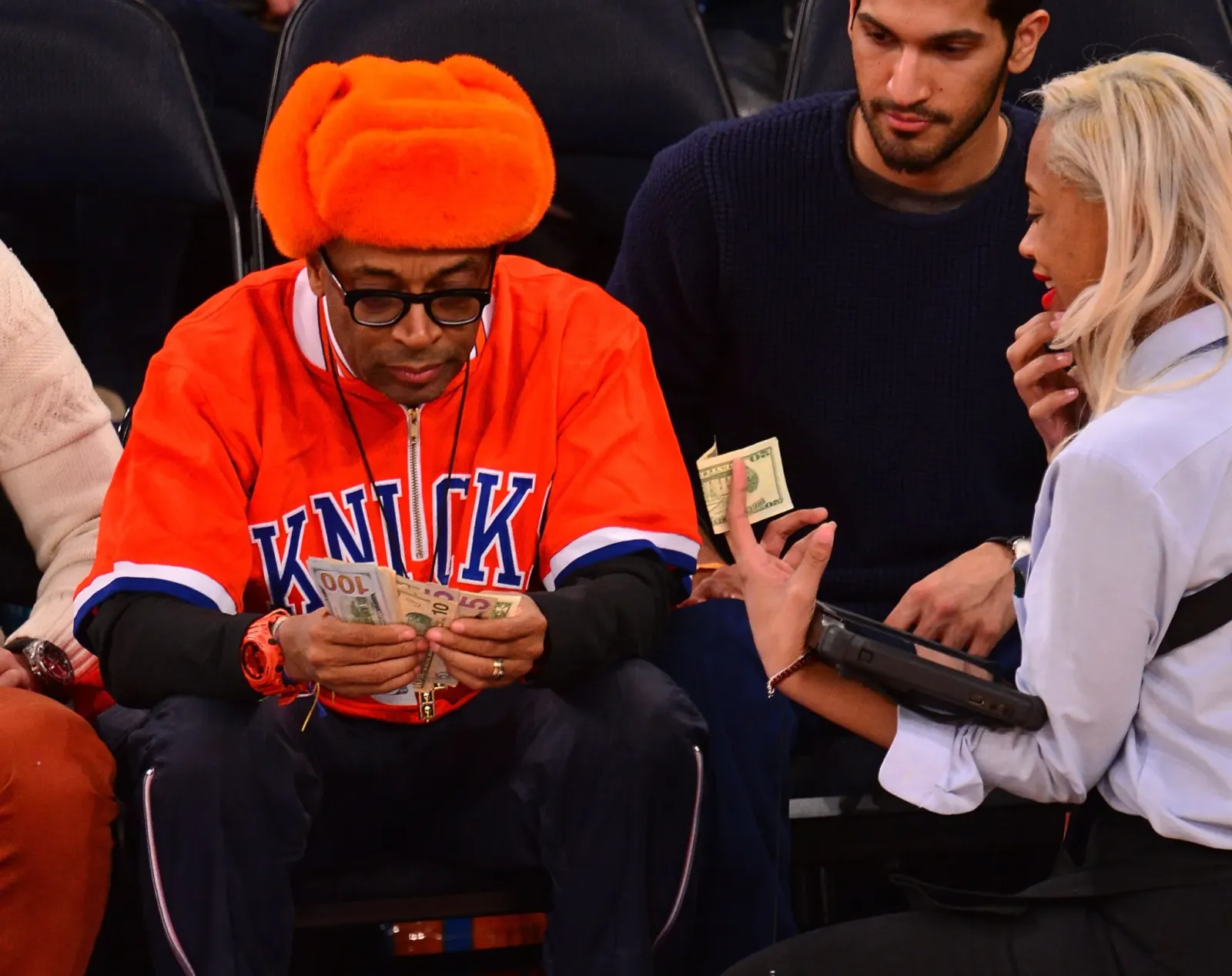
Andy Freedman, owner of The Jeffrey on Manhattan's Upper East Side, said the bar will cover tabs up to $100 if the Knicks win and is hedging that liability on Kalshi after taking a $4,000 hit on a prior promotion. For operators, the move shows how prediction markets can function like operational insurance when a business's exposure is tied to a single game, weather event, or policy outcome.
The Jeffrey, a craft beer and cocktail bar on Manhattan's Upper East Side, is putting real money behind a very New York promise: if the Knicks beat the San Antonio Spurs, customers who arrived before tip-off could get their bar tabs covered up to $100, not counting tax and gratuity. The twist is that owner Andy Freedman is not just gambling on fan loyalty. He is using Kalshi to hedge the risk, turning what could have been a costly promotion into a live demo of how prediction markets can protect a business from event-driven losses. In other words, the bar is betting on the Knicks, but it is also betting against the downside.
That matters because Freedman already learned what happens when a fun promotion goes wrong. During the Eastern Conference Finals, The Jeffrey offered customers 1% off their tabs for every point the Knicks won by. The Knicks won by 37 points, and Freedman said in a video posted to the bar's social media, "They won by a whopping 37%." The result: "Last time, we took a $4,000 hit." This time, he has a cleaner math problem. Freedman said, "We're hedging our risk on Kalshi," and explained the logic plainly: if the Knicks win, he pays the tabs but gets paid out by Kalshi, which he called "a successful hedge." If the Knicks lose, he loses the $5,000 premium on the hedge, but the packed bar of paying customers helps make him whole and then some. With the Knicks given only a 37% chance of winning the series opener, a $5,000 trade on Kalshi would net $8,514 in profit, $13,514 total, enough to cover everyone at the bar.
Kalshi did not just sit back and watch this idea happen. Jack Such, a representative for the company, told Fortune the firm spotted a story about The Jeffrey's earlier 1% promotion and reached out to Freedman. According to Such, Kalshi told him, "You just ate $4,000 for no reason when you really could have used Kalshi to hedge against that risk," and Freedman agreed to hedge. That interaction matters because it shows how Kalshi wants to position itself: not merely as a place to speculate on headlines, sports, and politics, but as a tool that businesses can use to smooth out nasty one-off exposure. For a small bar, that exposure might be a Knicks win. For another business, it could be rain, snow, tariffs, or even election results.
Kalshi, which is regulated by the Commodity Futures Trading Commission, lets people take positions on real-world outcomes ranging from sports scores to economic indicators. In the company’s telling, that makes it a kind of financial infrastructure for businesses that historically have not had an efficient way to offset highly specific event risk. Such said the use case is not instantly obvious. "Kalshi as a hedging product or insurance product is not the most intuitively obvious thing," he said. "It's obvious to us who work here, but probably not to everyone else." That framing is important. The company is trying to move prediction markets out of the novelty bucket and into the operating toolkit bucket, where they start to look less like a bar bet and more like a risk-management instrument.
The Jeffrey may be the first and only small business to hedge this way on Kalshi, though the company says it is in active conversations with others. Such said the idea was "kind of a good creative idea, really just sort of sprung out of" Freedman's work at the bar. He also pushed beyond basketball. Retailers and restaurants that rely on foot traffic can hedge against rain and snowfall using weather contracts. Small importers rattled by two years of tariff volatility can take positions against U.S. trade policy on political contracts. A bar in a heavily Norwegian neighborhood could, in theory, hedge against Norway getting knocked out of the World Cup early and the emptier nights that would follow. The specific examples are unusual, but the business logic is not. If revenue depends on a discrete event, and the event can be priced, then the risk can sometimes be priced too.
This is also landing in a bigger market that is already proving the appetite for monetizing predictions. Kalshi said it saw $11.5 billion of sports market volumes in April, and the company is now pitching itself as a hub for expressing views on major outcomes with money attached. The pitch is not limited to corner bars. Crypto firm Galaxy Digital, pending a crypto market-structure bill passing Congress, said it made a $10 million wager on Kalshi. According to Such, that hedge was placed against the GENIUS Act failing because Galaxy has significant financial exposure if it passes. That is a far larger and more strategic use of the same basic mechanism: a company identifying a policy outcome that could move its economics and laying off some of that exposure in advance.
The Knicks mania surrounding this promotion only sharpens the lesson. The cheapest seats at Madison Square Garden for Finals home games are selling for nearly $4,000 on secondary markets, about $100 more than the combined get-in price for every remaining home game this season for the Mets and Yankees, plus every home game for the Giants. About 20% of Game 1 purchases in San Antonio came from New York billing zip codes, according to TickPick, meaning fans are flying to Texas just to make the math work. Even the lower-cost alternatives got absurd: the Knicks hosted a Game 1 watch party inside Madison Square Garden for a flat $10, but it sold out within minutes, and resellers quickly listed the same passes for $40 and up. In that environment, a bar on East 60th Street offering to cover your tab starts to look less like a gimmick and more like a serious competitive edge. For operators watching from the sidelines, the takeaway is simple: if your business can be blown up by one public outcome, the hedge may be the product.
This story's Key Insights and Take-aways are locked.
Create a free account to unlock Executive Actions for one credit.
Register to UnlockAlways free for Executives Club members. Join the Club
More in Business

Anthropic’s Levant Alpöge cracks the Jacobian conjecture after 87 years
A Harvard valedictorian used Claude to hit a 1939 breakthrough, but the missing “why” is the real problem.

Uber buys Delivery Hero for nearly $15B, vaulting to top food delivery outside China
The deal doubles Uber's dual-services footprint and pushes a ride-and-eats bundling play into 50 more markets.

Epic and Google drop settlement bid, forcing rival Android app stores by July 22
Google told the court it is ready to carry third-party app stores starting Wednesday, July 22.