
US bombards Iran as Tehran claims strikes on US bases in Bahrain, Jordan, Kuwait
A regional escalation is forcing US embassies to warn nationals, while both sides trade blows across borders.
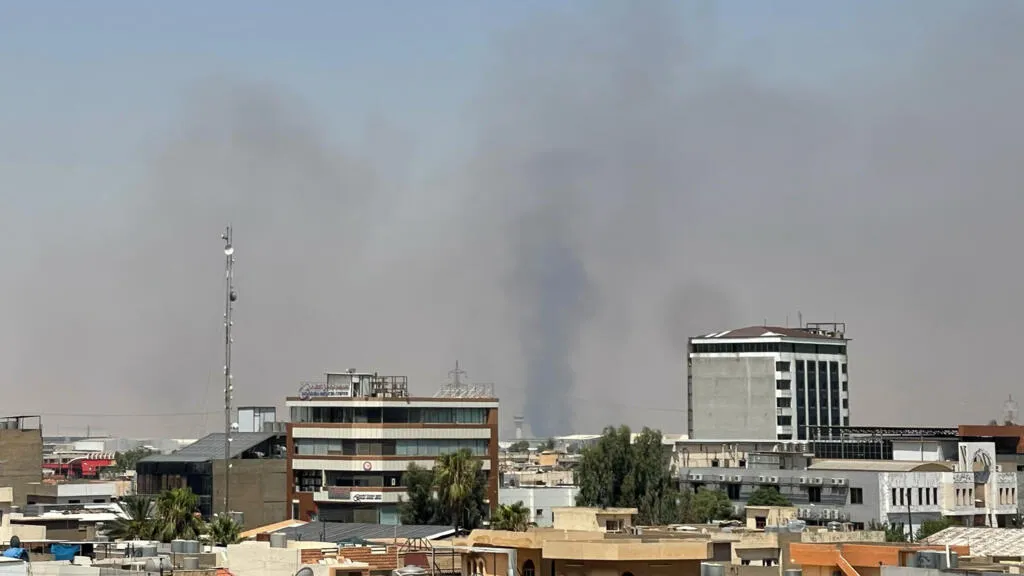
France 24 reports that Iran said it attacked US military assets and bases in Bahrain, Jordan, and Kuwait, citing retaliation for US strikes across Iran. In parallel, the US bombarded sites across Iran as the conflict escalated and warned that embassies across the region alerted nationals.
Iran and the United States are escalating in public view, and it is playing out across more than one battlefield. France 24 reports that on Friday, Iran said it carried out attacks targeting US military assets and bases with US forces in Bahrain, Jordan, and Kuwait. Iran framed those moves as retaliation for Washington's latest strikes across the country.
The other shoe drops just as quickly. France 24 also reports that the US bombarded sites across Iran as the conflict escalated, and that US embassies across the region alerted their nationals. That combination matters because it tells executives not just that violence is increasing, but that risk management is already being activated for people, assets, and operations tied to the US footprint.
From an operating standpoint, the Bahrain, Jordan, and Kuwait detail is the signal. Those are not distant abstractions. They are locations where US forces are present and where a range of private sector activities and infrastructure dependencies often cluster, from logistics and contracting to communications and travel. Even if a company is not a defense contractor, regional security events typically ripple into shipping schedules, insurance pricing, staffing availability, and payment timing. The “bases stationing US forces” phrasing in the report matters because it links the alleged targets to facilities that tend to draw concentrated support services, vendors, and third-party logistics.
For decision-makers, the immediate takeaway is that escalation is no longer a single-country headline. France 24 describes actions crossing borders: Washington strikes “across the country” (Iran), while Tehran points to US-linked sites in Bahrain, Jordan, and Kuwait. When conflict spreads geographically like that, it changes how boards and risk committees think. It is not just about sanctions exposure or geopolitical headlines. It becomes about operational continuity plans: which suppliers could be affected, which routes are disrupted, whether travel policies need tightening, and how quickly teams can execute remote work or alternate logistics.
There is also a regulatory and compliance layer hiding behind the drama. In conflicts like this, governments often tighten controls and increase enforcement around sanctions and export restrictions, even when they are not directly tied to a specific company. Without adding new facts, the logic is straightforward: more cross-border hostility increases the chance that financial systems, logistics channels, and certain categories of goods and services face heightened scrutiny. Executives should treat embassy alerts as a real-world “trigger event” for internal compliance workflows, because heightened risk often leads to faster changes in documentation standards, screening, and due diligence expectations from banks and counterparties.
The report also underlines how quickly public-sector posture can shift. US embassies alerting their nationals is not a technicality. It is a signal that the US government is taking the immediate threat environment seriously enough to communicate directly with people in multiple countries. From a corporate perspective, that can affect office operations, onsite staffing, and even customer communications if operations rely on regions where employees travel or reside.
Finally, this is an escalation story with second-order implications for peers in adjacent industries. If you run a business that depends on regional stability or on clients whose demand is tied to government spending, the market often prices in uncertainty rapidly. Higher risk can translate into higher costs and longer sales cycles, even if your product is not directly in the line of fire. Boards that have been treating geopolitical risk as a background variable need to treat it like a dynamic input. The France 24 snapshot gives a clear pattern: Iran claims attacks on US-linked bases in Bahrain, Jordan, and Kuwait, while the US bombards sites across Iran and pushes emergency-style alerts through embassies.
So the strategic stakes are bigger than the battlefield. When embassies start warning nationals and strikes span multiple countries, companies should assume the operating environment can change faster than standard planning cycles. The executives who move first are the ones who can keep people safe, keep compliance clean, and keep critical operations running while uncertainty peaks.
This story's Key Insights and Take-aways are locked.
Create a free account to unlock Executive Actions for one credit.
Register to UnlockAlways free for Executives Club members. Join the Club
More in Politics

LA County: DOJ's 20,000 'noncitizen' voter list is 'unreliable,' includes U.S.-born
Preliminary review by Los Angeles County election officials finds errors in the federal list, raising the stakes for voter roll integrity ahead of November.

Trump's $1.5B Pentagon chip investment lands in North Carolina
A $1.5 billion defense infusion for North Carolina chipmaking signals a new era of Pentagon-backed reshoring - here's what it means for the industry.
Nigeria confirms first Ebola case in Abuja, a woman just off a Uganda flight
Health Minister Muhammad Ali Pate says the patient flew in from Uganda, putting Africa's latest outbreak on Nigeria's doorstep.