

VA signs $1.6B Salesforce deal for agentic AI, right under Oracle’s defense record push
A three-year, flat seat-based AI licensing pact gives VA staff agent access, but usage and contract structure are the real battleground.
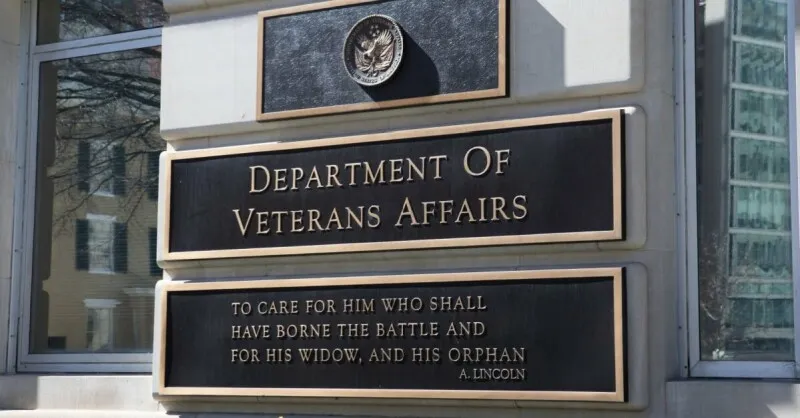
The U.S. Department of Veterans Affairs awarded Salesforce a $1.6 billion, three-year contract for agentic AI tools under an Agentic Enterprise License Agreement. The deal signals how vendors plan to commercialize AI agents, even as Oracle lands nearly $7 billion of its own defense-related software work.
The U.S. Department of Veterans Affairs just signed a $1.6 billion, three-year contract with Salesforce to roll out agentic AI across government services, and it is happening while Oracle runs a parallel track for VA enterprise systems. Salesforce’s agreement, called an Agentic Enterprise License Agreement (AELA), is designed to give VA employees access to agentic AI, integrated data, and advanced collaboration tools. Salesforce’s stated goal is to reduce the admin workload that slows down the people doing the work, arguing that every minute spent bouncing between disconnected systems is a minute not spent serving a Veteran.
In other words: this is not just “more AI,” it is a licensing and deployment mechanism meant to fit inside existing VA workflows. Salesforce’s AELA supports a 24/7 “virtual contact center” that deploys AI agents into live call workflows to retrieve information, triage cases, and automate benefits verification. The company also points to an “agentic operating system” based on Slack, which is already used in some VA hospitals, as part of the broader plan to connect people, data, and workflows. Salesforce’s CEO of defense and government unit, Kendall Collins, framed it as a way to build a trusted foundation across the department, with the intent of getting employees to the right information faster and freeing time for care and benefits.
Salesforce announced the AELA in October last year, right as the market started to argue about how application vendors would actually commercialize agentic AI. This matters because agentic tools are different from “chatbots you ask questions.” They are built to take actions, coordinate steps, and work across systems, which makes usage patterns harder to predict. That is why the structure of these deals has become the headline risk, not just the technology.
The AELA is described by Salesforce as a flat, seat-based arrangement that the company says is popular among customers. However, the underlying debate did not go away: earlier this year, Gartner cautioned that agreements like these will likely be converted into defined quantity contracts toward the end of their term. The concern is straightforward: if “unchecked usage may become costly,” buyers can end up inheriting bill-shock later, once usage scales and the pricing model shifts. Salesforce denied that it would move away from capped plans, and said renewals would remain flexible. For decision-makers, that last word, flexible, is not a throwaway. It is a signal about how vendors want to manage uncertainty while maintaining the sales narrative that pricing will not punish adoption.
Look at the timing and the operational targets, and the commercial logic gets clearer. The VA is not buying AI in a vacuum. It is deploying it into the places where time is consumed and errors are expensive, including contact center workflows where agents can retrieve information, triage cases, and automate benefits verification. It is also using Slack-based components as an “agentic operating system” in some hospital settings, suggesting the model is meant to unify communication and operational steps. In a public-sector environment, where integration and workflow fit are often the limiting factors, the difference between a demo and a working system is everything.
This also sits in the orbit of Oracle’s VA footprint. The VA has been working on an electronic health record system rolled out by Oracle, and further deployments were suspended in April 2023 after patient safety concerns were raised. That rollout was rebooted in February last year, with work continuing under an original $9.99 billion agreement signed in 2018. So while Salesforce is expanding agentic tools via licensing agreements, Oracle’s presence is tied to the deeper operational substrate of healthcare records. That combination is the practical reality behind “AI agents in government”: they depend on data access, workflow integration, and platform trust, which are exactly where large vendors are competing.
Oracle may not “feel downhearted” about missing out on the agent deal, because Oracle is still collecting major government software dollars. The same week as the Salesforce VA announcement, the U.S. Department of Defense signed an Enterprise Software Agreement (ESA) worth nearly $7 billion over as many as ten years, according to the report. The department estimated that consolidating fragmented, one-off purchases under the agreement will save taxpayers at least $441 million over its lifetime. That is a different kind of value proposition, but it points to the same theme: government buyers are trying to standardize spend, reduce fragmentation, and manage risk as software becomes more complex.
For executives and boards in enterprise and government adjacent sectors, this is the strategic stakes behind the $1.6 billion number. First, the VA deal is a proof point that agentic AI is moving from pilot to procurement, with licensing structures designed to make adoption palatable. Second, Gartner’s warning and Salesforce’s denial show how pricing governance is becoming the real battlefield when agents start acting, not just answering. Third, Oracle’s simultaneous record system and the DoD’s nearly $7 billion ESA reinforce that the winners are the vendors that can tie agent capabilities to the underlying platforms customers already operate, while still delivering credible cost controls.
In short: the VA is betting that agentic AI can reduce administrative burden by embedding agents into real workflows. Salesforce is betting its AELA model can scale without turning into an end-of-term usage surprise. And everyone else watching this space should pay attention, because once public agencies normalize these licensing mechanics, the rest of the enterprise market tends to follow.
This story's Key Insights and Take-aways are locked.
Create a free account to unlock Executive Actions for one credit.
Register to UnlockAlways free for Executives Club members. Join the Club
More in Business

Anthropic’s Levant Alpöge cracks the Jacobian conjecture after 87 years
A Harvard valedictorian used Claude to hit a 1939 breakthrough, but the missing “why” is the real problem.

Uber buys Delivery Hero for nearly $15B, vaulting to top food delivery outside China
The deal doubles Uber's dual-services footprint and pushes a ride-and-eats bundling play into 50 more markets.

Epic and Google drop settlement bid, forcing rival Android app stores by July 22
Google told the court it is ready to carry third-party app stores starting Wednesday, July 22.