
Valve puts Steam Machine RAM negotiations on blast with $1,049 and $1,349 price tags
Valve says 2026 RAM sourcing is “brutal” and take-it-or-leave-it, with hardware pricing not subsidized.
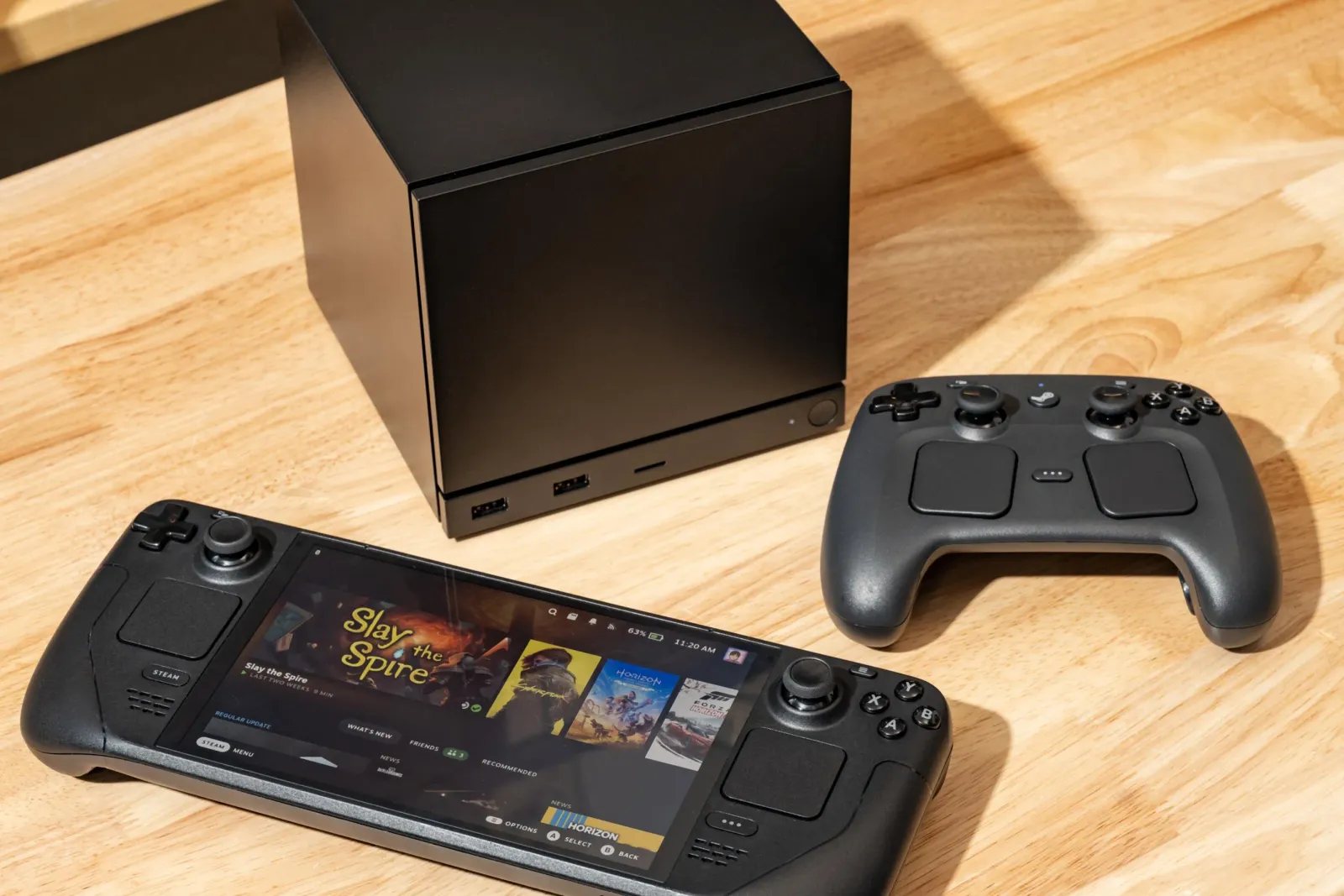
Valve has shared Steam Machine pricing, with a 512GB configuration at $1,049 and a 2TB version at $1,349, excluding bundled controllers. In a Gamers Nexus interview, Valve engineers described how RAM negotiations in 2026 can turn take-it-or-leave-it as components remain scarce.
Valve has finally given its Steam Machine a real price label, and it is not subtle. The 512GB configuration costs $1,049, while the 2TB version runs $1,349, and those figures exclude bundled controllers. That exclusion matters because it means the “headline” price is not the all-in number many buyers assume. It also signals something more strategic: Valve is not absorbing the pain.
The brutal part is not just sticker shock, it is why the bill got so high in the first place. Valve says it is not subsidizing the hardware, and the company has already indicated that the component crisis forced it to reconsider its initial pricing plans. In other words, the market did not simply get more expensive, it cornered Valve into a less flexible pricing reality, which is where RAM negotiations in 2026 start to resemble a high-stakes procurement contest rather than a normal supply chain relationship.
In an interview with the YouTube channel Gamers Nexus, Valve engineers discussed what sourcing RAM in 2026 looks like. The theme was straightforward: memory and other components remain in short supply, and that scarcity turns supplier offers into take-it-or-leave-it pricing. Instead of long negotiations that aim for mutual optimization, the process shifts toward procurement survival. The engineers pointed to a limited set of vendors, including Samsung, Micron, and SK Hynix, as examples of who can actually supply the needed capacity when demand is outpacing supply.
This is not just a hardware story, it is a business model story. When a company subsidizes components, it can buffer consumer pricing and smooth out volatility. Valve is explicitly not doing that here, which means every swing in RAM availability and component pricing hits the Steam Machine directly. That is the core reason the 512GB and 2TB variants land at $1,049 and $1,349 respectively, without bundled controllers included. For decision-makers, the big takeaway is that “availability risk” is now also “margin risk,” because you cannot price your way out of supply constraints if you refuse to subsidize.
There is also a procurement power shift hiding inside these numbers. When RAM supply is tight and only a few vendors like Samsung, Micron, and SK Hynix can credibly meet demand, suppliers effectively set the menu. Take-it-or-leave-it pricing is what that looks like on the ground. It can compress the timeline between design intent and component commitment, because waiting for better terms may be impossible if capacity allocation is already spoken for. For boards and operators, that changes how you structure planning cycles: product roadmaps become less about feature cadence and more about whether you can secure enough critical components at survivable terms.
The second-order implication is that pricing becomes a signal to investors and partners, not just consumers. Valve’s move to revisit initial pricing plans, tied to the component crisis, is basically a public admission that cost structures can force strategy changes. In ecosystems like gaming PCs and consoles, where customers compare specs, value perceptions can shift quickly. Excluding bundled controllers makes the comparison even sharper, because buyers will estimate total cost of ownership rather than the bare unit. If RAM negotiations are truly brutal in 2026, you should assume more products will face similar “rebaselined” pricing, especially where hardware vendors do not have the scale to negotiate better allocations.
For peers building similar devices, the procurement framing matters as much as the product. The combination of high RAM pricing, component scarcity across categories, and limited vendor options can turn hardware launches into liquidity events, not just engineering milestones. Even if the engineering is ready, the commercial outcome depends on whether component offers match the target bill of materials and whether the company is willing to absorb the delta. Valve’s approach here, no subsidization, suggests it is choosing financial transparency over consumer affordability padding, and it is betting that the market will accept the higher price when supply constraints explain it.
Strategically, the stake is simple: if RAM and other components stay scarce, the “cost to ship” can remain volatile into 2026, and negotiations may not be a collaborative process. The Steam Machine pricing gives you a snapshot of what that future looks like when hardware makers cannot smooth the shock. Executives running consumer hardware should treat procurement like a core operating function, because in a take-it-or-leave-it world, the supply chain does not just support the business. It drives it.
This story's Key Insights and Take-aways are locked.
Create a free account to unlock Executive Actions for one credit.
Register to UnlockAlways free for Executives Club members. Join the Club
More in Technology

Nvidia's $89B data center quarter: the 9 companies cashing in
The AI buildout is minting fortunes beyond GPUs, and memory, cloud, and cooling suppliers are riding the same wave.

Google quietly links your phone number to every Android account on your SIM
Adding a SIM now ties your phone number to all Google accounts - and future accounts inherit it. Here's the security and privacy stakes.

Hijacker AI 'Skynet mode' runs 100,000 attack steps against exposed models
Symantec caught a criminal AI agent that borrows other models, steals data, and mines crypto; the only relief is no confirmed victims yet.