
Valve’s Steam Machine starts at $1,049, topping $1,428 with a controller
Analysts call the price tag a “niche device” signal, and executives should read it as a distribution, margin, and adoption test.
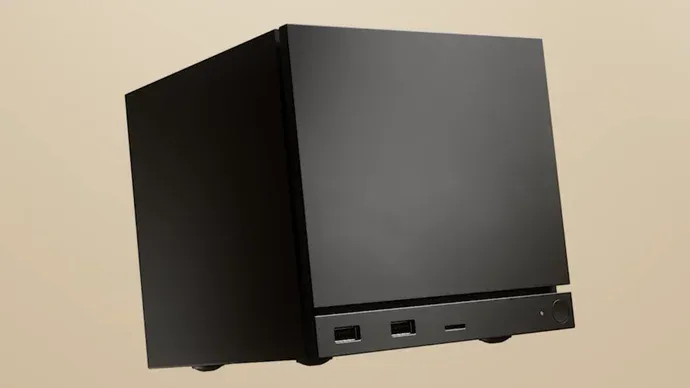
Valve has revealed Steam Machine launch prices ranging from $1,049 for a 515GB model without a controller to $1,428 for a 2TB machine with a controller. For decision-makers, the range turns the question from “can it ship?” into “can it sell profitably at scale?”
Valve finally put a number on its hotly anticipated Steam Machine console/PC hybrid, and it is not a guess. Launch pricing starts at $1,049 for a 515GB model without a controller, then climbs to $1,428 for a 2TB machine that includes a controller. In other words: this is not priced like a casual impulse buy, and it forces every stakeholder to decide what “mainstream” even means.
That $1,049-plus opening price is exactly why analysts are reacting with the blunt framing that “this is going to be a niche device.” When the entry point clears a major psychological threshold, the buyer set narrows fast. The key operational consequence is simple: if early adoption is limited, downstream partners, content publishers, and device makers will all behave differently than they would for a mass-market launch. They will manage inventory with more caution, prioritize ecosystems that already have momentum, and ask harder questions about how long it takes to reach meaningful install-base.
For investors and board members, the second-order issue is the business model math. Steam Machine is a hybrid concept, which implies it is competing on two fronts at once: the living-room hardware experience of a console and the flexibility of a PC ecosystem. But hardware at $1,049 to $1,428 pulls you into a tighter margin and volume constraint. The company and its partners do not just need demand. They need demand at a scale that can justify component costs, fulfillment, support, and the overhead of coordinating a product category that is still new to many retailers and consumers.
This pricing also changes the adoption curve for the “controller included” vs “controller not included” setups. The difference between $1,049 for 515GB without a controller and $1,428 for 2TB with a controller is not just storage and accessories. It is a test of bundling strategy: customers who already have controllers can delay upgrades, while customers who want a complete ready-to-play experience pay the premium. Executives should notice how that can shape customer acquisition channels. If controller-equipped units move faster, retailers and marketing teams will learn to structure offers differently. If they lag, they will treat controller bundles as an optional upsell rather than a primary conversion lever.
Then there is the ecosystem reality. Valve is essentially asking consumers to choose a specific hardware path to reach Steam, rather than using an existing gaming PC or buying a traditional console. That shifts the burden onto device discovery and experience quality. At a high price point, a buyer is less tolerant of friction, less likely to experiment, and more likely to compare the device to what they already own. So the “niche device” label is not just a demographic guess. It is a demand-quality warning. Early sales must come with strong clarity: what the device does better, what it simplifies, and why the Steam experience is compelling enough to justify the cost.
For operations leaders, the niche framing affects forecasting and risk management. When analysts expect a niche outcome, planning tends to get conservative, with tighter production windows and more cautious inventory. That can raise the per-unit cost if volume stays limited, which then feeds back into pricing power. Meanwhile, developers and publishers watching install base will prioritize platforms where the audience is growing predictably. If growth is slower, the early content strategy has to work harder to win attention, because the device cannot rely on sheer volume to carry it.
Finally, the regulatory and policy angle, while not explicit in the price announcement, matters in how these devices are sold and supported. In consumer electronics and connected devices, approvals, compliance requirements, and consumer protections can affect timelines, documentation, and support costs. A category that is already complex because it combines console-like use with PC-like capabilities has less room to absorb delays. When launch pricing is known, all the surrounding operational steps become more visible: shipping schedules, returns and warranty handling, and the customer support model needed to keep premium buyers from churning.
So what should executives and board members take from this? Steam Machine pricing from $1,049 to $1,428 establishes that Valve is not aiming for the cheapest entry into living-room gaming. The market will test whether a premium hybrid approach can earn enough loyalty and adoption to become more than a boutique product. If it does not, the story becomes less about technology and more about economics and distribution. For peers building or investing in next-generation hardware platforms, the takeaway is blunt: hardware categories win or lose on early install base and unit economics, and Valve has just turned the dial by making the cost real.
This story's Key Insights and Take-aways are locked.
Create a free account to unlock Executive Actions for one credit.
Register to UnlockAlways free for Executives Club members. Join the Club
More in Entertainment

Deltarune Chapter 5 smashes 300,000 Steam peak just minutes after launch
Within minutes, Toby Fox's episodic RPG blows past its own record, changing what “momentum” looks like on Steam.

Rogue Heroes’ WWII comeback proves streaming can still binge “mad bastards,” not just prestige
Steven Knight’s two-season series is driving major streaming momentum and hitting the exact Band of Brothers sweet spot.

Netflix builds its Philip K. Dick comeback, betting on its most ambitious sci-fi since the 2010s
The streamer is adapting an obscure Philip K. Dick story, and the stakes go beyond prestige sci-fi.