

Why Japan is bankrolling $21B of chip fabs in New York
GlobalFoundries CEO Tim Breen says the whole industry is in short supply, and Japan's up-to-$21B commitment to two Malta, New York plants shows sovereign capital is now funding US chip capacity.
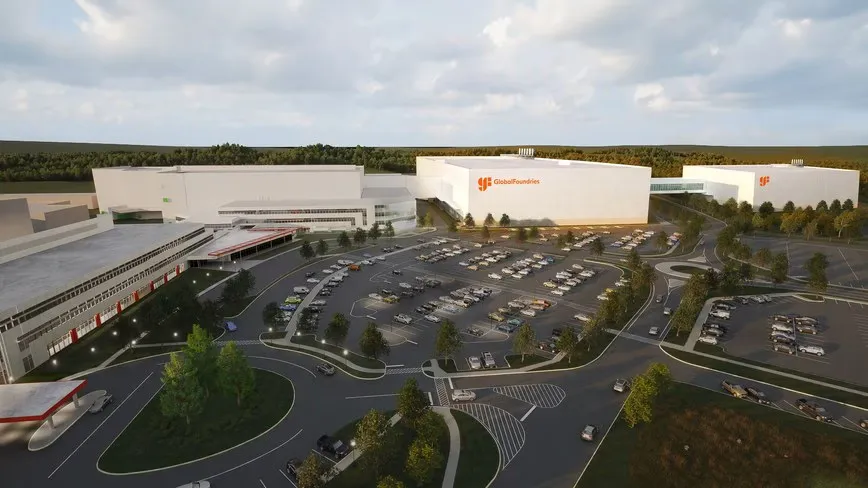
GlobalFoundries CEO Tim Breen confirmed the industry-wide chip shortage as Japan committed up to $21 billion to two new factories at the company's Malta, New York site, announced 14 October. For decision-makers, the deal signals that sovereign capital, not just corporate balance sheets, is now funding semiconductor capacity, with GlobalFoundries operating both plants as technology provider and operator.
Japan will put up to $21 billion into two new chip factories at GlobalFoundries' site in Malta, New York, the company announced on 14 October. The why, per CEO Tim Breen, is blunt: "Right now, the whole industry is in short supply," he told Bloomberg. That line is the whole story in miniature. The chip shortage that has snarled supply chains from Detroit to Shenzhen is now so persistent that a foreign government is writing billion-dollar checks for factories on US soil, and a major foundry is taking the money.
At up to $21 billion, this is not a rounding error. The scale is striking: a single foreign government committing that much to two factories on US soil. GlobalFoundries will run both plants as technology provider and operator, which means the company gets a major expansion of production capacity without shouldering the full capital burden itself. For a contract chipmaker, a foundry that manufactures chips designed by other companies rather than selling its own branded processors, that is the difference between waiting out the shortage and capitalizing on it.
The context is a supply crunch that has rippled far beyond Silicon Valley. Automakers have idled assembly lines for lack of microcontrollers. Server builders have wrestled with lead times stretching many months. Consumer electronics makers have scrambled for whatever allocation they can get. Breen's one-sentence diagnosis is the understatement of the cycle, and it is the reason governments are now behaving less like regulators and more like venture capitalists.
For context, Japan's move is notable because Tokyo has historically been one of the most aggressive state backers of domestic chip production, pouring public money into rebuilding advanced manufacturing at home. Writing a check of this size for factories on US soil marks a shift in how the country thinks about supply-chain security: when chips are this scarce, capacity anywhere in the allied world can be capacity that matters. The announcement also lands as Washington pushes its own semiconductor incentive programs, underscoring that the race to build fabs is now a government-funded competition as much as a corporate one.
GlobalFoundries is one of the world's largest contract chip manufacturers, and its Malta campus is already a major production site. Adding two factories there, funded by Japanese capital, effectively lets a foreign government underwrite the expansion of US manufacturing capacity. The structure matters as much as the number: GlobalFoundries operates the plants, Japan provides the money, and the chips produced will feed an industry that cannot get enough supply. That is a template other foundries and governments are likely to study closely.
For executives watching from the sidelines, the implications are direct. If your product depends on silicon, and almost every product now does, your supply chain just gained a new variable: sovereign-funded capacity that can come online faster than purely commercial builds. If you are a CFO, the deal is a case study in capital-light expansion: find a partner willing to fund the factory while you run it. And if you are a competitor, the bar for what counts as a credible fab investment just went up.
The strategic takeaway is that capital for critical infrastructure now flows across borders in ways that would have been unthinkable a decade ago. Japan's willingness to fund US fabs, and GlobalFoundries' willingness to accept the money, signals that governments and companies are aligning around a simple principle: in a shortage, whoever controls capacity controls the market. The up-to-$21 billion figure is the price of that principle, and it is a price more governments are evidently willing to pay.
For boards and CEOs, the lesson is to watch where sovereign capital is flowing in your own industry. The chip shortage turned semiconductor fabs into strategic assets, and the people who moved first, GlobalFoundries included, are now the ones with the capacity, the partners, and the war chest. The question for everyone else is who will be the next government-backed check to land, and whether your company is positioned to receive it or to compete against it.
This story's Key Insights and Take-aways are locked.
Create a free account to unlock Executive Actions for one credit.
Register to UnlockAlways free for Executives Club members. Join the Club
More in Business

Elon Musk unveils a flying car, and SpaceX helped build it
The Tesla CEO's showcase at a SpaceX facility signals a future where road and rocket engineering converge.

Apple's $2,000 iPhone Duo opens preorders, taking on Samsung and Google
Apple's first foldable hits the market at a premium price, reshaping a category Samsung and Google have led.

Pope Leo XIV, first American pope, diagnosed with lung cancer
The 71-year-old Chicago-born pontiff underwent successful surgery on his right lung, and his diagnosis raises new questions about his AI-focused papacy and the Vatican's future.