

Wildfires forced 300,000+ evacuations across France and Spain on Saturday
Bordeaux and areas near Madrid faced fresh evacuations as authorities warned of a difficult night.
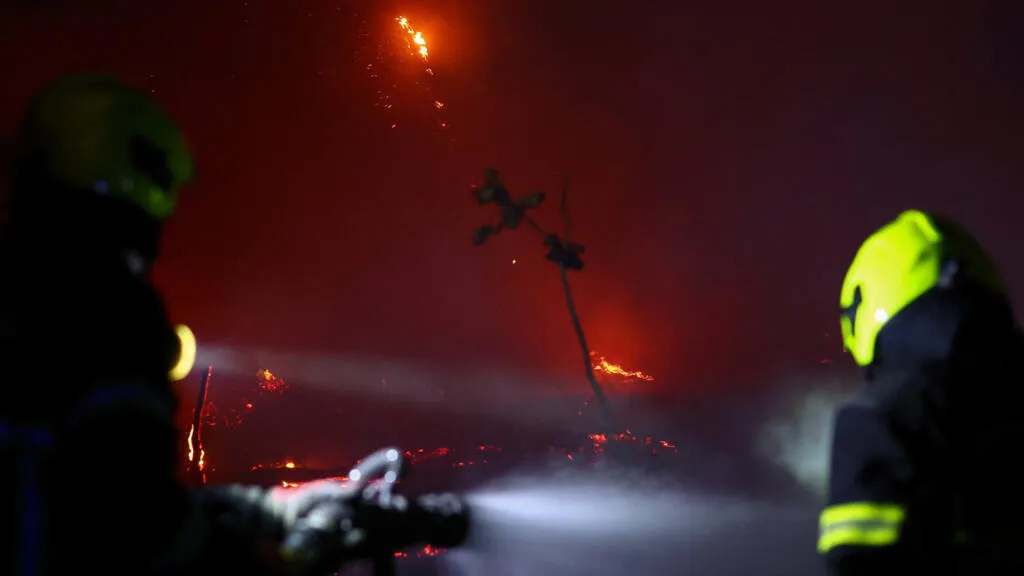
France and Spain saw more than 300,000 people flee wildfires on Saturday as worsening conditions triggered additional evacuations. For decision-makers, the expanding, fire-driven chaos raises near-term risks to logistics, insurance exposure, and operational continuity across borders.
Saturday’s wildfire spread turned into a mass-movement event across France and Spain, with more than 300,000 people fleeing fires as conditions worsened. Authorities warned of a “difficult night,” and fresh evacuations were required, including around Bordeaux, where fire-generated whirlwinds were fueling blazes. Across the border, Spain battled expanding infernos threatening areas near Madrid, intensifying the sense that the danger was not contained to a single region.
The operational headline for leaders is simple: when evacuation numbers reach that scale across two countries, it is rarely a “local emergency” anymore. The France-Spain flare-up shows how quickly wildfire dynamics can force repeated, fast-moving public decisions. Near Bordeaux, authorities reported fire-generated whirlwinds, which matter because they can rapidly change fire behavior and complicate routing, staffing, and resource allocation. Meanwhile, Spain’s expanding infernos near Madrid signal the same problem from another angle: even if a fire starts far from major population centers, the threat can creep toward them quickly, forcing authorities to protect people before “full containment” becomes possible.
To understand why this becomes an executive-level issue rather than just a headline, zoom out one layer. Wildfires do not just burn vegetation. They stress transportation networks, disrupt power and communications, and interfere with the movement of goods and personnel. In practice, evacuation and “difficult night” warnings can trigger cascades through supply chains, from road closures and airport delays to warehouse safety decisions and emergency staffing shortages. If your operations rely on regional travel, just-in-time parts, or cross-border logistics, mass evacuations increase the odds that routine routes become unreliable overnight.
There is also a financial and governance angle. When governments escalate evacuations and warn of difficult nights, it often implies uncertainty and volatility in the threat environment. That kind of uncertainty tends to increase administrative workload, emergency contracting needs, and pressure on public communications. For boards and insurers, these events can translate into rising claims exposure, higher premiums, and tighter underwriting standards over time, particularly in repeatedly affected areas. And for risk leaders, wildfire behavior amplified by factors like whirlwinds is a reminder that “model outputs” can fail when physical conditions shift faster than plans.
The cross-border nature of this story matters for capital allocation and oversight too. France and Spain are handling separate wildfire events, but executives managing multinational teams, facilities, or supplier networks face a shared problem: emergency actions in one geography can still affect operations in another, because people, transport, and procurement decisions often overlap. Even where the fires are described as near Bordeaux and near Madrid, the ripple effects can spread through national infrastructure and market expectations. If evacuation routes and regional transport corridors are disrupted, it can affect availability of labor, shipping schedules, and the timing of deliveries needed for normal business operations.
For companies with offices, factories, depots, or retail operations in the broader region, the immediate second-order issue is continuity planning under rapidly changing public conditions. Fresh evacuations mean decisions are not one-and-done. They can require updates to site status, staff communication, remote-work readiness, and asset protection. And “difficult night” warnings indicate that overnight conditions could worsen, increasing the importance of clear escalation triggers and pre-approved responses, like temporary suspension of non-essential travel, relocation of critical data systems, and coordination with local authorities.
The strategic takeaway for peers in similar roles is that wildfire risk is both operational and reputational. Operationally, mass evacuations at a 300,000-plus scale in a single weekend imply that disruptions can persist and intensify. Reputationally, companies that prepare, communicate clearly, and coordinate with local guidance tend to earn faster trust with employees and communities, which matters when events move faster than normal decision cycles.
In short, the weekend’s wildfire surge across France and Spain, with authorities warning of a “difficult night” and fire-generated whirlwinds near Bordeaux, is a real-world stress test for executives. It is a reminder that when fire behavior accelerates and evacuations multiply, leadership is measured by how quickly you convert uncertainty into action, protect people, and keep essential work moving as conditions change.
This story's Key Insights and Take-aways are locked.
Create a free account to unlock Executive Actions for one credit.
Register to UnlockAlways free for Executives Club members. Join the Club
More in Politics

LA County: DOJ's 20,000 'noncitizen' voter list is 'unreliable,' includes U.S.-born
Preliminary review by Los Angeles County election officials finds errors in the federal list, raising the stakes for voter roll integrity ahead of November.

Trump's $1.5B Pentagon chip investment lands in North Carolina
A $1.5 billion defense infusion for North Carolina chipmaking signals a new era of Pentagon-backed reshoring - here's what it means for the industry.

Nigeria confirms first Ebola case in Abuja, a woman just off a Uganda flight
Health Minister Muhammad Ali Pate says the patient flew in from Uganda, putting Africa's latest outbreak on Nigeria's doorstep.