

WPP’s Rob Reilly warns “Human creativity is under fire” as AI cheapens ideas
At Cannes Lions, WPP leaders argue budgets are shrinking and AI risks turning inspiration into drivel.
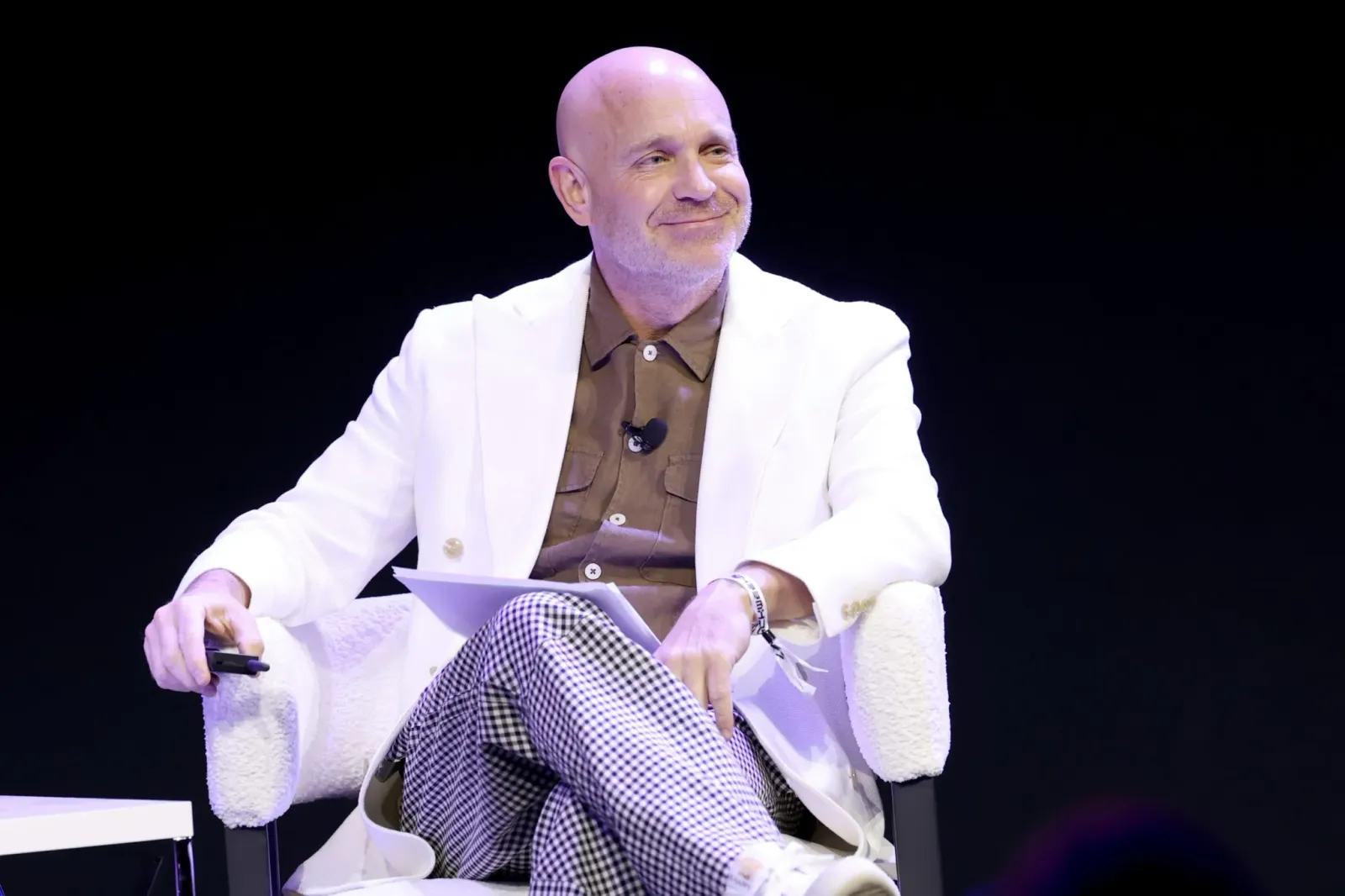
Rob Reilly, WPP’s global chief creative officer, tells Fortune that “Human creativity is under fire” as AI pushes idea production toward cheaper, automated outputs. For CMOs and boards, the consequence is clear: creativity may become undervalued financially, even as it becomes more important strategically.
Cannes Lions may look like a glamorous week for advertising trophies, but inside WPP, the mood is sharper. Rob Reilly, WPP’s global chief creative officer, is warning Fortune that “Human creativity is under fire.” His argument is not abstract. He frames creativity as the root of far more than ad campaigns, saying “Without it, society will lose far more than its capacity to innovate,” and that everything from “music, art, sports, and even simple hobbies like baking” is ultimately a product of creativity.
Reilly also points to what he sees as the immediate accelerant: AI in advertising. He describes a tension for companies like WPP that are “deep into technology and deep into AI,” asking, “where does human creativity fit in?” The danger, in his view, is an organizational habit of confusing capability with value. “It’s easy to get distracted by technology,” Reilly says, and adds that “AI in the hands of a skilled, visionary, creative person could be incredibly inspiring,” but “in the hands of hacks, it’s only going to create more and more drivel.” Put bluntly: if you let automation set the default, the industry risks mistaking volume for meaning.
This is happening as the business incentives around marketing tighten. According to Gartner’s 2026 CMO Survey, marketing budgets have fallen to 9.6% of total company budgets, down from 11.4% a year earlier. In that climate, creative teams can feel like they are swimming upstream. Even as creativity has become a prized corporate asset, many people responsible for producing it believe its value is “poorly understood, and poorly rewarded.” Reilly worries that creativity is being undervalued by the businesses that rely on it, including how it is paid for. He also argues the problem is partly structural: “Our business has not done itself a lot of favors when it comes to figuring out a really smart commercial model,” and that the advertising industry “is struggling a bit and, you know…will continue to struggle.”
For readers who run brand P&Ls or sit on boards, that structural point matters because it changes how creativity gets funded. Creative work often requires tolerance for uncertainty. It demands risk-taking and long-term investment, even when the payoff cannot be cleanly measured immediately. That is the environment where a CFO starts asking for efficiency, procurement pushes cost control, legal tightens risk management, and operations tries to enforce consistency. None of those functions are villains, but the combined effect can be to compress time horizons until great creative work becomes structurally difficult.
Eric Monnet, WPP’s chief of staff and global director of creative excellence, lays out the leadership mechanics. He says the most consistent thing he has heard from senior CMOs over the past year is that creative ambition is a quality of the leaders inside brands who “intentionally decide to champion it, defend it, and build the conditions for it to survive.” Monnet also argues against the myth that creative excellence is usually the product of a single breakthrough campaign. Instead, it is often built by leadership teams that invest consistently in ideas and shield the people who generate them from quarterly thinking.
The examples Monnet and Reilly point to reinforce this long-horizon view. Dove’s “Real Beauty” campaign began more than two decades ago with what Monnet describes as a simple cultural insight, and it has since evolved into a brand platform worth an estimated $7.5 billion. Volvo’s “EVA Initiative” is presented as another durability case: built on Volvo’s longstanding commitment to safety, it released decades of proprietary crash-test data so that women could be safer in every vehicle, not just a Volvo. These are not examples of “one and done” creativity. They are examples of creative work treated as a sustained business platform.
So why is this conversation taking center stage at Cannes Lions now? Reilly points to how the festival’s “thousand doors” work. “Cannes Lions has a thousand doors,” he says. “Perhaps only a hundred of them lead directly into traditional creative work.” The rest lead into areas that used to feel peripheral to advertising, like data science, venture capital, platform economics, creator ecosystems, and emerging technologies. But he rejects the idea that this is a departure from Cannes’s original mission. In his view, the festival continues to celebrate originality and craft while also increasingly rewarding work that delivers measurable impact in the real world. He summarizes the stance bluntly: “We don't celebrate anything that doesn't have good business results.”
The second-order implication for executives is uncomfortable but actionable: if your organization treats creativity like a line item instead of a growth multiplier, AI will feel like the easy path and humans will get crowded out. Monnet insists that “There must be a shared value for creativity across the organization,” and that when a brand views creativity as a force multiplier for growth rather than just an expense, it becomes easier to navigate internal pressures. Reilly closes with an optimism that doubles as a warning: “If people aren’t psyched to be part of the industry now, they're out of their minds. The industry is changing so fast. If you’re not on the train, you’re going to be left behind.” In other words: the fight isn’t for more tools. It is for the conditions where human creativity can still do the job only humans can do, even as the machines get better at generating output.
This story's Key Insights and Take-aways are locked.
Create a free account to unlock Executive Actions for one credit.
Register to UnlockAlways free for Executives Club members. Join the Club
More in Business

Anthropic’s Levant Alpöge cracks the Jacobian conjecture after 87 years
A Harvard valedictorian used Claude to hit a 1939 breakthrough, but the missing “why” is the real problem.

Uber buys Delivery Hero for nearly $15B, vaulting to top food delivery outside China
The deal doubles Uber's dual-services footprint and pushes a ride-and-eats bundling play into 50 more markets.

Epic and Google drop settlement bid, forcing rival Android app stores by July 22
Google told the court it is ready to carry third-party app stores starting Wednesday, July 22.