

Xbox pins down PC backward compatibility after 3,200 job cuts, starting with Blinx and Conker
Microsoft follows messy layoffs and shifting strategy with a concrete PC plan, led by Blinx and Conker in the first wave.
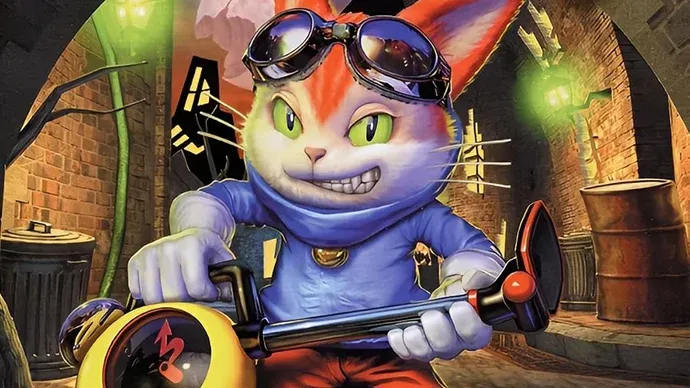
Xbox is announcing a Backward Compatibility on PC program, with Blinx and Conker leading the first wave. For decision-makers, it is a signal that Xbox is using PC continuity to stabilize its gaming strategy while it absorbs the fallout from cutting 3,200 jobs and four studios.
Xbox is rolling out a Backward Compatibility on PC program, and the first wave will be anchored by Blinx and Conker. That matters because this announcement is landing in the middle of a very specific kind of pressure: Microsoft is trying to downplay the gaming blowback from cutting 3,200 jobs and four studios, and internally the strategy message has sounded, at best, confused.
In other words, Xbox is not just making a vague promise that “old games are coming to PC.” It is trying to turn backwards compatibility into an actual delivery mechanism. The point is simple: keep existing audiences, keep existing franchises, and keep revenue conversations alive while the company rethinks what Xbox means in a world where PC is a mainstream platform, not a side quest.
This is a classic moment where execution has to outrun narrative. When a company reduces headcount by 3,200 jobs and shutters or consolidates four studios, the immediate questions from leadership, investors, partners, and staff tend to be about priorities. What gets deprioritized? What gets rescued? What changes in how the company allocates engineering, publishing support, and marketing budget? Xbox is answering at least part of that with a product-facing move: bring older Xbox titles to PC through backward compatibility, and make the first wave concrete by naming Blinx and Conker.
From an operator and board perspective, there is also a “second-order” reason this kind of program can help. Backward compatibility on PC is not just a distribution decision. It can reduce churn in a platform ecosystem where players have multiple launchers, multiple storefronts, and multiple ways to decide what to play next. Instead of asking players to abandon yesterday’s purchases and habits, Xbox leans on continuity. The more it can make existing ownership and library value travel to PC, the less fragile its customer relationship becomes during a replatforming or reorganization.
And those reorganizations are not small. The source frames Microsoft as trying to downplay the effect on its gaming business after the job and studio cuts. Whether or not the downplaying lands, the operational reality is still that layoffs and studio changes force strategy shifts, even when leaders want to present them as tidy. In the games business, studio capacity is not interchangeable. Studios, teams, and publishing pipelines have different strengths, and when four studios are affected, the company has to re-balance what it can build, what it can support, and what it can ship on a realistic timeline.
That sets the stage for why Xbox’s backward compatibility announcement is a credible anchor for the strategy. The source explicitly tells readers not to worry: old Xbox games are coming to PC. That is not just reassurance for fans. It is also reassurance for anyone whose business depends on Xbox momentum, including partners, advertisers, and employees mapping career and workload expectations.
There is also a regulatory and compliance subtext, even when the story is not about regulators. In many tech markets, platform continuity and interoperability are the themes that keep coming back when antitrust and consumer protection conversations heat up. Backward compatibility, when done properly, is a concrete form of interoperability, turning a previously platform-bound library into a cross-platform asset. That can be framed publicly as consumer value, while internally it can help strengthen Xbox’s position in partnership ecosystems where PC distribution and storefront relationships matter.
Finally, the “who” and “how first” detail is doing heavy lifting. By leading with Blinx and Conker, Xbox is signaling that the program is starting with named titles rather than relying on an abstract roadmap. In uncertain periods, specificity is a trust tool. A list of first-wave games is something teams can build around, something marketing can schedule, and something decision-makers can measure.
For executives at peer companies, the take is not that every platform should copy Xbox’s approach. It is that when gaming strategy gets turbulent, the credibility test is delivery. Layoffs and studio cuts can scramble internal narratives, but product commitments like backward compatibility on PC, especially when they name the first wave, can rebuild momentum quickly. If Xbox can make old games on PC feel seamless, it gains a stabilizer in its business while it continues to rethink the broader strategy that the source describes as muddy inside the house.
This story's Key Insights and Take-aways are locked.
Create a free account to unlock Executive Actions for one credit.
Register to UnlockAlways free for Executives Club members. Join the Club
More in Business

Anthropic’s Levant Alpöge cracks the Jacobian conjecture after 87 years
A Harvard valedictorian used Claude to hit a 1939 breakthrough, but the missing “why” is the real problem.

Uber buys Delivery Hero for nearly $15B, vaulting to top food delivery outside China
The deal doubles Uber's dual-services footprint and pushes a ride-and-eats bundling play into 50 more markets.

Epic and Google drop settlement bid, forcing rival Android app stores by July 22
Google told the court it is ready to carry third-party app stores starting Wednesday, July 22.