
Zepto’s IPO filing shows ad revenue +151%, but operating revenue only +104%
The filing backs fast monetization, while bigger losses and a still-murky valuation question force sharper scrutiny.
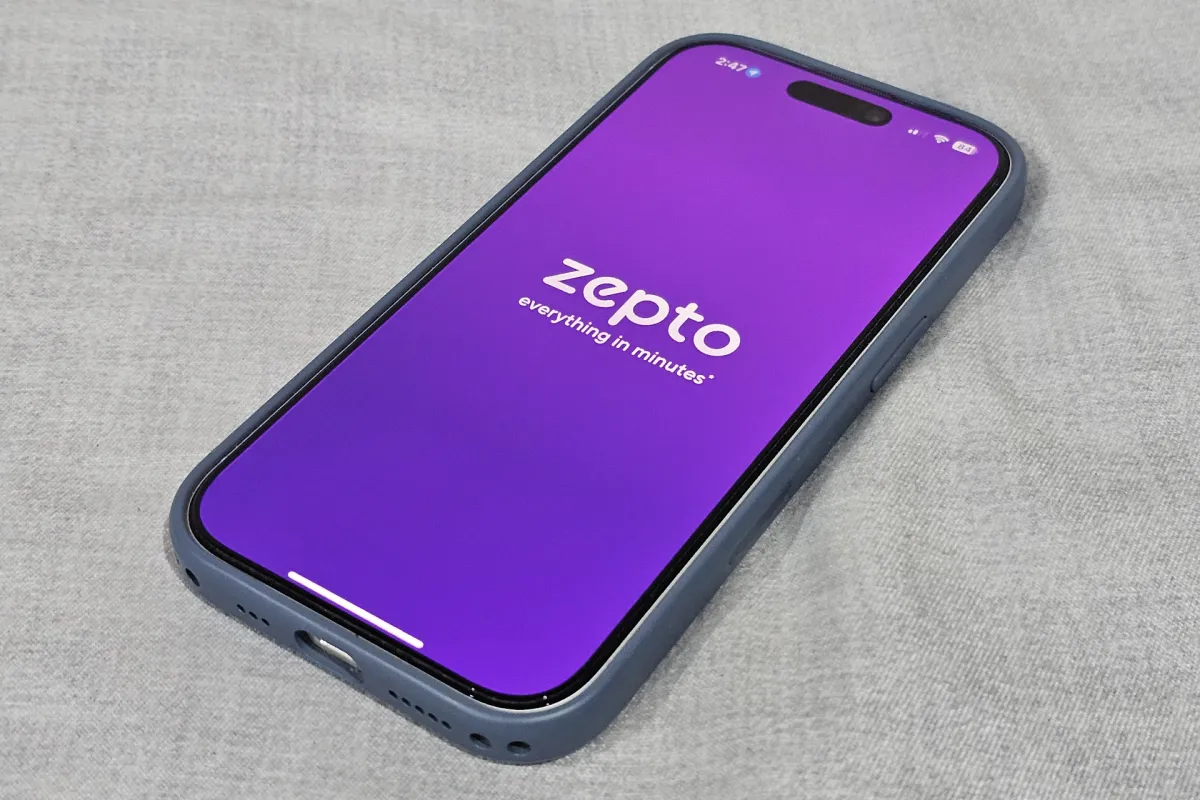
Zepto’s IPO filing, covered by TechCrunch, shows advertising revenue jumping 151%, compared with 104% growth in operating revenue. For decision-makers, that mix sharpens the growth narrative while raising questions investors will probe on margins, losses, and valuation.
Zepto’s IPO filing is turning one number into a spotlight: advertising revenue climbed 151%. That growth rate is faster than the company’s 104% operating revenue growth, meaning ads are not just keeping pace with the core business, they are outpacing it. In plain English, the filing suggests Zepto is monetizing attention more aggressively than it is expanding overall business activity.
The stakes here are simple. When a company goes public, investors do not just ask “are you growing?” They ask “what exactly is driving the growth, and how durable is it?” The ad-versus-total split in Zepto’s filing is the kind of detail that can change how underwriters and analysts model future revenue, because ads can behave differently from other operating line items. A faster ad growth rate than total operating revenue growth can signal improving monetization per customer, better ad inventory utilization, or stronger ad demand. It can also trigger tougher follow-up questions: is this a one-time acceleration, or a new, repeatable engine?
Zoom out one level and you get the broader IPO tension. TechCrunch frames Zepto’s filing as a package deal: fast growth, bigger losses, and a valuation question “nobody’s answered yet.” That last phrase is doing a lot of work. In IPO land, valuation uncertainty is rarely just academic. It can affect timing, pricing, and who is willing to underwrite the story. If the market thinks losses will widen, it demands stronger evidence that monetization like the 151% ad jump can eventually translate into improving unit economics. If the market thinks valuation is too aggressive, even good top-line growth can get discounted.
There is also a market-structure angle worth keeping in mind. Companies in consumer tech and retail marketplaces often try to balance two motions at once: grow demand, then monetize it. Ads are one of the most common monetization levers because they can scale with traffic. But the catch is that ad performance can be more sensitive to competitive dynamics and platform strategy than a simple “more customers equals more revenue” formula. That is why an ad revenue growth rate of 151% versus operating revenue growth of 104% becomes a diagnostic. It suggests Zepto’s ad engine is accelerating relative to its overall revenue growth, but it also implies that investors will dissect whether that acceleration is sustainable through the same cost base.
Losses, meanwhile, tend to be the headline everyone watches during an IPO, even if revenue growth grabs the initial attention. TechCrunch specifically notes “bigger losses” in the filing. That matters because growth without margin improvement usually forces a company into one of two paths: either it needs scale to eventually reduce losses, or it needs new levers to fund itself without dilution pressure. The filing’s ad acceleration could be one of those levers, but decision-makers will still want clarity on how quickly ad revenue flows through to profitability, and whether costs associated with growth and advertising are rising in tandem.
Regulatory context also matters, even when the specific source is focused on financials. In India and elsewhere, IPO processes often bring heightened scrutiny around disclosures, risk factors, and the accuracy of growth and revenue reporting. Advertising revenue is an area where investors typically want transparent definitions. Is it net of certain costs? How is it recognized? What are the drivers of ad demand? While the source does not provide answers beyond the 151% figure and the 104% operating revenue growth, the fact that Zepto is highlighting these metrics signals that it expects the market to focus on them. In other words, the numbers are not merely updates. They are arguments.
The second-order implication for boards and investors is about narrative control. When a company’s “fast growth” is supported by a metric that outpaces overall revenue, management can credibly claim monetization momentum. But bigger losses and a valuation question “nobody’s answered yet” can limit how confidently that narrative travels. For executives, the challenge becomes how to connect these dots in a way the public markets will accept. It is not enough to show that ad revenue is rising fast; the market will also demand that the ad engine contributes to a credible path toward less painful losses or a clearer valuation bridge.
For peers considering similar moves, Zepto’s filing is a reminder that investors will do ratio math, not just story time. A 151% ad revenue jump against 104% operating revenue growth can be a bullish signal, but it also becomes a benchmark against which future quarters will be judged. If the ad growth cools while losses keep expanding, that mismatch can become the valuation problem everyone talks about. If the monetization holds and losses stabilize or narrow, the same numbers could become the foundation for a higher-confidence IPO outcome. Either way, the “outpacing” detail is already out of the filing and into the market’s checklist.
This story's Key Insights and Take-aways are locked.
Create a free account to unlock Executive Actions for one credit.
Register to UnlockAlways free for Executives Club members. Join the Club
More in Business

Anthropic’s Levant Alpöge cracks the Jacobian conjecture after 87 years
A Harvard valedictorian used Claude to hit a 1939 breakthrough, but the missing “why” is the real problem.

Uber buys Delivery Hero for nearly $15B, vaulting to top food delivery outside China
The deal doubles Uber's dual-services footprint and pushes a ride-and-eats bundling play into 50 more markets.

Epic and Google drop settlement bid, forcing rival Android app stores by July 22
Google told the court it is ready to carry third-party app stores starting Wednesday, July 22.