

Cleveland Museum’s 7.3-inch bronze handle depicts Hypnos and Thanatos carrying Zeus’ son
A 400 to 375 B.C. Etruscan artifact turns a Trojan War death into wearable, almost ergonomic art.
By Bandar Al-Saud·· 3 min

Curating from trusted global sources…
Curated from trusted global sources, refined into briefing-grade analysis with executive summaries, insights, and bullet-point takeaways.
A 400 to 375 B.C. Etruscan artifact turns a Trojan War death into wearable, almost ergonomic art.

Researchers at ISTA add experimental constraints to AlphaFold, tackling its single-conformation bias and improving local structure predictions.
Public Health France tracked more than 1,200 deaths on record-hot Wednesday, then over 1,400 twice.
What happens after the first plant species disappears could determine whether grasslands buckle or hold steady.
If we have described only a sliver of insect life, the biodiversity, agriculture, and biotech bets built on today’s map could be missing crucial data.

A new study shows beneficial bacteria help plants survive salt stress by strengthening roots with lignin, improving both health and harvests.
A lethal bear mauling at Arene Candide came with evidence of mourning rituals, implying early humans grieved with purpose, not silence.
A missing fossil returns, tightening estimates of Otodus megalodon size and reshaping what scientists think it ate and how it moved.
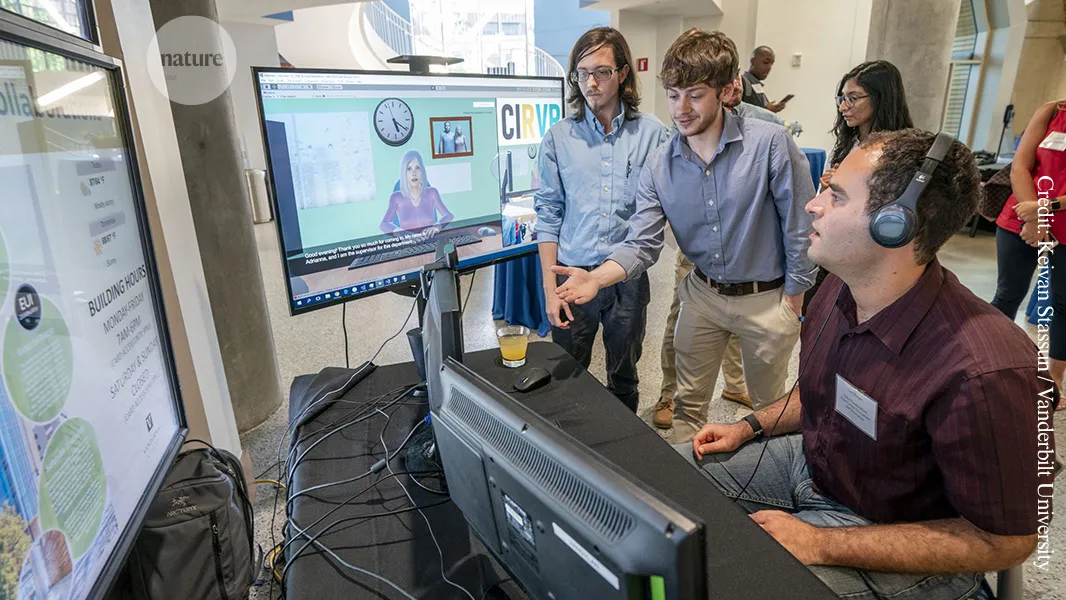
Marisa Chrysochoou and Keivan Stassun say AI tools could help students navigate the hidden curriculum.
A new family of superconductors emerges in rhombohedral graphene, with magnetic field participation that could reshape device roadmaps.
The fastest-melting glacier feeding the West Antarctic Ice Sheet amplified sea level rise, and the timeline matters for policy.
A new arXiv paper spotlights a neglected capability of the Solar Gravitational Lens: mapping compact objects.