
Abbas Araghchi says he survived rubble after airstrike killed Ali Khamenei
Araghchi describes being pulled from a leadership compound after a US-Israeli strike, and warns of accurate targeting.
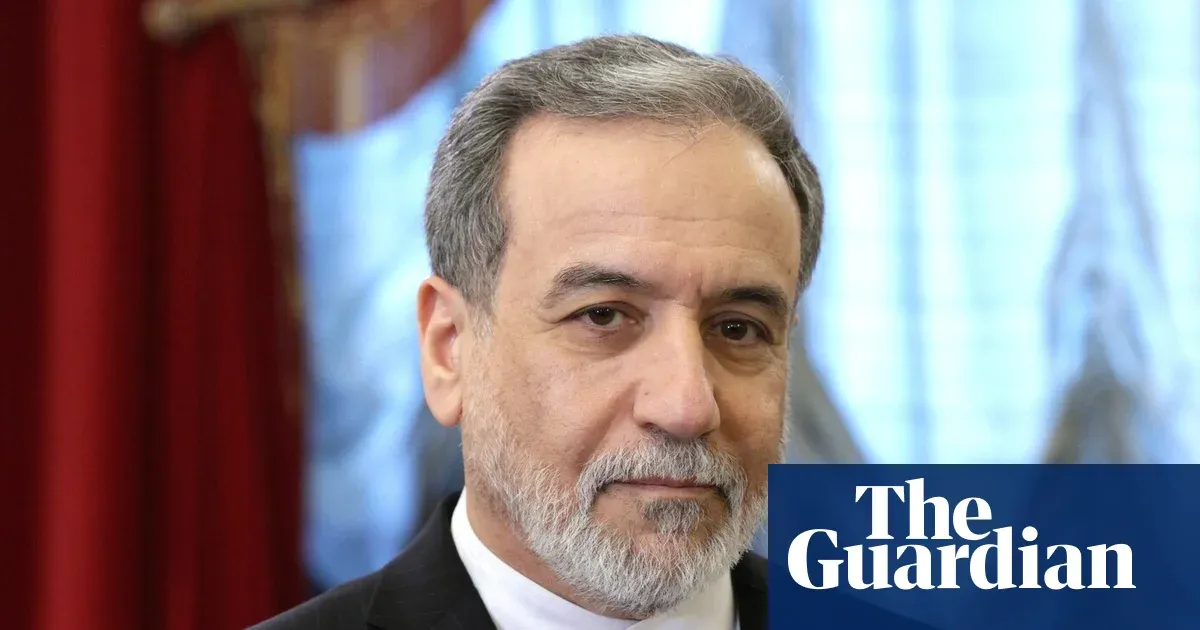
Iranian foreign minister Abbas Araghchi described in an interview how he survived after being pulled from rubble following a US-Israeli airstrike on the first day of the war that killed supreme leader Ali Khamenei. He also said Israel and the US had accurate intelligence on Khamenei and other officials’ locations, enabling attacks on Iran’s senior leadership.
Iran’s foreign minister Abbas Araghchi says he survived the first-day strike that killed the country’s supreme leader, Ali Khamenei. In an interview with Iranian journalist Javad Mogouyi, Araghchi described being pulled from the rubble of a leadership compound after the US-Israeli airstrike and then avoiding further danger by constantly moving around Tehran by car.
Araghchi’s account is not just personal survival. He also confirmed a key operational claim: he said Israel and the US had accurate intelligence about the locations of Khamenei and other officials, which allowed them to target Iran’s senior leadership. That is the kind of sentence that changes how every leadership team, security chief, and crisis planner thinks about risk, because it implies the threat is not random or opportunistic. It is specific, location-based, and informed.
For executives watching from the outside, these details matter because they hint at continuity risk inside a state apparatus. When a supreme leader is killed, and senior leadership is described as having been identifiable by a foreign attacker, the central question becomes how quickly decision-making can stabilize. The source does not describe any internal succession mechanics or organizational reshuffling, but it does highlight that Iran’s leadership response included constant movement through Tehran, which is a classic indicator of heightened vulnerability to further precision strikes.
There is also a message buried in the logistics. Araghchi says he kept on the move after being pulled from rubble and survived by constantly moving around the capital by car. In practical terms, that suggests security planning was forced to adapt in real time, rather than operating from a predictable pattern. For companies with exposure to Iran or with regional supply chains, this kind of operating environment raises second-order questions about reliability: which facilities can operate safely, which routes are survivable, and how quickly disruptions could turn into longer-term operational freezes.
Now widen out to how this kind of claim plays in the broader political and economic ecosystem. The Guardian piece frames the strike as a US-Israeli airstrike that killed Khamenei on the first day of the war. Even without extra specifics in the text, the timing and the target status are significant because they align with how markets usually interpret geopolitical escalations: sudden, leadership-level blows tend to accelerate uncertainty about policy continuity, enforcement posture, and retaliatory options. Decision-makers tend to move first on risk controls, not because they know the future, but because the downside becomes harder to insure against.
The operational claim about accurate intelligence is also relevant for anyone thinking about compliance and counterparty risk. When senior officials are described as having been targetable due to precise location information, it reinforces a world where sanctions, export controls, and financial monitoring are likely to tighten alongside kinetic actions. The source does not mention sanctions or regulators directly, so the conservative takeaway is simpler: in a scenario described as intelligence-driven targeting, the compliance environment can become less forgiving, and delays can become costly.
For boards and senior management teams, this is a governance stress test in disguise. Crises like this force rapid answers to questions that are typically theoretical until they are not: how much of your operations depend on stable leadership, predictable communications, and consistent physical mobility? Araghchi’s description of surviving by constant movement highlights that even top officials may assume exposure. That mindset is contagious in an organization, pushing teams to tighten controls, document decisions, and reduce single points of failure.
Finally, there is the strategic stake for peers in similar roles, especially those who lead during external shocks. Araghchi’s interview ties together three things: the moment of attack that killed Ali Khamenei, his personal survival after being pulled from rubble, and his assertion that the attacker had accurate intelligence on senior locations. Taken together, it signals that the conflict is not only about battlefield effects. It is about information advantage, leadership targeting, and the pace at which a government can adapt. For executives, investors, and operators, the lesson is blunt: when intelligence is described as accurate and targeting is described as enabled, risk management stops being a spreadsheet exercise and becomes an operational discipline.
This story's Key Insights and Take-aways are locked.
Create a free account to unlock Executive Actions for one credit.
Register to UnlockAlways free for Executives Club members. Join the Club
More in Politics

LA County: DOJ's 20,000 'noncitizen' voter list is 'unreliable,' includes U.S.-born
Preliminary review by Los Angeles County election officials finds errors in the federal list, raising the stakes for voter roll integrity ahead of November.

Trump's $1.5B Pentagon chip investment lands in North Carolina
A $1.5 billion defense infusion for North Carolina chipmaking signals a new era of Pentagon-backed reshoring - here's what it means for the industry.

Nigeria confirms first Ebola case in Abuja, a woman just off a Uganda flight
Health Minister Muhammad Ali Pate says the patient flew in from Uganda, putting Africa's latest outbreak on Nigeria's doorstep.